
How Everyday Workplace Habits Influence Long-Term Digestion Health
-

- July 23rd, 2026
- 32 views

FREE SEO Topical Map Generator: Find Your Next Content Ideas
Modern professionals spend a significant part of their lives at work, often prioritizing deadlines, meetings, productivity goals, and career advancement over personal well-being. While this commitment can support professional success, it can also create habits that gradually affect physical health, particularly the digestive system. For many office workers, symptoms such as bloating, acidity, irregular bowel movements, indigestion, and abdominal discomfort become so common that they are considered normal parts of a busy lifestyle.
However, digestive issues should never be dismissed as an unavoidable consequence of work. Maintaining good Digestion Health requires consistent lifestyle habits, balanced nutrition, proper hydration, and effective stress management. The choices professionals make every day—whether it's skipping breakfast, eating lunch at a desk, consuming excessive caffeine, or remaining seated for hours—can significantly influence digestive function over time.
Understanding how workplace habits affect gastrointestinal wellness can help professionals make informed decisions that support both career success and long-term health.
Why Modern Work Culture Can Affect Digestive Health
Today's workplace environment has changed dramatically. Long periods of screen time, virtual meetings, tight schedules, and demanding workloads have become part of everyday life for many professionals.
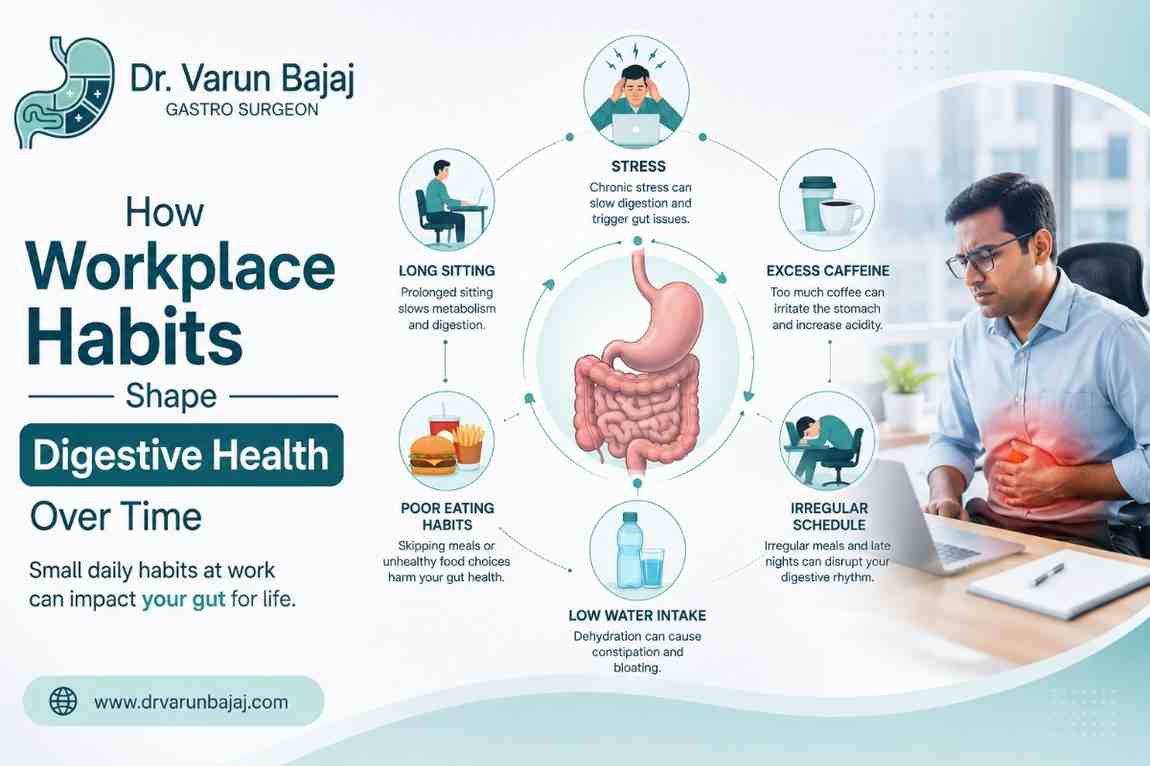
Common workplace habits that may affect digestion include:
- Long sitting hours
- Irregular meal timing
- Workplace stress
- Fast eating habits
- Frequent consumption of processed foods
- Poor hydration
- Lack of physical activity
- Inadequate sleep
Individually, these behaviors may seem harmless. However, when repeated consistently over months or years, they can impact digestive wellness and overall quality of life.
Irregular Eating Habits and Their Impact on Digestion
Skipping Meals Due to Work Pressure
One of the most common workplace habits is skipping meals. Professionals often delay breakfast or lunch because of meetings, deadlines, or heavy workloads.
When meals are skipped regularly, the digestive system's natural rhythm can be disrupted. This may contribute to fluctuations in appetite, reduced energy levels, and digestive discomfort throughout the day.
Eating Meals at Different Times Daily
The digestive system functions efficiently when meals are consumed at consistent times. Irregular eating patterns can make digestion less predictable and may increase the likelihood of discomfort after meals.
Rushed Eating and Poor Chewing Habits
Many employees eat lunch while answering emails or attending meetings. Eating too quickly often reduces proper chewing, which is the first important step in the digestive process.
Mindful eating helps support healthy digestion by allowing the body sufficient time to process food effectively.
The Hidden Effects of Prolonged Sitting
Modern office jobs often require sitting for extended periods.
Reduced Movement Throughout the Day
Physical activity supports overall digestive function. Unfortunately, many professionals spend eight to ten hours sitting at a desk with minimal movement.
Limited activity may contribute to feelings of sluggishness and reduced overall wellness.
Impact on Metabolism and Digestive Comfort
Movement helps stimulate normal bodily functions. Taking short breaks throughout the day can benefit not only musculoskeletal health but also support digestive comfort.
Simple ways to stay active include:
- Walking during breaks
- Taking stairs instead of elevators
- Stretching every hour
- Standing during phone calls
- Scheduling short walks after meals
These small changes can make a meaningful difference over time.
Workplace Stress and the Gut-Brain Connection
Stress is one of the most overlooked contributors to digestive complaints among working professionals.
How Stress Influences the Digestive System
The digestive tract and brain communicate continuously through a complex network often referred to as the gut-brain connection.
When stress levels rise, many people experience symptoms such as:
- Bloating
- Acid reflux
- Stomach discomfort
- Appetite changes
- Nausea
- Altered bowel habits
This is why digestive symptoms often become more noticeable during periods of high workplace pressure.
Long-Term Effects of Chronic Stress
Ongoing stress can influence eating habits, sleep quality, and overall lifestyle choices, creating a cycle that may further affect digestive wellness.
Practical Stress Management Strategies
Professionals can support digestive health by incorporating:
- Regular exercise
- Deep breathing exercises
- Meditation
- Mindfulness practices
- Better time management
- Healthy work-life balance
Managing stress effectively benefits both mental and digestive well-being.
Workplace Food Choices Matter More Than You Think
The Convenience Food Trap
Busy schedules often encourage professionals to choose convenience over nutrition. Fast food, highly processed snacks, and sugary beverages may become regular parts of the workday.
While convenient, these choices may not provide the nutrients needed to support optimal digestive function.
Excessive Dependence on Caffeine
Coffee and energy drinks are common workplace companions. Although moderate caffeine intake may be acceptable for many individuals, excessive consumption can contribute to digestive discomfort in some people.
Poor Hydration Throughout the Day
Many office employees realize at the end of the day that they have consumed very little water.
Adequate hydration supports normal digestive processes and helps maintain overall wellness.
The Role of Sleep in Digestive Wellness
Sleep is closely connected to digestive function, yet it is frequently sacrificed in busy professional lives.
Poor sleep habits may contribute to:
- Increased fatigue
- Changes in appetite
- Reduced energy levels
- Poor food choices
- Digestive discomfort
Creating a healthy sleep routine can support overall Digestion Health and improve daily productivity.
Helpful strategies include:
- Maintaining a consistent bedtime
- Limiting screen use before sleep
- Avoiding heavy late-night meals
- Creating a relaxing sleep environment
Building Better Habits for Long-Term Digestive Health
Improving digestive wellness does not require drastic lifestyle changes.
Small daily actions can provide meaningful long-term benefits:
- Eat meals at regular times
- Stay hydrated throughout the day
- Include fiber-rich foods in your diet
- Take movement breaks during work
- Manage stress proactively
- Prioritize quality sleep
- Limit excessive processed foods
- Practice mindful eating
Consistency is often more important than perfection.
When Should You Consult a Specialist?
Digestive symptoms should never be ignored if they persist or interfere with daily life.
Consider professional evaluation if you experience:
- Persistent bloating
- Frequent acidity or heartburn
- Ongoing constipation
- Recurring abdominal pain
- Changes in bowel habits
- Unexplained digestive discomfort
- Symptoms that continue despite lifestyle improvements
An experienced Gastro Surgeon in Ahmedabad can evaluate your symptoms, identify possible causes, and recommend appropriate treatment options when needed.
Conclusion
The workplace habits developed today can directly influence digestive wellness for years to come. Irregular eating schedules, prolonged sitting, workplace stress, poor hydration, unhealthy food choices, and lack of sleep often work together to affect the digestive system gradually. While these habits may seem insignificant in isolation, their long-term impact can be substantial.
By making conscious lifestyle improvements and paying attention to digestive warning signs, professionals can protect their Digestion Health, improve daily comfort, maintain productivity, and support overall well-being. Small positive changes made consistently can lead to significant long-term health benefits.
CTA
If workplace-related digestive symptoms are affecting your comfort, energy levels, or quality of life, consult Dr Varun Bajaj, a trusted Gastro Surgeon in Ahmedabad, for expert evaluation and personalized digestive care. Early guidance can help identify underlying concerns and support a healthier, more productive future.