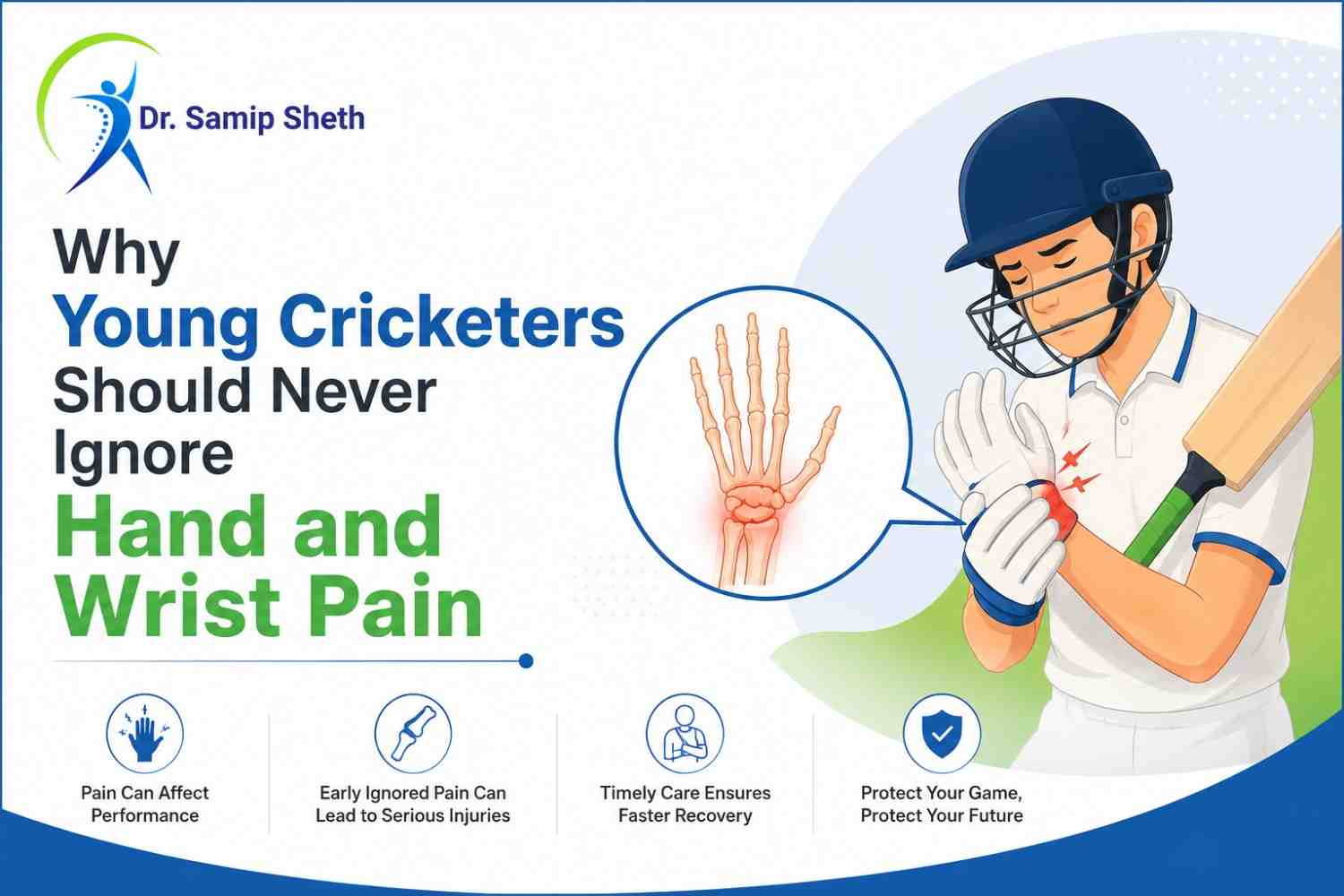
Why Young Cricketers Should Never Ignore Hand and Wrist Pain
-

- July 22nd, 2026
- 31 views

FREE SEO Topical Map Generator: Find Your Next Content Ideas
Cricket is one of the most popular sports among young athletes, requiring a combination of skill, coordination, strength, and endurance. Whether it's batting, bowling, fielding, or wicketkeeping, the hands and wrists play a crucial role in almost every aspect of the game. As young cricketers work hard to improve their performance, they often experience occasional aches and discomfort. While some soreness may be normal after intense practice sessions, persistent pain should never be ignored.
Many cases of Hand and Wrist Injuries in Cricket begin with mild symptoms that players dismiss as temporary. However, delaying proper evaluation can sometimes lead to prolonged recovery periods and reduced performance. According to Dr. Samip Sheth, a Sports Injury Specialist and experienced Orthopedic Surgeon in Ahmedabad, early diagnosis and treatment can help young athletes recover faster and prevent future complications.
Why Hand and Wrist Health Is Essential in Cricket
The hand and wrist are involved in nearly every cricket-related movement. From gripping the bat to controlling the ball during bowling, these structures work continuously throughout training and matches.
Batting Performance
A strong and healthy wrist helps players maintain better control over the bat. Quick wrist movements are often necessary for playing defensive strokes, timing shots correctly, and generating power. Pain or weakness in the wrist can significantly affect a batter's confidence and shot selection.
Bowling Accuracy
Both pace bowlers and spin bowlers rely on wrist movement and grip control to achieve accuracy and consistency. A healthy wrist supports better ball release, seam positioning, and spin generation.
Fielding and Catching
Fielders depend heavily on their hands and wrists while catching high-speed balls and making accurate throws. Even a minor injury can reduce reaction speed and overall fielding performance.
Because these body parts are used repeatedly, they are vulnerable to strain and injury if proper precautions are not taken.
Common Causes of Hand and Wrist Pain in Young Cricketers
Understanding the causes of pain can help players and parents identify potential issues before they become serious.
Repetitive Training Sessions
Many young athletes practice several times a week, often without adequate recovery. Repeated stress on muscles, tendons, and joints can gradually lead to overuse injuries.
Direct Impact from the Cricket Ball
The cricket ball can travel at significant speeds. A direct impact while fielding or batting may cause bruising, ligament injuries, or fractures.
Poor Technique
Incorrect batting grips, improper catching methods, or flawed bowling actions can place unnecessary pressure on the hands and wrists.
Growth-Related Stress
Young athletes are still developing physically. Growing bones and joints may be more susceptible to repetitive stress, especially when training volumes are high.
Common Hand and Wrist Injuries in Cricket
Several conditions can affect young cricketers.
Finger Sprains
Often caused by catching errors or ball impact, finger sprains can lead to pain, swelling, and reduced hand function.
Wrist Strains
Repetitive batting and bowling movements may overload wrist muscles and tendons, causing discomfort and stiffness.
Tendon Inflammation
Overuse can result in inflammation of tendons responsible for wrist and finger movement.
Fractures
Powerful impacts from the cricket ball may occasionally lead to fractures involving the fingers, hand, or wrist bones.
These problems are some of the most common Hand and Wrist Injuries in Cricket and should never be ignored.
How Hand and Wrist Pain Can Affect a Young Cricketer's Development
Many players assume pain is simply part of sports participation. However, untreated injuries can affect athletic growth and performance in several ways.
Reduced Performance
Hand and wrist discomfort can make basic cricket skills more difficult. Players may struggle with grip strength, batting control, throwing accuracy, and catching confidence.
Missed Training Opportunities
Persistent injuries often force players to reduce their participation in practice sessions and matches. Missing valuable training time can slow athletic development.
Increased Risk of Further Injury
When athletes continue playing through pain, they often alter their natural movement patterns. These compensations may place additional strain on nearby muscles, tendons, and joints.
Loss of Confidence
A young player worried about pain may become hesitant while batting, bowling, or fielding. This can negatively affect performance and enjoyment of the game.
Warning Signs Parents and Players Should Watch For
Recognizing symptoms early can help prevent more serious problems.
Persistent Pain
Pain lasting longer than a few days after activity should be assessed properly.
Swelling
Visible swelling around the fingers, hand, or wrist may indicate tissue damage or inflammation.
Weakness
Difficulty gripping the bat or catching the ball can signal an underlying injury.
Reduced Mobility
Limited wrist movement may affect batting, bowling, and fielding performance.
Recurring Symptoms
Pain that repeatedly returns after training sessions should never be considered normal.
How Young Cricketers Can Prevent Injuries
While not all injuries are avoidable, certain preventive measures can significantly reduce risk.
Warm Up Before Every Session
Proper warm-ups prepare muscles and joints for activity, reducing stress during training.
Strengthen Hand and Wrist Muscles
Targeted conditioning exercises improve stability, endurance, and resilience.
Follow Correct Technique
Professional coaching can help young athletes develop safer batting, bowling, and fielding mechanics.
Prioritize Recovery
Adequate sleep, proper nutrition, hydration, and scheduled rest days support healthy recovery.
Report Pain Early
Players should feel comfortable discussing pain with parents, coaches, and healthcare professionals.
Why Early Diagnosis Makes a Difference
Seeking professional medical advice early can provide several benefits:
- Faster recovery
- More effective treatment options
- Reduced risk of long-term complications
- Safe return to sports activities
- Better long-term athletic performance
Early intervention often prevents minor issues from developing into more serious sports injuries.
Conclusion
Young cricketers are naturally passionate about improving their game, but ignoring pain in the hands or wrists can have lasting consequences. Since these areas are vital for batting, bowling, and fielding, even small injuries can affect performance and confidence. Recognizing the early signs of Hand and Wrist Injuries in Cricket and seeking timely treatment can protect both immediate performance and long-term athletic development.
Building awareness, following proper training techniques, and prioritizing recovery can help young players stay healthy and continue enjoying the sport they love.
If your child is experiencing hand pain, wrist discomfort, reduced grip strength, or symptoms related to Hand and Wrist Injuries in Cricket, consult Dr. Samip Sheth, a trusted Sports Injury Specialist and Orthopedic Surgeon in Ahmedabad. Early diagnosis and personalized treatment can help ensure a safe recovery and a confident return to cricket.