Can Breastfeeding at Night Increase the Risk of Cavities?
-

- July 23rd, 2026
- 21 views

FREE SEO Topical Map Generator: Find Your Next Content Ideas
Breastfeeding is widely recognized as one of the best sources of nutrition for infants, providing essential nutrients, antibodies, and comfort during the early stages of life. Many parents continue breastfeeding during the night to soothe their child and support healthy growth. However, as a baby's teeth begin to emerge, an important question often arises: Can breastfeeding at night increase the risk of cavities?
The answer is more complex than a simple yes or no. Breastfeeding itself offers significant health benefits and should not be viewed as harmful. However, prolonged Night Time Feeding combined with poor oral hygiene habits can create conditions that may increase the risk of tooth decay in some children. Understanding how feeding habits, oral bacteria, saliva flow, and dental hygiene work together can help parents make informed decisions about protecting their child's smile.
At a trusted Pediatric Dental Clinic, pediatric dentists encourage parents to focus on preventive care rather than fear. With the right oral hygiene routine and regular dental checkups, children can enjoy the benefits of breastfeeding while maintaining healthy teeth and gums.
Understanding How Cavities Develop in Young Children
Before understanding the connection between breastfeeding and cavities, it helps to understand how tooth decay forms.
The mouth naturally contains bacteria. These bacteria feed on sugars present in foods and drinks and produce acids as a byproduct. Over time, repeated acid exposure can weaken tooth enamel and eventually lead to cavities.
Several factors influence cavity development:
- Frequency of feeding
- Oral hygiene practices
- Saliva production
- Diet and nutrition
- Tooth enamel strength
- Genetics and overall oral health
Tooth decay rarely develops because of one single factor. It is usually the result of multiple contributing conditions occurring over time.
What Happens During Nighttime Feeding?
Reduced Saliva Flow During Sleep
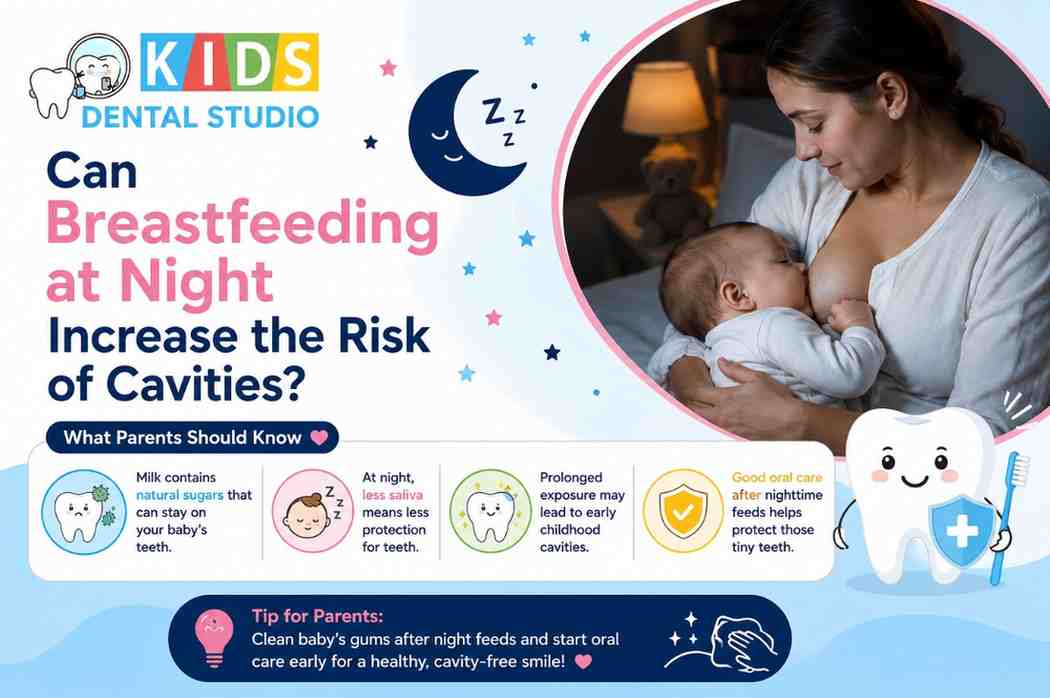
One of the most important factors linked to Night Time Feeding is the natural reduction in saliva production during sleep.
Saliva helps to:
- Wash away food particles
- Neutralize harmful acids
- Protect tooth enamel
- Maintain a healthy oral environment
When a child sleeps, saliva production decreases significantly. If milk remains on the teeth for extended periods, bacteria may have more opportunity to produce acids that affect enamel.
Teeth Remain Exposed for Longer Periods
During daytime feeding, children swallow frequently and remain active, helping clear residue from the mouth.
At night:
- Feeding may occur multiple times
- Milk can remain on tooth surfaces longer
- Teeth may not be cleaned afterward
- Bacterial activity continues while the child sleeps
This is why dentists often discuss nighttime feeding habits when evaluating cavity risk.
Does Breastfeeding Directly Cause Cavities?
The simple answer is no.
Breastfeeding alone is not considered the direct cause of tooth decay. Breast milk contains valuable nutrients that support infant development and overall health.
However, cavity risk may increase when breastfeeding is combined with:
Frequent Overnight Feeding
As children grow older and develop more teeth, repeated overnight feedings may expose teeth to sugars more frequently.
Lack of Oral Hygiene
When teeth are not cleaned regularly, bacteria and plaque can accumulate more easily.
Existing Plaque Buildup
Children who already have plaque accumulation may be more susceptible to enamel damage.
Delayed First Dental Visits
Without professional monitoring, early signs of dental problems may go unnoticed.
The concern is not breastfeeding itself but the combination of feeding frequency, oral hygiene habits, and a child's overall cavity risk.
Signs Parents Should Watch For
Early detection can prevent more serious dental problems later.
White Chalky Areas
These spots may be among the earliest signs of enamel weakening.
Yellow or Brown Discoloration
Visible color changes can indicate developing decay.
Plaque Near the Gum Line
Sticky deposits around the teeth may suggest bacterial buildup.
Increased Sensitivity
Children may become uncomfortable when consuming cold, hot, or sweet foods.
Difficulty Chewing
Pain or discomfort while eating should always be professionally evaluated.
Parents who notice these symptoms should schedule an appointment at a Pediatric Dental Clinic as soon as possible.
How Parents Can Protect Their Child's Teeth
Clean the Gums Before Teeth Appear
Oral care should begin before the first tooth erupts.
Parents can gently wipe the gums using:
- A soft cloth
- Damp gauze
- Infant oral wipes recommended by dental professionals
This helps remove milk residue and establish healthy habits early.
Brush Once Teeth Erupt
As soon as the first tooth appears, brushing should become part of the daily routine.
Using a soft-bristled toothbrush helps remove plaque and reduce bacterial buildup.
Consistent brushing is one of the most effective ways to prevent childhood cavities.
Schedule Early Dental Visits
Many parents wait until a problem develops before seeing a dentist.
Preventive visits allow dental professionals to:
- Monitor oral development
- Assess cavity risk
- Provide feeding-related advice
- Detect problems early
Regular visits to a Pediatric Dental Clinic are an important part of preventive care.
Create Healthy Bedtime Habits
A healthy bedtime routine might include:
- Feeding your child
- Cleaning gums or brushing teeth
- Providing comfort through non-feeding methods
- Encouraging regular sleep patterns
Small routine changes can have long-term benefits for oral health.
Why Baby Teeth Deserve Special Protection
Some parents believe baby teeth are not important because they eventually fall out.
In reality, primary teeth play a critical role in:
- Speech development
- Proper chewing
- Nutrition
- Jaw growth
- Guiding permanent teeth into place
Protecting baby teeth helps support healthy oral development and may reduce future orthodontic concerns.
The Role of Preventive Pediatric Dentistry
Preventive dental care focuses on keeping problems from developing in the first place.
A pediatric dentist can help parents understand:
- Feeding-related cavity risks
- Proper brushing techniques
- Oral hygiene schedules
- Dietary recommendations
- Growth and development milestones
Professional guidance is especially valuable during infancy and early childhood when oral habits are being established.
Conclusion
Breastfeeding remains one of the most beneficial ways to nourish and comfort a growing child. While Night Time Feeding does not automatically cause cavities, it can become one factor among several that influence oral health when proper hygiene practices are overlooked. The good news is that most dental concerns associated with nighttime feeding can be reduced through simple preventive measures, including regular cleaning, early dental visits, and healthy bedtime routines.
Parents do not need to choose between breastfeeding and oral health. With the right approach, children can enjoy the benefits of breastfeeding while developing strong, healthy smiles that last well beyond childhood.
Do you have questions about Night Time Feeding, cavity prevention, or your child's developing teeth? The experienced team at Kids Dental Studio, a trusted Pediatric Dental Clinic in Ahmedabad, is here to help. Schedule a consultation today for personalized guidance on infant oral care, preventive dentistry, and maintaining a healthy smile from the very beginning.