Peanut Protein Bar, No Sugar, and Actually Tasty | What to Look For in the Best Protein Bars in India
-

- August 05th, 2026
- 25 views

FREE SEO Topical Map Generator: Find Your Next Content Ideas
Walk into any gym in India right now and you will find at least three people carrying a protein bar in their bag.
Walk into a supermarket and you will find an entire shelf of them with different brands, different flavours, different claims on the packaging.
Most of them are not what they look like.
High sugar hiding behind "natural sweeteners." Protein numbers that sound impressive until you read the serving size. Ingredient lists that run 30 lines long with names nobody can pronounce. A peanut protein bar that is more corn syrup than peanut.
This guide cuts through all of it: what actually makes a good protein bar, what to avoid, and why the best protein bars in India right now are the ones built around real ingredients and zero added sugar.
The best protein bars in India are ones with 10–15g protein, no added sugar, real whole-food ingredients, and a clean label you can actually read. A good peanut protein bar should lead with peanuts and protein not sugar, corn syrup, or refined oil. No sugar protein bars are not a marketing trend, they are the only kind worth buying if daily nutrition is the goal.
Why Most Protein Bars in India Fail the Label Test
The protein bar market in India has grown fast. The quality has not kept up.
Most bars sold in India including popular imported brands share the same structural problem: they are built to taste good first and be nutritious second. The result is a product that looks like a health food and functions like a candy bar.
Here is what to look for on the label before you buy anything.
Added Sugar Is the First Red Flag
Turn any protein bar over and find the ingredients list. If you see sugar, glucose syrup, corn syrup, fructose, or dextrose in the first five ingredients, put it back. These are all forms of added sugar that spike blood sugar, cause an energy crash, and directly undo the satiety benefit that protein is supposed to provide.
A genuine no sugar protein bar uses natural sweetness from whole foods like dates not refined sugar added to make a cheap base taste better.
Protein Source Matters More Than the Number
A bar claiming 20g protein is not automatically better than one with 12g. What matters is the source and completeness of that protein.
Pea protein is plant-based and complete. Whey is dairy-based, fast-absorbing, and effective for muscle recovery. Soya is an amino acid variety. A blend of these like what a quality peanut protein bar uses gives you a broader amino acid profile than a single-source bar.
What does not give you a good amino acid profile: collagen protein, which shows up in many bars marketed as high-protein but is an incomplete protein that does not support muscle synthesis the way a complete protein does.
The Ingredient List Should Read Like Food
Count how many ingredients you recognise. In a quality no sugar protein bar you should recognise most of them oats, nuts, seeds, dates, peanuts, pea protein, whey.
What Makes a Good Peanut Protein Bar
The peanut protein bar is one of the most popular formats in India and one of the most variable in quality. Here is what separates a genuinely good one from one that just tastes like peanut butter.
Peanuts should be high on the ingredient list
A peanut protein bar that lists peanuts fifth or sixth is using peanuts for flavour, not nutrition. The first few ingredients are where the bulk of the product comes from. If peanuts and protein sources are at the top that is a good sign.
It should have a complete protein blend
Peanuts alone are not a complete protein source; they are low in certain essential amino acids. A quality peanut protein bar uses a protein blend alongside peanuts to ensure complete amino acid coverage. MyBodyBox's peanut bar uses a pea, whey, and soya blend giving you plant and dairy protein together for broader coverage.
Note: because the peanut bar contains whey, it is not suitable for vegans or those with dairy intolerance. The Choco Almond variant is pea protein only for those who need a dairy-free option.
No added sugar sweetness from dates only
Peanut butter is naturally slightly sweet. A good peanut protein bar does not need refined sugar added — dates provide enough natural sweetness while also contributing fibre and micronutrients. If a peanut bar has added sugar on top of dates, it is overcompensating for poor quality ingredients.
Satisfying enough to replace a snack
The whole point of a peanut protein bar is that it is filling. It should have enough protein, healthy fat from peanuts, and fibre to keep you full for 2–3 hours. A bar that leaves you hungry 45 minutes later is not doing its job.
No Sugar Protein Bars — What "No Added Sugar" Actually Means
There is a difference between "no sugar" and "no added sugar" and it matters.
No added sugar means no refined sugar, corn syrup, glucose, or fructose has been added during manufacturing. The bar may still contain natural sugars from whole foods like dates or nuts and that is completely fine. Natural sugars in whole foods come packaged with fibre, which slows absorption and prevents the blood sugar spike that refined sugar causes.
Zero sugar is a stricter claim meaning no sugar of any kind, including natural sugars from whole foods. Most genuinely nutritious bars do not make this claim because dates and nuts naturally contain some sugar. Be sceptical of bars claiming zero sugar while listing dates or fruit the claim is often misleading.
The MyBodyBox no sugar protein bars use dates for natural sweetness and make a "no added sugar" claim which is accurate and honest. Natural sugars from whole foods in a high-fibre, high-protein bar behave completely differently in your body than refined added sugar.
What Are the Best Protein Bars in India Right Now?
Here is what the best protein bars in India actually look like regardless of brand:
10–15g protein per bar — meaningful contribution to daily protein without overpromising
No added sugar — sweetened only from whole-food sources like dates
Real ingredient base — oats, nuts, seeds, pea protein, whey not refined flour or corn syrup as the base
Clean label — under 15 ingredients, all recognisable
Functional additions — ingredients that do something beyond basic protein. Creatine supports strength and performance. L-Glutamine supports muscle recovery and gut health. A bar that includes both gives gym-goers something they would otherwise need to supplement separately.
Flavour variety that holds up on repeat — you are eating this bar multiple times a week. It needs to taste good on day 30, not just day one.
MyBodyBox Protein Bars — Built Around These Principles
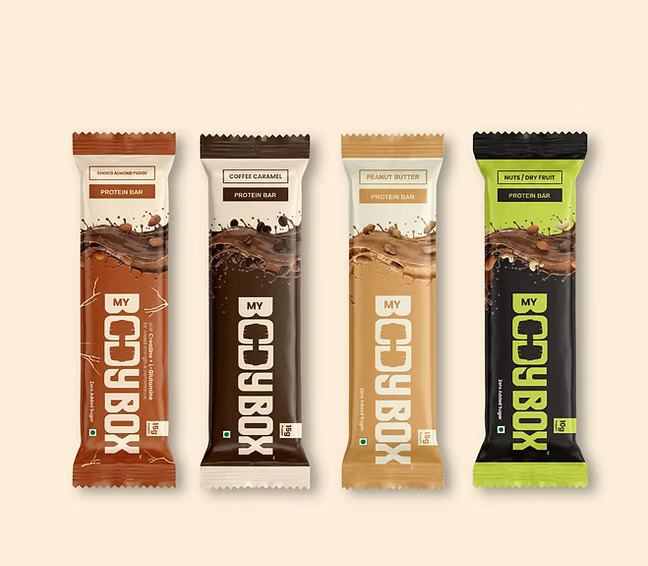
The MyBodyBox Protein Bar range is India's first protein bar formulated with both Creatine and L-Glutamine making it the only bar in India that covers gym performance and recovery in a single product alongside 10–15g protein and no added sugar.
Here is what each variant actually contains:
Choco Almond Fudge
15g protein from pea protein is fully plant-based. No added sugar. Rich chocolate taste with real almond pieces. Powered with Creatine. ₹129.
Peanut Butter Protein Bar
15g protein from a pea, whey, and soya blend. Not vegan contains whey and soya. No added sugar. Real peanut butter base, genuinely filling, and one of the highest protein bars available in India at this price point. ₹129.
Coffee Caramel
15g protein. Sweetened with dates. Coffee and caramel flavour without artificial flavouring. For adults who want their caffeine and their protein in the same place. ₹129.
Nutty Bar
10g protein. No added sugar. High fiber. Built around nuts and seeds, a lighter option for clean daily snacking rather than post-gym recovery. ₹149.
All bars are FSSAI Licensed and Lab Tested. No refined oils. No artificial flavours. No synthetic fillers.
Who Should Be Eating Protein Bars
Protein bars are not just for gym-goers. Here is who benefits most from a daily clean best protein bar:
Gym-goers and active adults
Pre-workout fuel or post-workout recovery the Creatine and L-Glutamine in MyBodyBox bars make them functional for both. No need to carry separate Creatine powder.
Busy working professionals
The 3pm vending machine snack is almost always sugar and refined carbs. A no sugar protein bar replaces it with 15g protein and no blood sugar crash better focus through the afternoon.
Women managing weight
High protein keeps you fuller for longer and reduces cravings. A no added sugar peanut protein bar as an afternoon snack reduces total daily calorie intake without requiring willpower because you are genuinely not hungry.
Teenagers and adolescents
Growing bodies need consistent protein. A clean protein bar with no added sugar, real ingredients is a far better after-school snack than biscuits or chips.
Protein Bar Before or After Workout — Does It Matter?
Both work. Here is the simple distinction:
Before workout: eat the bar 30–45 minutes before. The protein and complex carbohydrates from oats provide sustained energy through the session without causing heaviness.
After workout: eat within 30–60 minutes of finishing. The protein supports muscle repair. The Creatine in MyBodyBox bars supports recovery alongside the L-Glutamine that reduces post-workout soreness.
If you can only eat one post-workout it is slightly more important for muscle recovery. But the difference is small. Consistency matters more than timing, eating a quality no sugar protein bar every day produces better results than perfectly timing a mediocre one.
How to Read a Protein Bar Label in 60 Seconds
Next time you pick up a protein bar — do this before buying:
Step 1 — Check ingredients list position 1–3
If sugar, corn syrup, or glucose is in the first three — put it back.
Step 2 — Check protein source
Is it pea, whey, soya, brown rice? Good. Is it collagen? Not a complete protein skip it.
Step 3 — Check protein per serving vs bar weight
A 60g bar with 15g protein is reasonable. A 100g bar with 15g protein is mostly carbs.
Step 4 — Count ingredients
Under 15 clean. Over 25 heavily processed.
Step 5 — Check for Creatine or L-Glutamine
Most bars do not have these. If they do and the rest of the label checks out, that is a genuinely functional bar worth buying.
FAQ — People Also Ask
Are no sugar protein bars actually healthy?
Yes when made from real whole-food ingredients with no added sugar. No added sugar protein bars sweetened with dates provide natural sweetness alongside fibre and micronutrients that refined sugar does not. They are significantly healthier than standard snack bars and most mainstream protein bars that contain added sugar.
What is the best protein bar in India for gym?
The best protein bar for gym use in India should have 12–15g complete protein, no added sugar, and functional ingredients that support performance and recovery. The MyBodyBox Protein Bar is currently the only bar in India formulated with both Creatine and L-Glutamine alongside 15g protein and no added sugar.
Is a peanut protein bar good for weight loss?
Yes when it has no added sugar and high protein. Peanut protein bars are filling because of the protein and healthy fat content from peanuts, which reduces overall calorie intake by keeping you full. Avoid peanut protein bars with added sugar; they add calories without the satiety benefit.
How many protein bars can I eat in a day?
One to two is sufficient for most people as a snack replacement. Protein bars should supplement your diet not replace meals. Two bars per day provides 20–30g additional protein enough to close a moderate daily protein gap without adding excess calories.
Are MyBodyBox protein bars vegan?
Not all of them. The Choco Almond Fudge bar uses pea protein only and is suitable for vegans. The Peanut Butter bar uses a pea, whey, and soya blend and contains dairy; it is not vegan. Always check the individual product label for your dietary requirements.
What makes MyBodyBox protein bars different from other brands?
MyBodyBox bars are India's first protein bars formulated with both Creatine and L-Glutamine alongside 10–15g protein and no added sugar. Most Indian protein bars offer protein alone. The addition of Creatine for performance and L-Glutamine for recovery makes these functionally different not just as a snack but as a complete gym nutrition product.
Can teenagers eat protein bars?
Yes when the bar has no added sugar and real ingredients. A clean protein bar is a significantly better after-school or post-sport snack than biscuits or chips. For younger children aged 2–12, the MyBodyBox Kids Protein Mix is the more appropriate age-specific option.
The Bottom Line
The best protein bars in India are not the ones with the biggest claims on the front of the packaging. They are the ones with the cleanest ingredient list on the back.
No added sugar. Real protein from recognisable sources. A peanut protein bar that leads with peanuts and protein not corn syrup. Functional additions like Creatine and L-Glutamine that actually do something beyond basic nutrition.
The MyBodyBox Protein Bar range Choco Almond, Peanut Butter, Coffee Caramel, and Nutty is built on exactly these principles. 10–15g protein. No added sugar. India's first Creatine + L-Glutamine bar. FSSAI Licensed. Lab Tested.
Available at mybodybox.in/proteinbars · Amazon India · Flipkart
Starting at ₹129 per bar.