Cricket and Football Knee Injuries: A Complete Guide for Athletes
-

- August 05th, 2026
- 23 views


FREE SEO Topical Map Generator: Find Your Next Content Ideas
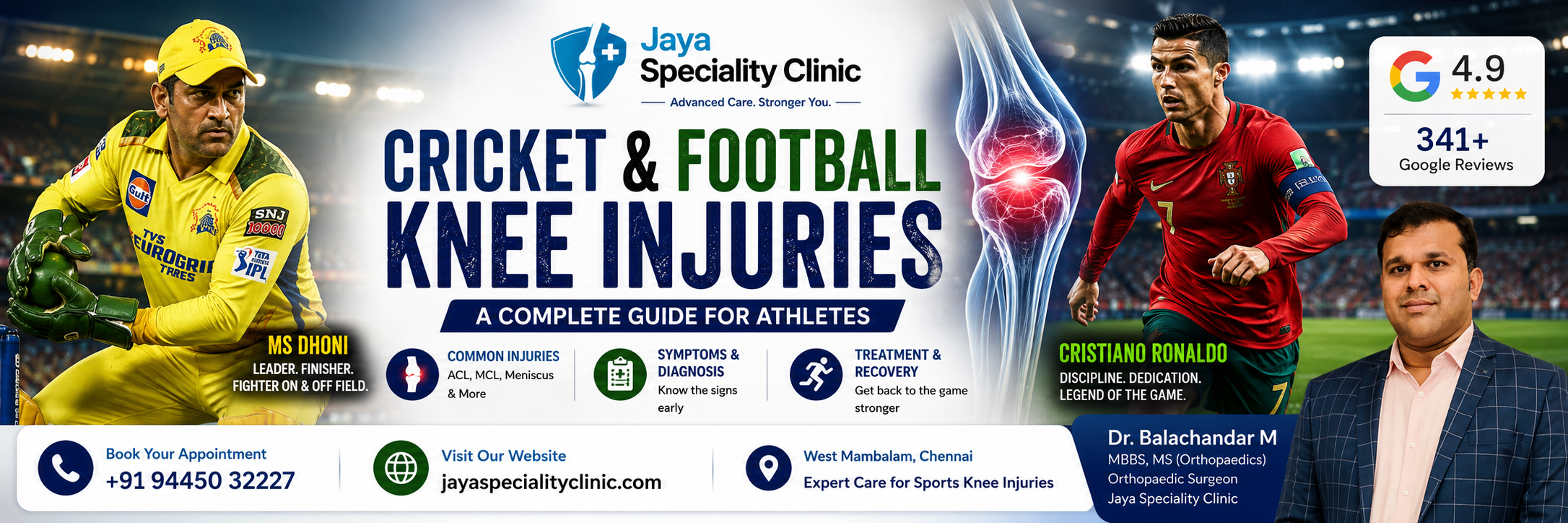
Cricket and football knee injuries are among the most common problems athletes face. Whether you are a professional player, a college athlete, or someone who enjoys weekend matches in Chennai, ignoring knee pain can affect your performance and confidence. The sudden sprints, sharp turns, and aggressive joint movements in these sports put massive pressure on the knee joint.
The good news is that many knee injuries can improve with proper assessment, structured rehabilitation, and the right approach to recovery.
Why Are Knee Injuries So Common in Cricket and Football?
Cricket and football involve repeated high-impact movements. Players constantly accelerate, stop suddenly, jump, twist, and maintain balance while competing. These movements create stress on the knee joint.
Football players often experience injuries during quick direction changes, tackles, or sudden stops. Cricket players may develop knee problems from repeated bowling actions, fast running between wickets, jumping, or awkward fielding positions.
Common reasons behind sports knee injuries include:
•Sudden twisting movements
•Incorrect landing techniques
•Poor warm-up routines
•Muscle weakness or imbalance
•Overtraining without enough recovery
•Previous untreated injuries
Many athletes continue playing through discomfort because they do not want to miss matches. However, ignoring early warning signs can lead to worsening symptoms and reduced athletic performance.
Most Common Cricket and Football Knee Injuries
To understand knee injuries, it helps to know how the knee works. The knee contains important supporting structures, including the Anterior Cruciate Ligament (ACL), Posterior Cruciate Ligament (PCL), Medial Collateral Ligament (MCL), Lateral Collateral Ligament (LCL), meniscus, tendons, and cartilage. These structures work together to provide stability, strength, and smooth movement. When one of these areas gets injured, athletes may experience pain, swelling, instability, or difficulty performing sports activities.
ACL Tear and Ligament Injuries
An ACL tear is one of the most discussed injuries among athletes. The ACL helps control knee stability, especially during sudden movements and changes in direction. A recent study of 638 elite Indian athletes found that kabaddi and football accounted for the highest percentage of ACL injuries, followed by cricket .
ACL injuries commonly occur when a player:
•Changes direction quickly
•Lands incorrectly after jumping
•Stops suddenly while running
•Receives direct impact to the knee
Common ACL injury symptoms include sudden knee pain, swelling, feeling that the knee is unstable, and difficulty continuing activity.
Meniscus Injuries
The meniscus acts as a cushion between the bones of the knee. A sudden twist or rotation can damage this cartilage. Meniscus injuries may cause knee stiffness, pain during movement, swelling, and difficulty bending or straightening the knee. Athletes with meniscus problems often notice discomfort while running, squatting, or changing direction.
MCL and PCL Injuries
The Medial Collateral Ligament (MCL) and Posterior Cruciate Ligament (PCL) also help maintain knee stability. MCL injuries often happen because of impact from the outer side of the knee, while PCL injuries can occur due to forceful impact or excessive pressure on the knee. Proper evaluation helps determine the severity and the right rehabilitation plan.
How Do Injuries in Cricket Compare to Football?
While both sports cause knee pain, the mechanics of the injury often differ.
Feature |
Cricket Knee Injuries |
Football Knee Injuries |
Primary Cause |
Repeated bowling actions, fast running between wickets, awkward fielding dives |
Sudden direction changes, tackles, pivoting, landing incorrectly after jumps |
Most Common Injury |
Meniscus tears, patellar tendinitis (jumper's knee) |
ACL tears, MCL sprains |
Recovery Focus |
Gradual return to repetitive throwing/bowling motions |
Restoring explosive power and lateral stability |
Prevention Strategy |
Proper bowling technique, workload management |
Warm-up drills focusing on pivoting and landing mechanics |
If you experience constant radiating pain, consult Jaya Speciality Clinic for a proper diagnosis.
Knee Injury Symptoms Athletes Should Not Ignore
Many players initially ignore knee discomfort, thinking it will disappear after rest. Sometimes mild pain improves, but repeated symptoms need attention.
Common knee injury symptoms include:
•Sudden knee pain after playing
•Severe knee discomfort
•Swelling around the joint
•Painful movement
•Difficulty running
•Difficulty walking
•Limited mobility
•Feeling of knee instability
Some athletes also experience frustration after injury because they cannot perform at their previous level. The fear of missing matches or losing fitness can affect confidence. Early assessment can help athletes understand the problem and return to activity safely.
Treatment and Rehabilitation for Knee Injuries
Treatment depends on the type and severity of the injury. Some athletes recover with rehabilitation, while serious injuries may require additional medical procedures.
Non-Surgical Treatment Options
Many athletes in Chennai prefer conservative, non-surgical treatments to avoid long recovery times. At our ACL and Ligament Injury Treatment Center in Chennai, we specialize in advanced, non-surgical care.
Treatment typically includes:
•Sports Physiotherapy: Targeted exercises to improve strength, mobility, and balance.
•PRP Therapy: Platelet-Rich Plasma injections to accelerate tissue healing.
•Radiofrequency (RF) Ablation: A minimally invasive procedure to block chronic pain signals.
Surgical Treatment
In severe ligament injuries, surgical repair becomes necessary. Advanced cases may require expert consultation with an orthopedic specialist. In long-term damage or joint failure cases, patients may consider knee replacement, especially when mobility reduces significantly.
How Athletes Can Prevent Knee Injuries
Prevention is always better than spending months away from the game.
Athletes can protect their knees by:
•Performing proper warm-up exercises
•Strengthening leg muscles
•Improving flexibility
•Using correct playing techniques
•Wearing suitable sports footwear
•Taking adequate recovery breaks
A strong and balanced body helps athletes handle the physical demands of cricket and football.
Frequently Asked Questions
1. What is the most common knee injury in cricket?
The most common knee injuries in cricket are meniscus tears and patellar tendinitis, often caused by repeated bowling actions or awkward fielding dives.
2. Can cricket knee injuries heal without surgery?
Yes. Many mild to moderate knee injuries, including minor meniscus tears and sprains, can heal without surgery through structured physiotherapy and non-surgical treatments like PRP therapy.
3. How long does it take to recover from a knee injury in sports?
Recovery time varies by injury. Minor sprains may take 2 to 4 weeks, while an ACL tear requiring surgery can take 6 to 9 months for a full return to sports.
4. Can I play sports after an ACL injury?
Yes, you can return to sports after an ACL injury, but it requires proper treatment, surgery (if necessary), and a strict rehabilitation program to restore knee stability and strength.
5. How to prevent knee injuries in cricket and football?
You can prevent knee injuries by performing proper warm-ups, strengthening your leg muscles, improving flexibility, using correct playing techniques, and allowing adequate recovery time.
Take Control of Your Knee Health Today
Knee injuries can really affect how well an athlete plays, their confidence, and how much they enjoy the game. When you know what to look out for with knee injuries in cricket and football, like the symptoms and what causes them, you can do something about it before it gets worse.
Don't just leave knee pain or trouble moving around. Get a check-up and a plan to help you get better, and your knees will thank you in the long run.
If you've hurt your knee playing sports, need some expert advice? Contact Jaya Speciality Clinic in West Mambalam, Chennai at +91 94450 32227. They can give you a check-up and help you get back to your normal routine with a personalized plan.