Choosing Between Polyester and Wooden Acoustic Panels in Qatar: Which Wall Treatment Is Right for Your Project?
-

- August 01st, 2026
- 60 views

FREE SEO Topical Map Generator: Find Your Next Content Ideas
Selecting the right acoustic wall treatment is about more than aesthetics. Every space has unique acoustic requirements depending on its purpose, occupancy, and architectural design. Recording studios demand accurate sound absorption, offices prioritize speech clarity, while hospitality venues seek a balance between noise control and visual appeal. Two of the most widely specified solutions in Qatar are polyester acoustic panels and timber-based acoustic systems. Understanding how these materials perform helps architects, contractors, acousticians, and facility managers make informed decisions that improve both acoustic comfort and long-term project value.
How Polyester and Wooden Acoustic Panels Improve Room Acoustics
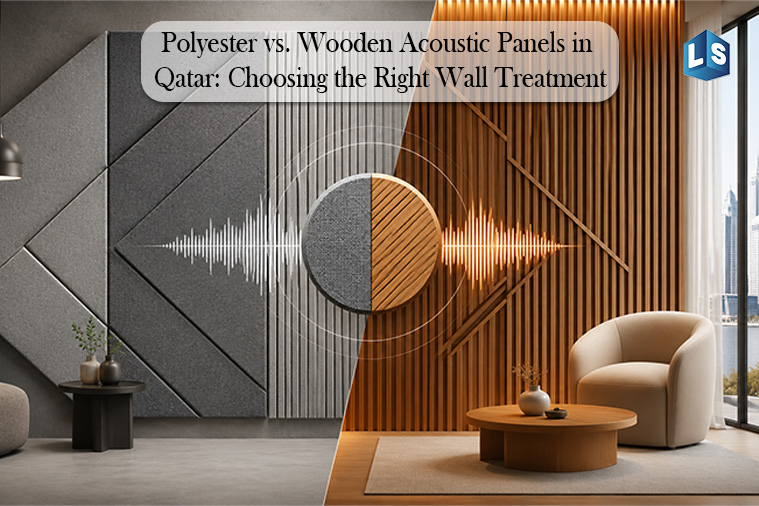
Although both products are designed to enhance indoor acoustics, they achieve this in different ways. Polyester panels are manufactured from compressed PET fibres that absorb sound by trapping airborne sound waves within their porous structure, reducing reverberation and echo. Wooden systems primarily combine timber slats with an acoustic backing that absorbs sound passing between the slats while allowing the timber surface to provide an attractive architectural finish. The choice between the two depends largely on the required reverberation time, interior design objectives, and installation environment. In many commercial projects, designers even combine multiple acoustic treatments to achieve balanced performance across different sound frequencies while maintaining an appealing interior appearance.
Choosing the Right Solution for Different Room Types
Every environment presents different acoustic challenges, making product selection an important design decision. Offices, classrooms, meeting rooms, healthcare facilities, and public buildings often benefit from polyester panels because they deliver consistent sound absorption, are lightweight, and can be installed across large wall areas. Premium commercial interiors, hospitality venues, executive boardrooms, and luxury residences frequently specify wooden acoustic panels in Qatar where aesthetics are equally important as acoustic performance. Recording studios, theatres, and auditoriums may require a combination of absorptive panels and reflective timber finishes to maintain natural sound characteristics without excessive reverberation. Selecting the right solution should always be based on acoustic calculations rather than appearance alone to ensure the finished space performs as intended.
Common Mistakes Buyers Should Avoid
One of the most common misconceptions is assuming all acoustic wall panels deliver the same level of performance. In reality, factors such as panel thickness, density, mounting method, air gap, and room dimensions significantly influence sound absorption. Another frequent mistake is choosing decorative finishes without considering the room's acoustic objectives, resulting in spaces that still experience echo or poor speech intelligibility. Some buyers also expect acoustic panels to completely block sound transmission through walls, although their primary role is to control reflections inside the room rather than provide full soundproofing. Professional acoustic assessment helps determine the appropriate quantity, placement, and combination of treatments before installation begins, avoiding expensive modifications later in the project.Selecting the right solution should always be based on acoustic calculations rather than appearance alone to ensure the finished space performs as intended.
Installation Considerations for Qatar's Climate
Qatar's environmental conditions require careful planning during acoustic installations. High temperatures, thermal movement, and continuous air-conditioning cycles make correct fixing methods essential for maintaining long-term durability. Installers should ensure wall substrates are clean, dry, and structurally sound before mounting acoustic panels. Moisture resistance, fire performance, and ease of maintenance should also be considered when specifying materials for commercial buildings, educational institutions, healthcare facilities, and hospitality projects. Timber finishes, including wooden acoustic slats, should be installed with suitable expansion allowances where recommended by the manufacturer to accommodate environmental changes while preserving their appearance and structural integrity. Proper installation ensures that acoustic performance remains consistent throughout the life of the building.
Choosing the Right Acoustic Wall Treatment for Your Project
The most effective acoustic solution is one that balances technical performance with architectural design requirements. Polyester panels provide excellent broadband sound absorption and practical installation for many commercial environments, while timber acoustic systems offer premium aesthetics alongside effective acoustic control. The ideal specification depends on the building's function, interior design goals, occupancy levels, and required acoustic performance. Working with experienced acoustic suppliers ensures the correct products are selected, positioned, and installed to meet project objectives without unnecessary costs. L S Trading (LST) supplies a comprehensive range of acoustic wall treatments, including polyester panels, timber acoustic systems, and complementary soundproofing materials for projects across Qatar. Consulting LST's technical team helps ensure every solution is tailored to your space, delivering reliable acoustic performance and long-term value.
Originally published on : https://www.lstcco.com/polyester-vs-wooden-acoustic-panels-in-qatar-choosing-the-right-wall-treatment/
Related Posts