Soapstone Countertops: The Quiet Elegance of Natural Stone
-

- July 29th, 2026
- 27 views

FREE SEO Topical Map Generator: Find Your Next Content Ideas
When people think about countertop materials, granite and quartz are usually the first names that come to mind. But there's another natural stone that's been quietly earning devoted fans for generations: soapstone. With its smooth, velvety texture and understated beauty, soapstone offers something different from the shinier, more polished surfaces that dominate today's kitchens — a material with real warmth, history, and personality.
What Exactly Is Soapstone?
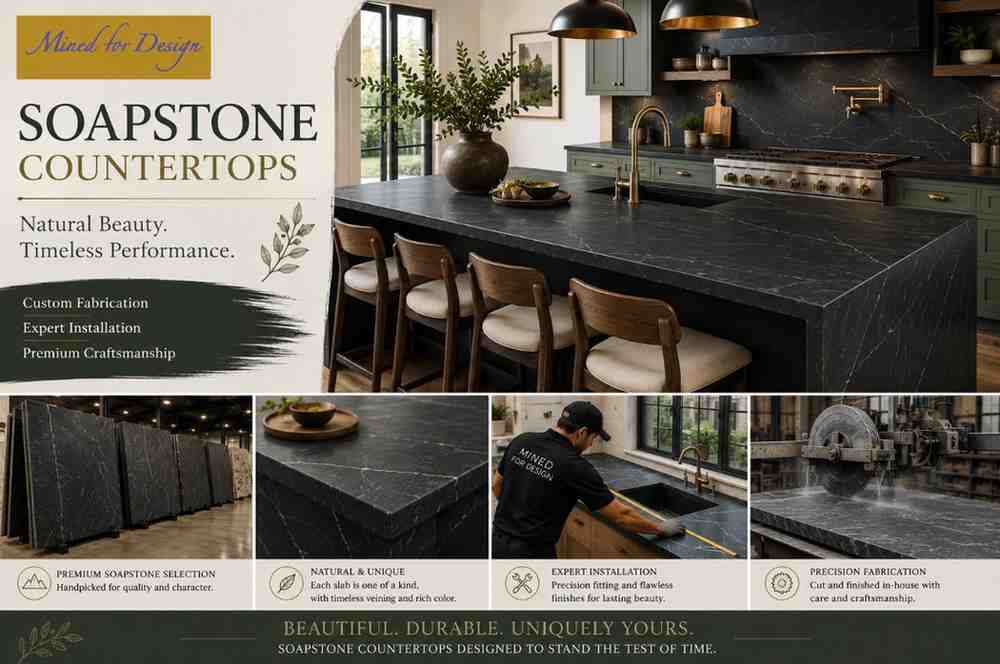
Soapstone forms deep underground through a slow geological process involving intense heat and pressure over millions of years. It's composed primarily of talc, which is what gives the stone its signature soft, smooth feel. Unlike granite, marble, or quartzite, soapstone has a softer, more organic look that changes and deepens over time rather than staying static.
Every slab of soapstone is different. Natural veining, subtle color shifts, and unique markings mean that no two installations ever look exactly alike. For homeowners who want a material with real character rather than a uniform, factory-made appearance, that individuality is a major draw.
Soapstone also has a long history of practical use. It's been used for centuries in kitchens, laboratories, and historic buildings, largely because of its impressive durability and its natural resistance to heat and chemicals. That track record gives it a level of credibility that newer engineered materials simply haven't had time to build.
The Benefits That Set Soapstone Apart
Soapstone brings together a distinctive combination of qualities that few other countertop materials can match:
- It's 100% natural stone, quarried rather than manufactured
- It's naturally non-porous, so it resists moisture without needing to be sealed
- No sealing is required at all, which saves both time and ongoing maintenance
- It offers excellent resistance to heat, making it a natural fit for cooking areas
- It resists staining and bacteria thanks to its non-porous structure
- It develops a rich, natural patina as it ages, deepening in color and character
- Every slab has its own unique veining and personality
- It's relatively easy to maintain and, when needed, easy to restore
That combination of low maintenance and evolving beauty is part of why soapstone has such a loyal following among homeowners who appreciate materials that feel authentic rather than mass-produced.
What It's Actually Like to Live With Soapstone
Living with soapstone is a genuinely different experience compared to other stone countertops, and that difference is part of the appeal. Because it's naturally non-porous, soapstone doesn't need to be sealed, and it holds up remarkably well against staining. Day-to-day cleaning is refreshingly simple — mild soap and water are usually all it takes to keep the surface looking its best.
One of soapstone's most distinctive traits is how it changes over time. As it's used, soapstone naturally darkens and develops a patina that many homeowners find adds depth and richness to the material. Some choose to speed up or enhance this process by periodically applying mineral oil, which brings out a deeper, more uniform color. This step is entirely optional, though, and plenty of homeowners simply let the stone age naturally at its own pace.
It's worth noting that soapstone is softer than materials like granite or quartzite, which means minor scratches can happen with everyday use. The good news is that these scratches are typically easy to blend or repair, and many homeowners actually embrace them as part of the stone's evolving, lived-in character rather than seeing them as a flaw. In a world of countertops designed to look untouched forever, soapstone offers something refreshingly honest.
Colors and Design Styles
Soapstone's color palette is more limited and understated than some other natural stones, but that restraint is exactly what gives it such a distinctive, grounded aesthetic. Popular options include:
- Soft gray soapstone with subtle tonal variation
- Deep charcoal and near-black soapstone for a dramatic, moody look
- Soapstone featuring bold white veining
- Rustic and farmhouse-style applications
- Traditional designs suited to historic homes
- Honed, matte finishes that emphasize the stone's natural texture
Because of its earthy, timeless quality, soapstone tends to pair especially well with farmhouse kitchens, historic renovations, and interiors that lean toward natural materials and warm, layered textures.
Where Soapstone Works Best
Soapstone's versatility means it isn't limited to a single room or application. Popular uses include:
- Kitchen countertops
- Kitchen islands
- Bathroom vanities
- Laundry rooms
- Wet bars
- Fireplace surrounds
- Hearths
- Accent walls
- Backsplashes
- Historic home renovations
Its natural resistance to heat and moisture makes soapstone especially well suited to kitchens and fireplace installations, where those qualities really get put to the test.
Common Questions About Soapstone
Does soapstone need to be sealed? No. Because it's naturally non-porous, soapstone doesn't require sealing.
Can soapstone stain? It's highly resistant to staining, since it doesn't absorb liquids the way many other natural stones do.
Does soapstone scratch easily? It's softer than granite and quartzite, so some scratching can occur with regular use. Minor scratches are usually easy to blend or repair, and they often become less noticeable as the stone ages.
Why do people use mineral oil on soapstone? Mineral oil deepens the stone's color and creates a more uniform, richer appearance. It's a matter of personal preference rather than a necessity.
Is soapstone heat resistant? Yes — soapstone is exceptionally heat resistant and has a long history of use around fireplaces, stoves, and other high-temperature settings.
Is Soapstone Right for Your Home?
Soapstone isn't trying to be the flashiest material on the market, and that's exactly its appeal. For homeowners drawn to natural materials with real depth, history, and personality, it offers something that engineered surfaces simply can't replicate — a countertop that changes and improves with age rather than one designed to look frozen in time.
Whether you're renovating a historic home, building a farmhouse-style kitchen, or simply looking for a material with genuine character, soapstone deserves serious consideration. Its blend of low maintenance, natural heat resistance, and evolving beauty makes it one of the more distinctive — and quietly practical — choices available for countertops today.
originally published on:
https://minedfordesign.com/soapstone