Warehouse Automation Market Potential Driven by Smart Logistics Expansion
-

- July 29th, 2026
- 37 views

FREE SEO Topical Map Generator: Find Your Next Content Ideas
The Warehouse Automation Market is gaining significant momentum as businesses seek faster, more accurate, and scalable ways to manage inventory and fulfill customer orders. Warehouses are no longer viewed only as storage facilities. They have become essential operational hubs that influence delivery speed, customer satisfaction, supply chain resilience, and overall business performance.
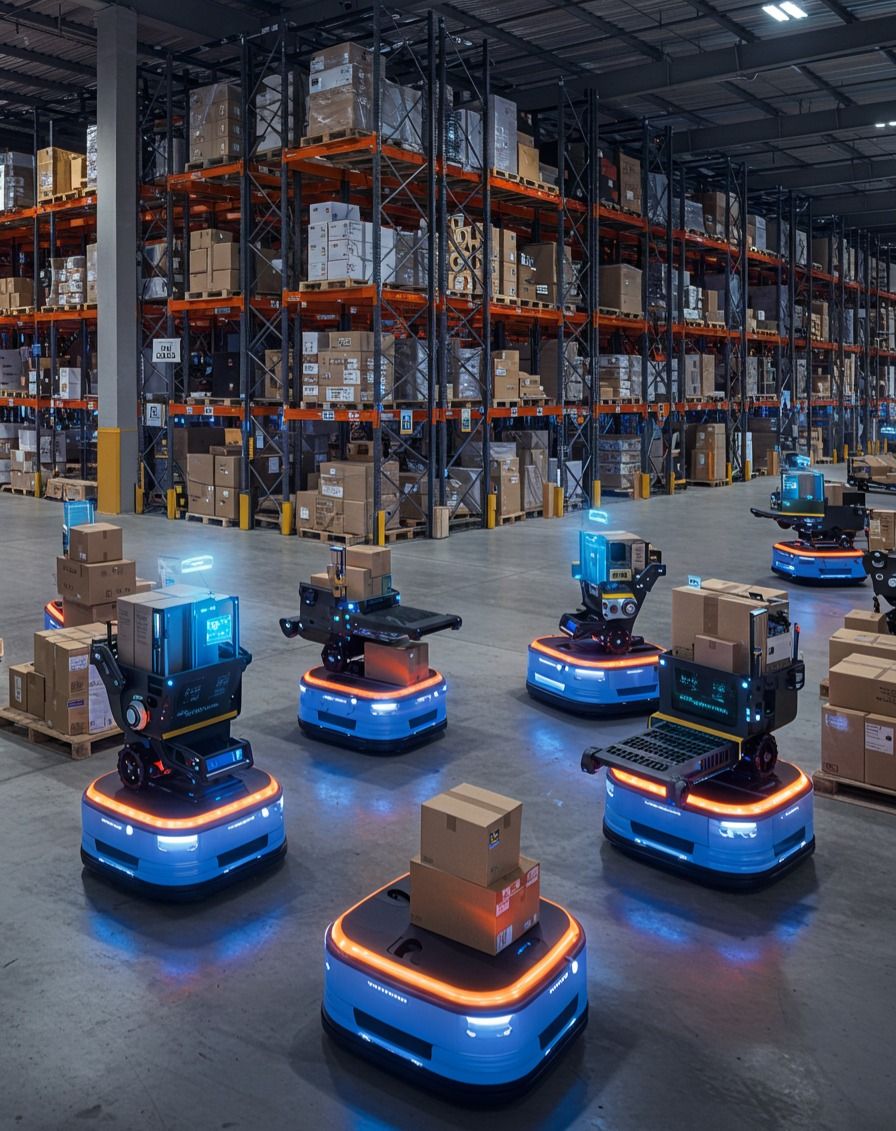
Automation technologies are helping warehouse operators reduce repetitive manual work, improve inventory visibility, and maintain consistent performance during periods of fluctuating demand. Solutions such as automated storage and retrieval systems, autonomous mobile robots, conveyor systems, robotic picking equipment, automated sorting technologies, warehouse management software, and intelligent analytics are reshaping warehouse operations across industries.
The growing need for efficient logistics networks is expanding the long-term potential of the Warehouse Automation Market. As companies handle larger product catalogs, shorter delivery expectations, and increasingly complex distribution requirements, automated systems are becoming important tools for improving operational agility.
Expanding E-Commerce Creates Strong Growth Potential
The continued expansion of e-commerce is one of the most important factors supporting the market’s potential. Online retailers must process large numbers of individual orders while meeting expectations for rapid and accurate delivery. Traditional warehouse processes can become difficult to manage when order volumes increase sharply or customer demand changes unexpectedly.
Warehouse automation enables faster product movement and more efficient order fulfillment. Automated picking systems can reduce travel time within facilities, while robotic solutions can support repetitive tasks such as transporting goods, sorting packages, and replenishing inventory. These capabilities allow companies to improve throughput without relying entirely on additional manual labor.
The Warehouse Automation Market is also benefiting from the growth of omnichannel retail. Businesses increasingly need to fulfill orders through physical stores, online platforms, distribution centers, and direct-to-customer channels. Automated warehouse systems can help coordinate inventory across these channels and support more flexible fulfillment strategies.
Rising Demand for Faster and More Accurate Operations
Speed is becoming a major competitive factor in logistics. Customers expect shorter delivery times, and businesses are under pressure to process orders efficiently while controlling operational costs. Automation can help warehouses increase the speed of receiving, storing, picking, packing, and shipping activities.
Accuracy is equally important. Incorrect orders may lead to returns, additional transportation expenses, customer dissatisfaction, and inventory discrepancies. Automated identification technologies, robotic systems, sensors, and software platforms can reduce the risk of errors by improving the consistency of warehouse workflows.
The Warehouse Automation Market has strong potential because automation addresses both speed and accuracy at the same time. Instead of focusing only on increasing output, automated systems can support more reliable and traceable operations throughout the fulfillment process.
Labor Challenges Strengthen Adoption Opportunities
Many warehouse operators face difficulties related to labor availability, employee turnover, training requirements, and the physical demands of warehouse work. Repetitive activities such as lifting, walking long distances, transporting heavy materials, and sorting products can be challenging to maintain at high volumes.
Automation provides an opportunity to redesign these workflows. Robots and automated equipment can handle repetitive or physically demanding tasks, while employees can focus on supervision, maintenance, quality control, exception handling, and other higher-value responsibilities.
This shift does not necessarily mean that warehouses will operate without people. In many facilities, automation is creating collaborative environments in which workers and machines perform complementary roles. Human employees can manage complex decisions, while automated systems handle predictable and repetitive processes.
As labor-related challenges continue, the Warehouse Automation Market may see increasing demand from companies seeking stable and scalable operating models.
Technological Innovation Broadens Market Scope
Advancements in robotics, artificial intelligence, machine vision, cloud computing, sensors, and data analytics are expanding the capabilities of warehouse automation solutions. Earlier systems often required fixed infrastructure and highly standardized workflows. Modern technologies are becoming more flexible and capable of adapting to changing warehouse conditions.
Autonomous mobile robots can navigate facilities and transport goods without depending entirely on fixed conveyor networks. Machine vision can support product identification, inspection, and sorting. Artificial intelligence can improve demand forecasting, inventory allocation, labor planning, and workflow optimization.
Cloud-based platforms also allow warehouse operators to monitor performance across multiple facilities. Real-time data can help managers identify delays, evaluate equipment utilization, and respond quickly to operational changes.
These developments increase the potential of the Warehouse Automation Market by making advanced solutions relevant to a broader range of warehouse environments.
Growing Adoption Among Small and Medium-Sized Businesses
Large logistics companies and major retailers have traditionally been early adopters of warehouse automation. However, the market’s future potential is increasingly linked to small and medium-sized businesses.
Flexible automation models are making adoption more accessible. Modular systems allow businesses to automate selected processes instead of redesigning an entire warehouse. Companies may begin with automated sorting, robotic transportation, or warehouse software and expand their systems as operational needs grow.
Robotics-as-a-service and subscription-based technology models may also reduce the need for substantial upfront investment. These approaches can help businesses access automation capabilities through more predictable operating expenses.
The expanding availability of scalable solutions creates new opportunities for the Warehouse Automation Market, particularly among organizations that previously considered advanced automation too expensive or complex.
Strong Potential Across Diverse Industries
The market is supported by demand from a wide range of industries. Retail and e-commerce remain major application areas, but automation is also becoming important in manufacturing, healthcare, food and beverage, automotive, consumer goods, electronics, pharmaceuticals, and third-party logistics.
Manufacturers use automated warehouse systems to manage components, raw materials, and finished products. Healthcare organizations may use automation to improve inventory control and support the efficient handling of medical supplies. Food and beverage companies can benefit from automated systems that improve product movement and support time-sensitive operations.
Cold storage facilities represent another promising area. These environments can be physically demanding for workers, making automation valuable for improving productivity and reducing employee exposure to extreme temperatures.
The diversity of applications reduces dependence on any single industry and supports the long-term expansion of the Warehouse Automation Market.
Data-Driven Warehousing Enhances Business Value
Modern warehouse automation is increasingly connected to data management and operational intelligence. Automated systems generate information about inventory movement, equipment performance, order processing, workflow efficiency, and facility utilization.
When analyzed effectively, this information can support better decision-making. Warehouse managers can identify bottlenecks, predict maintenance requirements, improve inventory placement, and optimize the use of available space.
Predictive analytics may also help businesses prepare for changes in demand. By combining historical information with real-time operational data, companies can improve workforce planning and inventory allocation.
The growing importance of data-driven operations adds another dimension to the market’s potential. Automation is not only improving physical processes; it is also helping businesses develop more intelligent and responsive supply chains.
Sustainability Creates New Opportunities
Sustainability goals are encouraging companies to improve resource efficiency throughout their logistics operations. Warehouse automation can support these objectives by reducing unnecessary product movement, improving space utilization, and optimizing energy use.
Automated systems may reduce travel distances and improve the efficiency of material handling. Intelligent software can support better warehouse layouts and minimize wasted capacity. Automated storage systems can also increase storage density, potentially reducing the need for additional warehouse space.
As organizations place greater emphasis on environmental performance, energy-efficient automation technologies may become increasingly important. This creates opportunities for solution providers that combine productivity improvements with sustainable operational benefits.
Challenges That May Influence Market Expansion
Despite strong potential, warehouse automation adoption can involve several challenges. Initial investment requirements may be significant, especially for large-scale projects involving advanced robotics, automated storage systems, and major facility redesigns.
Integration can also be complex. New automation technologies must work effectively with existing warehouse management systems, enterprise software, inventory platforms, and operational processes. Businesses may require specialized technical expertise to implement and maintain automated systems.
Cybersecurity and data protection are additional considerations as warehouses become more connected. Organizations must protect operational information and ensure the reliability of digital systems.
However, modular technologies, improved interoperability, and flexible deployment models are helping reduce some of these barriers. As solutions become easier to integrate and scale, adoption opportunities may continue to expand.
Future Outlook
The future potential of the Warehouse Automation Market remains strong as supply chains become faster, more connected, and increasingly dependent on real-time operational intelligence. Businesses are likely to prioritize solutions that provide flexibility rather than automation designed for only one fixed workflow.
Collaborative robots, autonomous mobile systems, artificial intelligence, digital twins, predictive maintenance, and cloud-based warehouse platforms may play larger roles in future facilities. Automation systems may also become more adaptive, allowing warehouses to respond quickly to seasonal demand, changing product mixes, and evolving customer expectations.
The Warehouse Automation Market is expected to develop beyond the goal of replacing manual activities. Its broader value will come from creating intelligent warehouse ecosystems that improve visibility, resilience, productivity, and decision-making.
Conclusion
The Warehouse Automation Market offers substantial potential because it addresses several critical business needs, including faster fulfillment, improved accuracy, labor efficiency, operational scalability, and stronger supply chain visibility. Growing e-commerce activity, technological progress, expanding industry applications, and the need for resilient logistics networks are creating favorable conditions for long-term development.
As automation solutions become more flexible, modular, and accessible, adoption may extend across organizations of different sizes. Companies that align automation investments with operational goals and workforce needs can build more efficient and responsive warehouse environments. With continued innovation and broader implementation, warehouse automation is positioned to remain an important part of the future logistics ecosystem.