Factory Relocation in Dubai: 7 Critical Risks That Can Disrupt Operations
-

- June 25th, 2026
- 35 views

FREE SEO Topical Map Generator: Find Your Next Content Ideas
Relocating an industrial facility in Dubai involves far more than transporting machinery between locations. A successful move requires careful coordination of regulatory approvals, engineering assessments, utility disconnections, transportation logistics, and recommissioning activities. Even minor oversights can lead to unexpected downtime, equipment damage, compliance issues, and significant financial losses. Understanding the most common relocation risks allows businesses to prepare effectively and maintain operational continuity throughout the transition.
Regulatory Challenges: Factory Relocation Contractors in Dubai Must Navigate
The Dubai industrial movement process requires approvals from various bodies, each with their own unique criteria for facility relocation. What often surprises operations managers is how these regulations interact and overlap at various stages of the relocation process.
Timing is critical:
Dubai Municipality approvals should be secured before any dismantling activities begin.
Fire protection systems typically require inspection and approval before recommissioning at the new facility.
Trakhees approvals may be required for facilities operating within specific free-zone jurisdictions.
RTA transport approvals involve pre-planning the movement schedule and routes of vehicles
DEWA disconnect and reconnect timelines must be precisely coordinated with relocation schedules.
Things get even more complex when relocating between territories, moving a facility from the mainland to the free zones, for instance.
Structural Risks During Industrial Equipment Relocation
Even the most seasoned facility managers can face unforeseen challenges once the disassembly process begins. These surprises, while frequent, can have significant implications regarding the schedule and budget of the entire process.
Foundation-related issues are among the most common challenges discovered during equipment removal. Some equipment anchored to the floor decades ago may have been altered over the years with extra grouting or reinforcement.
Utility connections are also problematic to uncover. As production facilities evolve, additional utility connections, equipment upgrades, and support systems are often installed without corresponding updates to engineering documentation, creating challenges during relocation planning and execution. Identifying these undocumented connections often requires detailed site inspections and engineering verification.
Structural deterioration often becomes visible once equipment lifting begins. The removal of equipment often exposes cracks and deterioration in floor slabs that were not visible during normal operations. Equipment removal can expose hidden corrosion in anchor bolts and fastening systems that may not have been visible during normal operations. In such circumstances, conducting a structural assessment before proceeding with relocation activities helps identify any necessary repairs or reinforcement measures.
Why Missing Documentation Delays Factory Relocation Projects
Accurate documentation is the foundation of effective planning for professional factory relocations in Dubai—a fact many clients only recognize when problems arise.
Important documents include:
Original equipment manufacturer (OEM) documentation outlining approved procedures for dismantling, transporting, reinstalling, and commissioning equipment
Maintenance records highlighting any modifications made
Detailed diagrams of control panel electrical connections
Information about lubrication for transport and commissioning
Calibration certificates, which document baseline equipment performance before relocation.
In the absence of accurate documentation, contractors must spend additional time verifying equipment configurations, utility connections, and operational requirements before relocation can proceed.
During one industrial relocation project, contractors discovered several undocumented compressed-air connections hidden beneath a production line. The undocumented connections required additional engineering verification, extending the dismantling schedule by three days before work could safely continue.
As industrial facilities evolve, equipment upgrades, process improvements, and system modifications often accumulate over years of operation, creating potential documentation gaps. Temporary utility connections, upgraded control systems, and process improvements are often implemented without fully updating engineering records. Conducting a comprehensive pre-relocation audit helps identify these undocumented changes before dismantling begins, reducing the risk of delays during reinstallation and commissioning.
Why Factory Relocation Projects Require Detailed Planning
Pressure to reduce production downtime can lead facility managers to shorten planning periods. Efforts to reduce planning time often result in unforeseen complications, causing project delays and additional costs that significantly exceed the benefits of an accelerated schedule.
A few common signs of rushed planning include:
Inaccurate equipment lists that leave out auxiliary equipment
Lack of disconnect procedures for determining how to proceed
Insufficient packaging material for transporting delicate equipment
Failure to obtain the necessary permits from relevant authorities can result in operational shutdowns at the site
The new facility may not be fully prepared to receive and install equipment
Detailed relocation planning should also include contingency scenarios for unexpected events such as permit delays, transportation disruptions, equipment damage, or utility connection issues at the new facility. Developing risk mitigation plans in advance enables project teams to respond quickly without significantly affecting production schedules.
All of these can result in significant delays, which take even longer than the planning period saved. Experienced contractors often spend more time planning to reduce execution delays and project risks.
Equipment-Specific Vulnerabilities
The different types of machinery carry varying levels of risk when relocating that are not readily apparent to those without specialized knowledge.
Manufacturing equipment, including CNC machine tools, coordinate measuring machines, and optical alignment systems, is highly sensitive to vibration and shock during transportation. Even minor jolts can cause significant misalignment or damage, so specialized handling and packaging are essential to ensure safe relocation.
Equipment that has handled hazardous materials typically requires documented decontamination before dismantling, transport, or reinstallation. Before transportation, all pipes, tanks, and filtration components should be appropriately drained, cleaned, and prepared to meet safety and operational requirements.
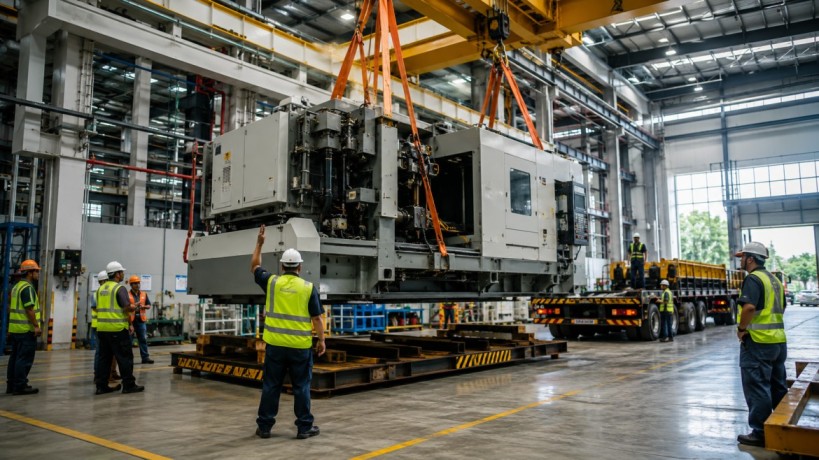
Large molds and dies often require specialized rigging solutions, as their irregular shapes and uneven weight distribution can create additional challenges during lifting and transportation.
According to manufacturing industry studies, unplanned downtime can cost organizations thousands of dollars per hour, depending on the complexity of their production.
Sensitive electronic control systems, PLCs, and automated production equipment often require specialized protection during transport to minimize the risk of environmental damage and commissioning issues after installation. Exposure to excessive humidity, dust, or temperature fluctuations can affect performance and create commissioning challenges. Specialized packaging and environmental monitoring are often recommended for critical manufacturing assets.
The Human Factor in Industrial Moves
While equipment protection receives significant attention during relocation, staff-related factors are equally important to project success.
Loss of critical knowledge can occur if experienced maintenance personnel depart before relocation activities are complete. These employees often possess valuable knowledge about equipment history, modifications, and operational nuances that may not exist in formal documentation.
Employee orientation and operational familiarization at the new facility can significantly influence how quickly production returns to normal levels. Changes in facility layout, material flow patterns, equipment positioning, and safety procedures may require employees to adapt their daily workflows. Early familiarization programs can reduce adjustment periods and support a faster return to productivity.
Communication is essential during the relocation process, where multi-shift work is involved. Clear communication protocols help prevent accidental disruption of operational systems during relocation activities.
Financial Safeguards Often Overlooked
Insurance considerations for factory relocation extend well beyond standard property coverage.
Transit insurance should provide coverage for vibration and shock in addition to collision and theft.
Rigging activities often require dedicated insurance coverage that may not be included in standard liability policies.
Business interruption coverage should be evaluated before relocation to ensure it adequately reflects potential operational risks and downtime.
Vendor Certificates of Insurance must be obtained before any site activities commence.
Businesses should also evaluate contractual responsibilities among relocation contractors, transport providers, and equipment specialists. Clearly defining liability for equipment damage, delays, or commissioning issues helps prevent disputes and ensures accountability throughout the project lifecycle.
During a recent manufacturing facility relocation, a delayed utility connection prevented commissioning activities from starting on schedule, extending the project timeline by several days despite the equipment arriving on time.
Operational Readiness Risks After Relocation
Even when equipment is successfully installed at the new facility, operational readiness challenges can delay the return to full production. Utility systems, compressed air networks, cooling systems, process controls, and safety systems must be thoroughly tested before operations resume. Conducting structured commissioning and performance verification activities helps identify issues early and reduces the likelihood of unplanned downtime after startup.
FAQs
Q1. When should a factory relocation project begin planning?
Complex relocations require eight to twelve weeks of planning before disassembly begins, whereas simpler moves typically need only three to four weeks of preparation.
Q2. Is production possible when moving is ongoing?
With phased relocation strategies, multi-line factories can maintain partial production, but single-line factories require a complete shutdown during relocation.
Q3. What if there is hidden damage found during disassembly?
Contractors typically document the damage, conduct a technical assessment, evaluate safety implications, and provide recommendations before repairs or relocation activities continue.
Q4. Is there a limitation on the weight of industrial transport within Dubai?
Yes, any vehicle transporting heavy cargo requires an RTA permit and may be subject to travel time and route restrictions based on total weight.
Q5. What are the cleaning procedures for machinery before relocating?
Cleaning requirements vary depending on the equipment and industry. Machinery used in food processing, pharmaceuticals, or chemical manufacturing often requires documented cleaning and decontamination before transport.
Conclusion
A successful factory relocation is measured not only by the safe movement of equipment but also by the speed and efficiency with which production resumes. Businesses that invest in detailed planning, accurate documentation, regulatory compliance, risk management, and professional relocation expertise are better positioned to minimize disruption and protect operational performance. By identifying potential challenges early, organizations can execute complex industrial relocations with greater confidence and long-term success.