Root Beer Market Driven by Premium Beverage Demand and E-Commerce Expansion
-

- July 30th, 2026
- 12 views

FREE SEO Topical Map Generator: Find Your Next Content Ideas
The Root Beer Market is growing due to rising consumer interest in craft sodas, unique flavors, and nostalgic beverages. Increased demand for non-alcoholic options and healthier alternatives also fuels this growth.
Market Overview
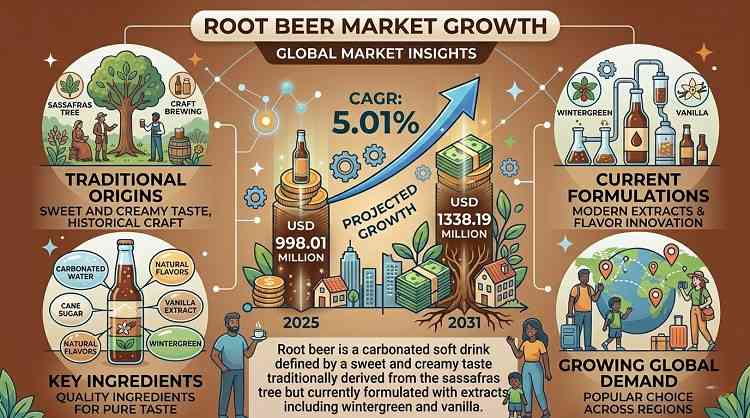
According to TechSci Research, the Global Root Beer Market is projected to grow from USD 998.01 million in 2025 to USD 1,338.19 million by 2031, registering a compound annual growth rate (CAGR) of 5.01% during the forecast period, according to the latest study by TechSci Research. The report highlights evolving consumer preferences, increasing demand for craft beverages, product innovation, and the rapid expansion of online retail as key factors supporting market growth.
Root beer has traditionally been one of North America's most recognized soft drinks, but its consumer base is expanding across international markets. Growth is supported by rising interest in premium carbonated beverages, greater availability through digital retail channels, and manufacturers introducing new formulations that align with changing dietary preferences.
The market includes both alcoholic and non-alcoholic root beer, with the non-alcoholic category accounting for the largest share due to its broad consumer appeal across families, young adults, and mainstream beverage consumers. Companies are also responding to growing demand for healthier beverage choices by introducing reduced-sugar, sugar-free, and low-calorie products using alternative sweeteners such as stevia, monk fruit, and natural cane sugar.
According to the report, the increasing popularity of craft and premium sodas continues to reshape the competitive landscape. Consumers are showing greater interest in beverages produced with natural ingredients, traditional brewing methods, and distinctive flavor profiles. As a result, craft root beer manufacturers are expanding their product portfolios while emphasizing authenticity, ingredient transparency, and premium positioning.
Health and wellness trends are also influencing product development across the industry. Manufacturers are investing in formulations that reduce sugar content while maintaining traditional flavor characteristics. Some brands are exploring functional beverage concepts through the addition of probiotics, herbal extracts, and vitamins to appeal to wellness-focused consumers seeking alternatives within the carbonated soft drink category.
Distribution channels continue to evolve as e-commerce becomes increasingly important. Online retail platforms, direct-to-consumer sales, subscription beverage services, and specialty online retailers are enabling both established companies and smaller craft producers to reach broader consumer audiences. Digital commerce has improved access to premium and niche root beer products that may have limited shelf space in conventional retail outlets.
Despite the growth of online channels, supermarkets, hypermarkets, convenience stores, specialty stores, and restaurants remain important distribution networks, ensuring widespread product availability across multiple consumer segments. The report notes that an omnichannel retail strategy is becoming increasingly important for beverage manufacturers seeking to strengthen market reach.
Brand heritage and consumer nostalgia continue to influence purchasing decisions. Long-established root beer brands benefit from strong customer loyalty, with many consumers associating the beverage with traditional soda fountains, family dining experiences, and classic American beverage culture. At the same time, newer brands are leveraging vintage-inspired packaging, premium branding, and innovative flavor combinations to attract younger consumers and differentiate themselves in a competitive market.
Based on distribution channel, the online segment is expected to record the fastest growth during the forecast period. Increased internet penetration, growing consumer confidence in online grocery shopping, and expanding digital marketplaces are contributing to stronger online beverage sales. Subscription models and direct brand websites are also creating additional opportunities for consumer engagement and repeat purchases.
Regionally, Asia Pacific is projected to be the fastest-growing market for root beer through 2031. Rising disposable incomes, expanding urban populations, and increasing consumer interest in Western-style beverages are supporting demand across countries including China, India, and Japan. The continued growth of organized retail, international food service chains, and cross-border e-commerce is further improving product accessibility throughout the region.
The report identifies several companies operating in the global root beer market, including Keurig Dr. Pepper Inc., Anheuser-Busch Companies, LLC, Blitz-Weinhard Brewing Co., Dad's Root Beer, Sprecher Brewing Co. Inc., The Berghoff, Bundaberg Brewed Drinks, Boylan Bottling Co., Henry Weinhard's Root Beer, and Jones Soda Co. These companies continue to compete through product innovation, portfolio expansion, distribution partnerships, and evolving consumer-focused strategies.
According to Mr. Karan Chechi, Research Director at TechSci Research, the global root beer market is expected to maintain steady momentum as manufacturers continue investing in innovative product development, healthier formulations, premium offerings, sustainable packaging initiatives, and geographic expansion into emerging markets.
Frequently Asked Questions (FAQs)
1. What is the projected size of the global root beer market by 2031?
The global root beer market is expected to reach USD 1.34 billion by 2031, growing from USD 998.01 million in 2025 at a CAGR of 5.01%.
2. What factors are driving growth in the root beer market?
Key growth drivers include increasing demand for craft and premium beverages, product innovation, healthier formulations, expanding online retail, and rising consumer interest in international beverage options.
3. Which distribution channel is expected to grow the fastest?
The online distribution channel is forecast to experience the fastest growth due to increasing e-commerce adoption, direct-to-consumer sales, subscription services, and greater availability of specialty beverage products.
4. Which region is expected to witness the highest growth?
Asia Pacific is projected to be the fastest-growing regional market, supported by urbanization, rising disposable incomes, growing interest in Western-style beverages, and expanding retail and e-commerce infrastructure.
Full Research Guide: https://www.techsciresearch.com/report/global-root-beer-market/1423.html