A Step-by-Step Framework for Choosing Performance Management Software
-

- July 29th, 2026
- 31 views

FREE SEO Topical Map Generator: Find Your Next Content Ideas
Most performance management software purchases fail for the same reason: teams start by comparing feature lists instead of defining the problem they're actually trying to solve. The result is a platform that looks impressive in a demo but never becomes part of how managers and employees actually work.
A better approach is to treat this like any other strategic decision — define the problem first, evaluate against that problem specifically, and plan the rollout before you sign anything. Here's a practical framework for doing exactly that with performance management software.
Step 1: Define What You're Actually Solving For
Before looking at a single vendor, get specific about what's broken in your current process. "We need better performance management" is too vague to evaluate against. Instead, try to pin down the actual pain points:
- Are goals unclear or invisible to employees?
- Is feedback rare, delayed, or inconsistent across managers?
- Are reviews rushed, biased toward recent events, or seen as a formality?
- Is recognition inconsistent or missing entirely?
- Does leadership struggle to identify who's ready for promotion or at risk of leaving?
- Is HR spending too much time chasing forms and consolidating spreadsheets?
An employee engagement survey is often the fastest way to surface which of these issues matter most to your team specifically, rather than guessing. The clearer you are here, the easier every later step becomes — vendors will differentiate themselves quickly once you're asking pointed questions instead of generic ones.
Step 2: Map the Full Performance Cycle
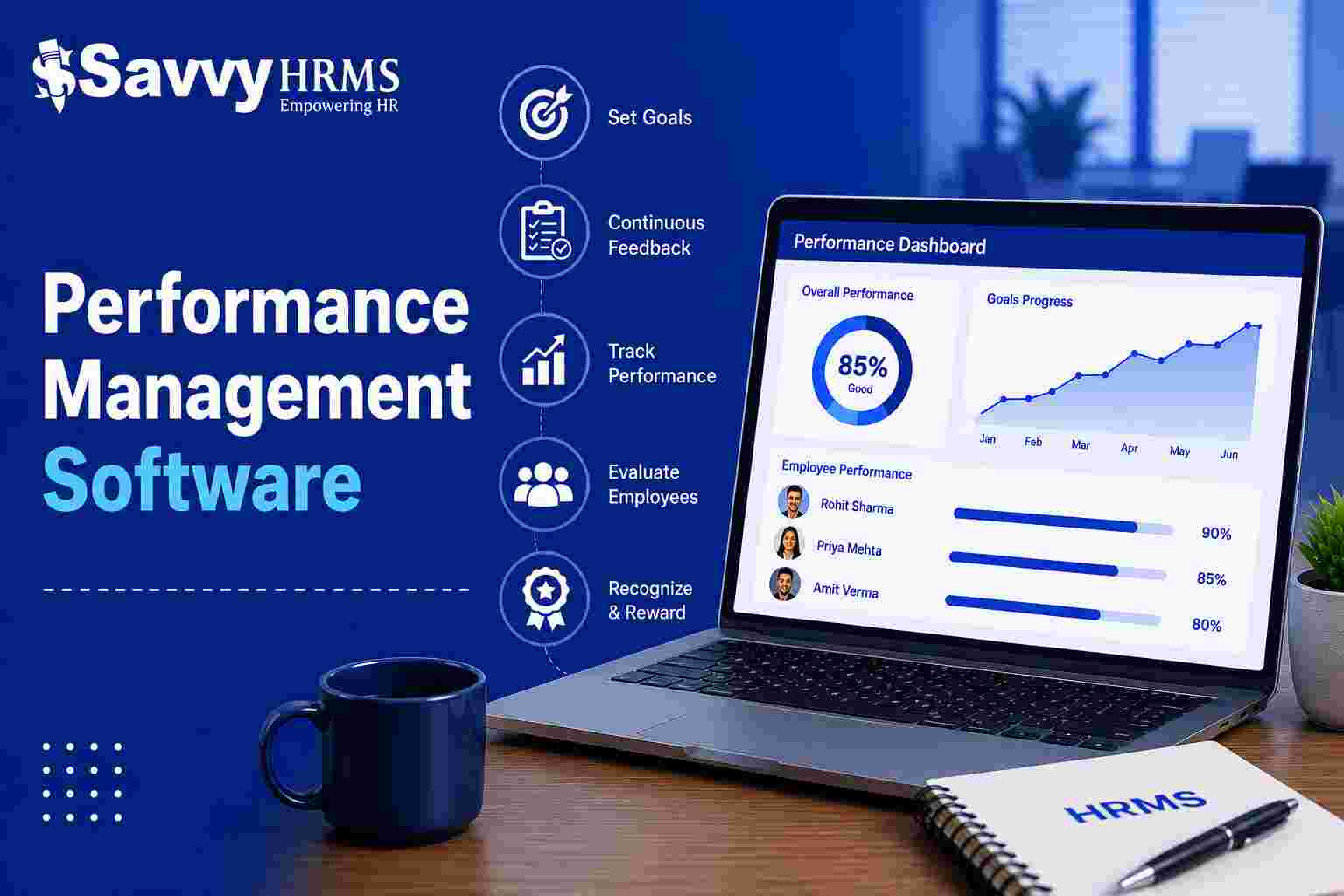
Whatever specific problems you identified, make sure your solution addresses the complete cycle rather than a single piece of it. Strong performance management covers four connected stages:
Plan — Goals are set collaboratively and clearly tied to organizational objectives, so employees understand not just what they're working toward but why it matters.
Monitor — Real-time visibility into progress lets managers catch issues early instead of discovering them months later.
Review — Structured, well-documented conversations bring historical context into the room, reducing recency bias and making evaluations genuinely useful.
Recognize — Timely, visible recognition reinforces the behaviors you want to see more of, rather than being saved for once-a-year mentions.
If a platform only strongly supports one or two of these stages, you'll likely end up patching the rest with spreadsheets — which defeats the purpose of switching in the first place.
Step 3: Build Your Feature Priority List
With your problems and cycle stages mapped, translate them into a concrete feature checklist. Common priorities include:
Goal management
- Cascading goals connecting company, team, and individual objectives
- Support for OKRs, SMART goals, or your preferred framework
- Real-time progress tracking is visible to the whole team
- AI-assisted goal writing to save managers' time
One-on-ones and reviews
- Shared meeting agendas and trackable action items
- Best-practice templates so managers aren't starting from scratch
- Automated reminders that keep meetings from disappearing off calendars
- Reviews that pull in prior goals and feedback automatically
- 360-degree and multi-rater feedback support
Continuous feedback
- Fast, low-friction tools for giving or requesting feedback
- AI support for turning quick notes into clear, constructive comments
- Feedback trend tracking over time
Recognition
- Peer-to-peer recognition, not just top-down praise
- Automated milestone and anniversary reminders
- A public feed that makes good work visible company-wide
- Integrations with tools like Slack or Teams
Talent and succession insights
- 9-box or similar visualization for flight risk and promotion readiness
- Calibration tools for fair, consistent ratings across managers
- Succession planning is tied directly to performance history
- Rank these by how directly they address the problems from Step 1 — that ranking becomes your evaluation scorecard.
Step 4: Evaluate Vendors Against Your Scorecard, Not Their Pitch
Sales demos are designed to highlight strengths, so it's easy to walk away impressed without actually testing what matters to your organization. During evaluation, ask vendors to walk through your specific scenarios rather than their standard script:
- Would a busy manager actually use this without extra prompting? Complexity is one of the most common reasons performance software goes unused after the first quarter.
- Can it be customized to reflect our culture and terminology, or does it force a rigid, generic workflow?
- Does it integrate cleanly with our HRIS so employee data stays accurate without manual updates?
- Does the vendor use their own software internally? A small detail, but a telling one.
- What does support look like after the sale — and is it available to managers and employees, not just administrators?
- Can the vendor help us measure impact over time, so you're not left guessing whether the investment paid off?
If a vendor can't clearly answer these for your specific situation, treat that as useful information.
Step 5: Compare Against the Alternatives You're Already Using
It's worth explicitly comparing a dedicated platform against whatever you're using today:
- HRIS systems handle payroll, benefits, and records well, but typically lack the depth needed for goal tracking, structured feedback, and review workflows.
- Spreadsheets are familiar and free, but they don't scale, they're error-prone, and they make it nearly impossible to spot trends across a growing team.
- Generic office tools like Google Forms work for one-off feedback requests, but can't support an ongoing, connected process.
- Purpose-built performance management software is designed specifically to combine goals, feedback, reviews, and talent insights, which is exactly what generic tools struggle to do together.
If your Step 1 audit revealed multiple connected problems, a dedicated platform is almost always the more sustainable choice.
Step 6: Plan the Rollout Before You Sign
The best software choice still fails if the rollout is rushed. Build your implementation plan alongside your vendor selection, not after:
- Start with one habit. Regular 1-on-1s are usually the easiest and highest-impact place to begin.
- Involve employees early. People adopt new processes far more readily when they've helped shape them.
- Train managers to coach, not just evaluate. This mindset shift matters more than any individual feature.
- Let automation carry out the routine work. Reminders and dashboards keep new habits alive once the initial rollout excitement fades.
- Communicate the "why" clearly. Teams adapt faster when they understand the reasoning behind the change.
- Reassess every few months. Treat the process as something you continuously refine, not something you finalize once.
Step 7: Measure What Actually Changed
Once the platform is live, track a handful of concrete indicators rather than assuming adoption equals success:
- Percentage of 1-on-1s and reviews completed on schedule
- Frequency of feedback given and received across teams
- Employee survey results tied to clarity, recognition, and trust
- Manager time spent on review preparation, before and after
- Voluntary turnover trends over the following review cycles
These numbers give you a factual basis for renewing, adjusting, or expanding your investment — instead of relying on general impressions.
Frequently Asked Questions
Q1. What is performance management software? It's a platform that helps organizations plan, track, and evaluate employee performance through connected tools for goal-setting, feedback, reviews, recognition, and talent analytics — replacing scattered spreadsheets and once-a-year evaluations with one ongoing process.
Q2. How long should the evaluation process take? Most organizations spend four to eight weeks defining requirements, demoing vendors, and running trials. Rushing this step tends to produce poor-fit decisions that cost more time to fix later than the evaluation itself would have taken.
Q3. Should we involve managers in the vendor selection process? Yes. Managers are the primary daily users, and their buy-in during evaluation significantly improves adoption after launch. Include a few in demos and pilot testing before finalizing a decision.
Q4. What's the most common reason implementations fail? Low adoption, usually caused by unclear rollout communication or a platform that's too complex for the day-to-day rhythm of a busy manager. Prioritizing simplicity and change management matters as much as the software itself.
Q5. Do we need a dedicated platform if we already have an HRIS? In most cases, yes. HRIS systems are built for records, payroll, and benefits — they typically don't offer the depth needed for goal tracking, structured feedback, or review workflows. Most performance management software integrates with your HRIS rather than replacing it.
Q6. What role do employees play in this process? Employees actively participate by setting personal goals, requesting and giving feedback, taking part in self-assessments, and using the visibility the software provides to drive their own development.
Conclusion
Choosing performance management software isn't really a software decision — it's a decision about how your organization wants managers and employees to work together going forward. Teams that start by clearly defining their problem, mapping it against the full performance cycle, and planning the rollout consistently end up with tools people actually use, instead of one more system that quietly gets ignored after the first quarter.
Savvy HRMS was built around that same principle — helping HR teams move through this framework with a platform designed for real adoption, not just a feature checklist. If you're ready to start Step 1, we're happy to talk through where your team stands today.