Muse Image vs Traditional AI Image Generators: Why Agentic Architecture Is the Future of Visual Content Creation
-

- July 08th, 2026
- 31 views

FREE SEO Topical Map Generator: Find Your Next Content Ideas
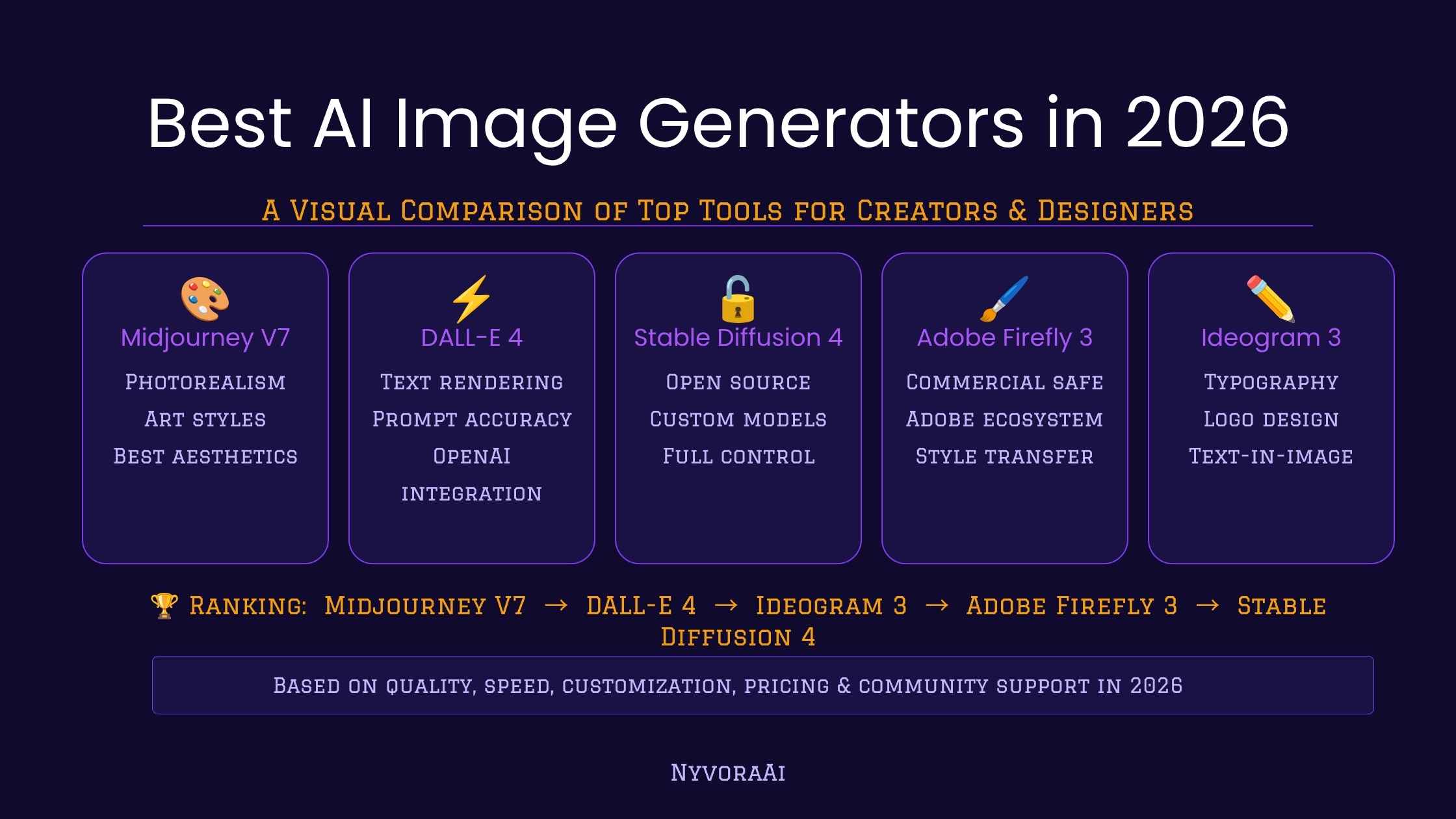
The AI image generation market in 2026 is saturated. Midjourney, DALL-E, Stable Diffusion, Flux, Ideogram, and dozens of specialized alternatives all compete for creative professionals, marketers, and casual users. Each new release promises better aesthetics, faster generation, and more creative control.
But step back from the feature comparison charts and you notice something striking: these tools all share the same fundamental architecture. They encode text prompts into latent representations and decode those representations into images through a single-pass diffusion process. No reasoning. No fact-checking. No self-correction. The differences between them are tuning differences, not architectural ones.
Muse Image, released by Meta Superintelligence Labs, breaks this pattern. It is the first production-available image generator built on an agentic architecture — a system that reasons about requests, accesses external information, performs computation, and refines its own output before delivering results.
This article examines what that architectural difference means in practice, how it changes the output quality for professional use cases, and why it may represent the direction the entire industry is heading.
The Architectural Divide
To understand why the agentic approach matters, you need to understand what conventional generators actually do with your prompt.
When you type a description into a standard image generator, the model encodes your entire prompt into a single mathematical vector — a point in a high-dimensional space. This vector captures the statistical essence of your description but necessarily loses specific details, spatial relationships, and factual requirements in the compression.
The model then generates an image by working backward from noise, using this compressed vector as guidance. The result reflects the general neighborhood of your prompt in the model's learned visual space, but specific details are addressed probabilistically rather than deterministically.
This is why your detailed prompt about a specific arrangement of specific objects in a specific style reliably produces something that captures the mood while missing individual specifications. The architecture does not have a mechanism for tracking and satisfying individual constraints.
Muse Image adds that mechanism. Before generating any pixels, the model decomposes your prompt into individual requirements. It determines which requirements need factual verification through web search, which need computational precision through code execution, and which can rely on its generative capabilities. After generation, it evaluates the result against each requirement and corrects discrepancies through targeted editing or regeneration.
The output is not a probabilistic approximation of your prompt. It is a reasoned response to your specific requirements.
Head-to-Head Comparison
I tested Muse Image against three leading conventional generators across five categories that matter for professional use. Here are the results.
Instruction Fidelity
I submitted identical prompts with eight specific visual requirements to each generator. For each output, I scored how many of the eight requirements were accurately fulfilled.
Conventional generators averaged four to five requirements met per generation. Muse Image averaged seven to eight. The reasoning layer systematically addresses each requirement rather than capturing the overall impression while dropping individual details.
Factual Accuracy
I prompted each generator to create images referencing real locations, products, and data points. Conventional generators produced plausible but fictional versions — buildings that do not exist, products that look similar but wrong, data that is fabricated.
Muse Image's search grounding produced images with recognizable real buildings, accurate product appearances, and correctly represented information. For any application where visual content needs to be factually correct, this is not a quality improvement — it is a capability that conventional generators do not possess.
Text Rendering
I requested images containing specific text — signs, labels, titles, and captions. Conventional generators produced garbled, misspelled, or illegible text in the majority of outputs. Muse Image produced correctly spelled, legible text in over ninety percent of cases, with the model's code execution capability handling complex typography programmatically when needed.
Editing Precision
I submitted identical source images with identical editing instructions to each tool. For conventional generators, sixty to eighty percent of outputs showed unintended changes to elements that should have been preserved — shifted colors, modified lighting, altered proportions in unedited regions.
Muse Image preserved unspecified elements in over ninety percent of cases. The semantic understanding of the editing instruction — distinguishing between what should change and what should be preserved — produces dramatically more reliable results.
Multi-Reference Consistency
I provided the same set of reference images to each generator and asked for compositions maintaining identity across references. Conventional generators showed noticeable identity drift — facial features shifted, proportions changed, distinguishing details were lost.
Muse Image maintained consistent identity across all tested compositions. The reasoning architecture analyzes relationships between references before composing, producing results where faces remain recognizable and distinguishing features are preserved.
Why This Matters for Professional Adoption
The test results above translate directly into workflow implications.
Reduced Iteration Cycles
When seven to eight out of eight requirements are met on the first generation, you spend dramatically less time regenerating, curating, and manually correcting. The time from prompt to usable output decreases by an estimated sixty to seventy percent compared to conventional generators.
Eliminated Verification Steps
When images are factually grounded through web search, you do not need a separate fact-checking step between generation and deployment. For content marketing, editorial illustration, and educational publishing, this eliminates an entire review stage.
Simplified Editing Workflows
When editing precision prevents collateral damage, you do not need post-editing quality checks to verify that unedited elements remain unchanged. For content variation pipelines — producing multiple versions of the same base asset — this reliability enables automation that would be impractical with less precise tools.
Consistent Character and Product Representation
When multi-reference composition maintains identity consistency, you do not need to generate and select from dozens of outputs to find ones where the character or product looks correct. For brand content, visual narratives, and product photography, this consistency enables scaled production.
Industry Applications
Advertising and Marketing
Campaign asset production benefits from every capability improvement — accurate product representation, factual location imagery, reliable text rendering, and efficient variation production through precise editing. Muse Image enables marketing teams to use AI generation as a production tool rather than an inspiration tool.
E-Commerce
Product visualization with accurate appearance, lifestyle placement through multi-reference composition, and variation generation through semantic editing creates a complete product content workflow. From hero images to seasonal variations to marketplace-specific adaptations, the pipeline can be automated.
Media and Publishing
The combination of factual accuracy and text rendering reliability makes AI-generated illustrations and infographics viable for editorial contexts where they were previously too unreliable. Search grounding ensures visual content supports rather than undermines editorial credibility.
Education
Accurate visual representations of real-world subjects, correctly rendered diagrams and charts, and legible text labels make AI-generated educational visuals trustworthy enough for classroom and publication use.
The Trade-Offs
The agentic architecture involves genuine trade-offs that users should understand.
Generation time is longer. The reasoning, search, code execution, and refinement steps add processing time. For rapid ideation or high-volume generation where speed matters more than accuracy, conventional generators remain faster.
Simple prompts benefit less. If your prompt does not require factual accuracy, computational precision, or complex instruction compliance, the agentic architecture provides marginal improvement over conventional generation. The benefits are proportional to prompt complexity.
Spatial precision operates at a semantic level. Pixel-level positioning control requires traditional graphic design tools. The model understands "left side of the table" but not exact coordinate specifications.
Output and Pricing
Resolution up to 4K. Content Seal provenance watermarking. Browser-based with no installation. Free tier without login. Paid subscriptions from twelve dollars per month. API access for programmatic integration.
Currently ranked second on Arena benchmarks across text-to-image, single-image editing, and multi-image editing.
The Industry Direction
Muse Image is likely not the last agentic image generator. The architectural advantages — factual grounding, computational precision, self-correction — address problems that users have been asking to solve since the first generation of AI image tools. Competing labs will likely adopt similar approaches.
But today, Muse Image is the only production-available tool that offers these capabilities. For professional users who have been waiting for AI image generation to become reliable enough for serious production work, the wait appears to be over.
The question is no longer whether AI can generate beautiful images. It can. The question is whether AI can generate accurate, specific, and reliable images. With the agentic architecture, the answer is finally yes.