Nano Banana 2 Lite: A Complete Guide to Google's Most Affordable AI Image Generator
-

- July 01st, 2026
- 24 views

FREE SEO Topical Map Generator: Find Your Next Content Ideas
If you follow the AI space, you know new image generation models appear almost weekly. Most offer marginal improvements. Occasionally, a release genuinely shifts the landscape. Google's Nano Banana 2 Lite is one of those releases — not because it produces the most stunning images, but because it makes high-quality AI image generation genuinely accessible to everyone, including bloggers, small businesses, and independent creators in India and across the developing world.
Understanding the Basics
Nano Banana 2 Lite belongs to Google's Nano Banana family of AI image generators. Think of it as the economy class option — except this economy class outperforms some of the business class seats. The model is built on the Gemini 3.1 Flash Lite architecture, which Google has specifically optimised for two things: speed and cost efficiency.
The core specifications tell the story. Generation speed is approximately four seconds per image at 1K resolution. That is 2.7 times faster than the previous Gemini Flash Image model. Pricing sits at $0.034 per 1,000 images — roughly 2.8 Indian rupees for a thousand images. The model supports 14 different aspect ratios, covering formats for Instagram, Facebook, YouTube thumbnails, website banners, and more. A single API handles text-to-image generation, image editing, and multi-image composition.
In the Nano Banana family hierarchy, it sits below the standard Nano Banana 2 ($0.067 per thousand) and the premium Nano Banana Pro ($0.134 per thousand). But in terms of text-to-image quality benchmarks, it actually scores higher than both the original Nano Banana 1 (Elo 1151) and the premium Pro (Elo 1245), achieving an Elo score of 1251.
Why the Pricing Matters for Indian Creators
India has one of the world's most vibrant creator economies. Millions of bloggers, YouTubers, Instagram creators, and small business owners produce content daily. Yet professional design services remain expensive relative to creator revenues. A freelance designer might charge 500 to 2000 rupees for a set of social media graphics. Stock photography subscriptions cost thousands of rupees annually.
At less than 3 rupees per thousand images, Nano Banana 2 Lite essentially removes cost from the equation. A blogger publishing daily could generate unique header images for an entire year for less than the price of a cup of chai. An e-commerce seller listing hundreds of products could generate lifestyle shots and promotional graphics without any measurable impact on their budget.
This is not hyperbole. The math is straightforward. One thousand images for 2.8 rupees means each individual image costs approximately 0.003 rupees. At this price point, the decision to generate or not generate an image is no longer economic — it is purely creative.
Step-by-Step: How to Get Started
For bloggers and creators who are new to AI image generation, here is a practical guide to getting started with Nano Banana 2 Lite.
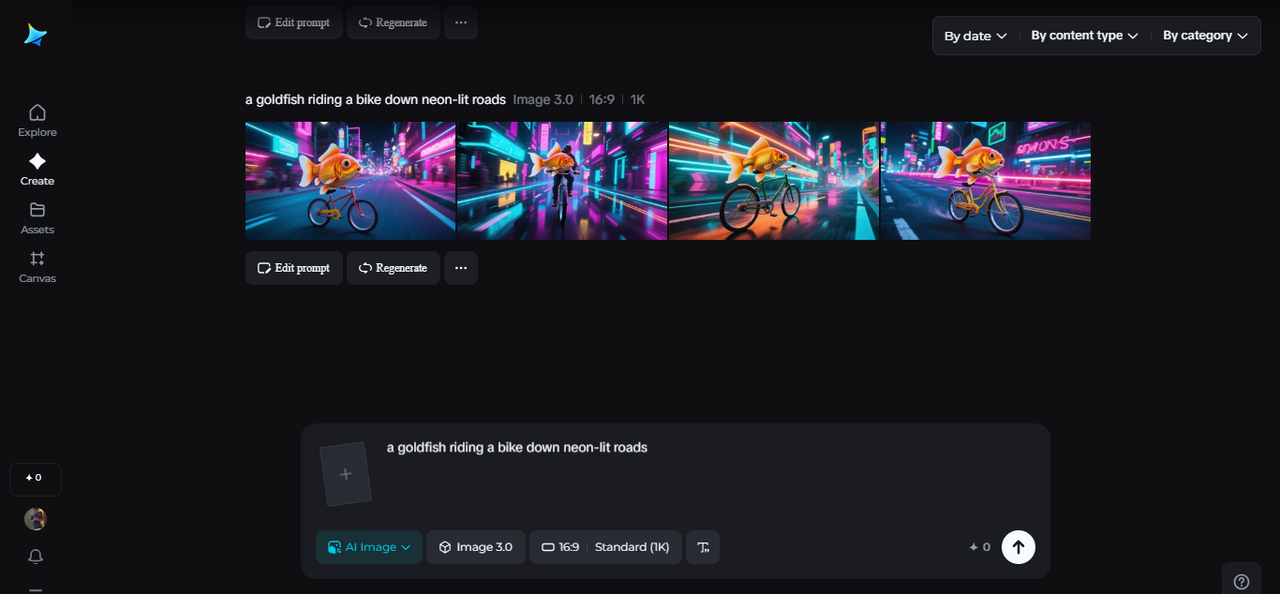
The simplest entry point is Google AI Studio, which provides a browser-based interface requiring no technical setup. Visit the platform, select the Nano Banana 2 Lite model, type a description of the image you want, and click generate. The result appears in approximately four seconds. You can then adjust your description and regenerate as many times as needed.
For creators who want to integrate image generation into their workflow, the Gemini API provides programmatic access. A basic integration requires minimal coding knowledge — a simple API call with your text prompt returns the generated image. Google provides documentation and code examples in Python, JavaScript, and other popular languages.
For users who prefer no-code solutions, the model is already integrated into Google consumer products. The Gemini app generates images from conversational prompts. Google Photos offers creative editing powered by the model. NotebookLM creates visual summary videos using it.
The Interactions API adds an important capability: multi-turn editing. After generating an initial image, you can make sequential refinements — change the background, adjust colours, add or remove elements — with each edit building on the previous version. Up to three sequential edits are supported per session.
Practical Use Cases for Indian Bloggers
Let me outline specific scenarios where Nano Banana 2 Lite adds immediate value for the Indian blogging community.
Blog header images are the most obvious application. Instead of searching stock photo sites for images that approximately match your content, generate a custom image that precisely illustrates your article's topic. A food blogger writing about biryani can generate an image of biryani in exactly the style, setting, and composition they envision. A tech blogger can generate conceptual illustrations for abstract topics that no stock photo could capture.
Social media content benefits enormously from the speed factor. Creating a carousel post for Instagram typically requires designing multiple graphics, which can take an hour or more. With Nano Banana 2 Lite, you can generate ten visual variations in under a minute, select the best ones, and publish. The four-second generation time means the creative process moves at the speed of your ideas rather than the speed of your design tool.
Product photography for small businesses is another compelling use case. While AI-generated images cannot replace actual product photos for e-commerce listings that require accurate representation, they serve well for lifestyle imagery, promotional graphics, and social media content that shows products in aspirational contexts.
Festival and seasonal content — Diwali graphics, Holi visuals, Independence Day posts — can be generated rapidly and customised for different platforms and audiences. Instead of using the same generic festival graphic that thousands of other creators are posting, generate something unique that reflects your brand's personality.
Educational content creators can produce explanatory diagrams, concept illustrations, and visual aids that enhance learning outcomes. The model's reliable text rendering means that labels, annotations, and headings within images come out legible — an important capability for educational visuals.
Quality Assessment: Honest Strengths and Limitations
I believe in giving readers honest assessments, so here is my evaluation of where Nano Banana 2 Lite excels and where it falls short.
Strengths include consistent colour accuracy across generations, strong prompt adherence for descriptive prompts, reliable text rendering within images, fast iteration speed that enables creative exploration, pricing that removes economic barriers entirely, and broad aspect ratio support covering major social platforms.
Limitations include the 1K resolution cap which is insufficient for print production or large displays, occasional inconsistency with very complex scenes involving many elements, less artistic sophistication than premium models like Midjourney, inability to produce photorealistic images indistinguishable from actual photography, and permanent AI watermarks that cannot be removed.
For the typical Indian blogger or content creator, the strengths overwhelmingly outweigh the limitations. The quality is more than adequate for digital content, the speed enables a more productive workflow, and the cost is negligible.
The Broader Industry Context
Nano Banana 2 Lite arrives in a market with established competitors. Midjourney leads on artistic quality. OpenAI's DALL-E benefits from ChatGPT integration. Stable Diffusion and Flux offer open-source alternatives. Adobe Firefly integrates with the Creative Cloud ecosystem.
What Nano Banana 2 Lite offers is the most compelling combination of speed, quality, and cost. No competitor matches all three dimensions simultaneously. And Google's distribution advantage — deployment across consumer products, developer APIs, and third-party integrations with Adobe, Figma, WPP, and others — means the model reaches users wherever they work.
Major partners have validated this through early adoption. Adobe is integrating it into Firefly. WPP uses it for marketing asset generation. Figma has built it into their design canvas. Manus AI deploys it in autonomous agent workflows. Artlist offers it for content creator visual generation.
Every generated image includes SynthID watermarks and C2PA content credentials by default, ensuring content authenticity and supporting platform compliance as AI content policies evolve.
Conclusion
Nano Banana 2 Lite is not the most powerful AI image model available. But for Indian bloggers, content creators, and small businesses, it may be the most useful one. The combination of professional-quality output, four-second generation speed, and pricing measured in fractions of a paisa per image removes every practical barrier to adoption.
If you have been waiting for the right moment to incorporate AI image generation into your content workflow, that moment has arrived. The tools are accessible, the cost is negligible, and the quality is more than sufficient for professional digital content. Nano Banana 2 Lite is worth trying — and at these prices, there is literally nothing to lose.