What Makes a Mobile App Successful in 2026?
-

- July 27th, 2026
- 31 views

FREE SEO Topical Map Generator: Find Your Next Content Ideas
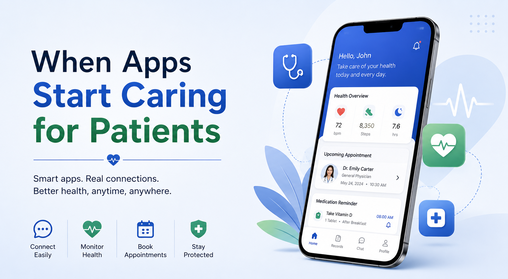
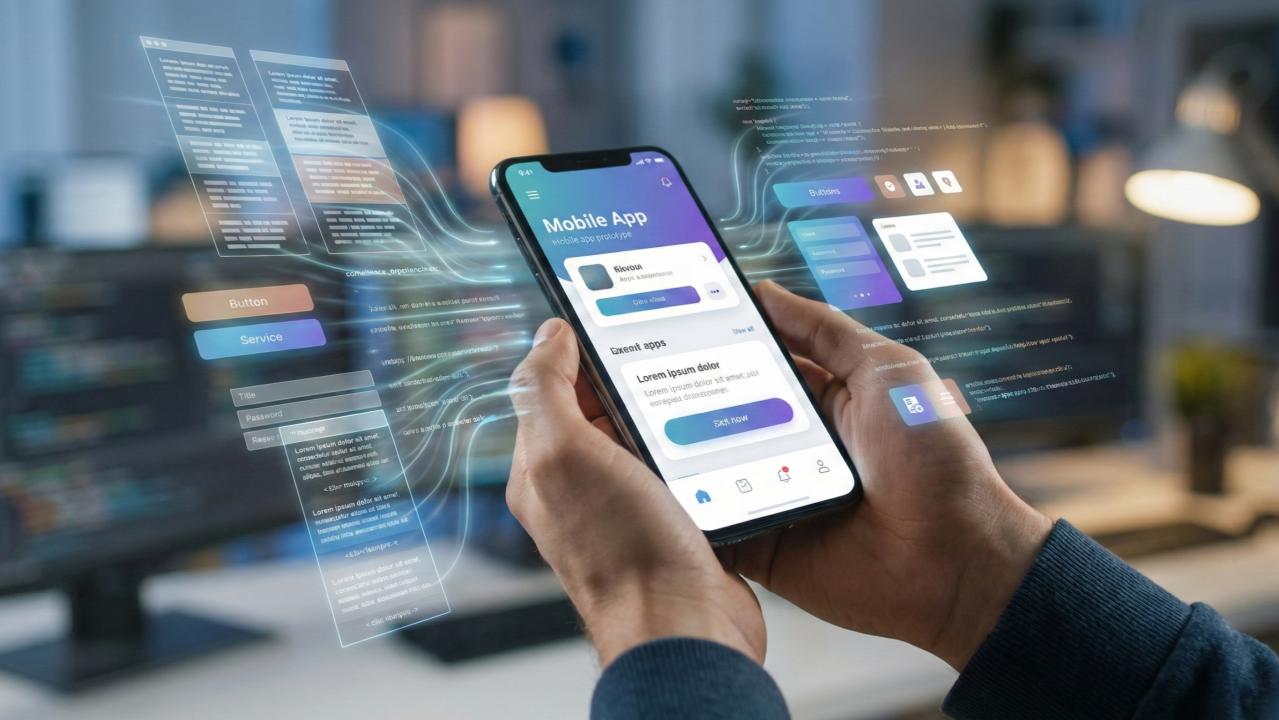
A few years ago, launching a mobile app was often considered a major achievement for a business. Today, simply having an app is no longer enough. Users have more choices, higher expectations, and very little patience for poor digital experiences. If an app is slow, confusing, difficult to navigate, or fails to provide real value, users can uninstall it within minutes. In 2026, successful mobile apps are becoming smarter, faster, more personalized, and more connected to the way people actually live and work. Artificial intelligence is playing a bigger role, but technology alone does not guarantee success. The best apps combine innovation with simplicity, usefulness, security, and a deep understanding of user behaviour.
So, what actually makes a mobile app successful in 2026?
1. A Clear Purpose Comes Before Advanced Technology
One of the biggest mistakes businesses make is starting with technology instead of a problem. An app may use artificial intelligence, augmented reality, automation, or advanced analytics, but if users do not understand why they need it, those features will not create long-term value. A successful app should solve a genuine problem.
It might help users:
- Save time
- Manage their finances
- Shop more easily
- Communicate faster
- Learn something new
- Track their health and fitness
- Automate a repetitive task
- Access a business service conveniently
Before development begins, businesses should ask a simple question:
What problem does this app solve, and why would someone continue using it?
A clear purpose provides the foundation for everything else, including design, features, technology, and marketing.
2. AI Should Make the Experience Smarter
Artificial intelligence is becoming an increasingly important part of mobile applications in 2026. Current industry discussions highlight AI personalization, AI agents, on-device processing, and predictive experiences as major directions in mobile development. However, adding an AI chatbot simply because AI is trending does not automatically make an app successful. The technology should serve a purpose.
AI can help mobile apps:
- Personalize recommendations
- Improve search results
- Predict user needs
- Automate customer support
- Analyze user behaviour
- Provide voice-based interactions
- Summarize information
- Assist users with repetitive tasks
For example, a shopping app could recommend products based on user preferences. A productivity app could help organize tasks. A learning app could adapt content according to a user's progress. The best AI features often work quietly in the background, making the app more useful without making the experience complicated.
3. Personalization Is Becoming a User Expectation
People are used to personalized digital experiences. They expect platforms to remember their preferences, recommend relevant content, and reduce the effort required to find what they need. This is why AI-powered mobile app development is becoming increasingly important for businesses that want to create more adaptive digital products.
Personalization can include:
- Customized content feeds
- Personalized product recommendations
- Smart notifications
- Location-based suggestions
- Adaptive user interfaces
- Individualized offers
However, personalization must be handled responsibly. Users should understand how their data is being used and should have meaningful control over permissions and privacy settings. The future of personalization is not simply about collecting more data. It is about creating useful experiences while respecting user trust.
4. Speed and Performance Can Decide Whether Users Stay
A beautifully designed app can still fail if it is slow. Users expect mobile applications to load quickly, respond smoothly, and work reliably across different devices and network conditions. Performance issues such as crashes, slow loading screens, battery drain, and poor responsiveness can quickly damage user satisfaction. This is why professional mobile app development services focus not only on visual design but also on architecture, backend performance, API optimization, testing, and scalability. A successful app should be tested across different devices, operating systems, screen sizes, and network conditions. Performance is not something that should be considered only after the app is built. It should be part of the development strategy from the beginning.
5. Simplicity Is More Valuable Than Feature Overload
Many businesses assume that adding more features automatically makes an app better. In reality, too many features can make an application confusing. Users generally want to complete tasks quickly and easily. If they have to navigate through multiple screens to perform a simple action, they may abandon the app.
Successful mobile applications focus on:
- Clear navigation
- Simple menus
- Logical user journeys
- Easy-to-understand buttons
- Minimal unnecessary steps
The goal is not to remove useful features. It is to organize them in a way that does not overwhelm the user. A simple experience can be more powerful than a complicated one.
6. Privacy and Security Are Critical in 2026
Mobile apps often handle sensitive information, including personal details, payment information, location data, and business information. As AI and third-party technologies become more common in mobile applications, security risks and data governance have also become increasingly important. Recent industry research has highlighted widespread mobile application vulnerabilities and the need for stronger security practices around application code and dependencies.
Users want to know:
- What data is being collected?
- Why is it being collected?
- Where is it stored?
- Who can access it?
- Can permissions be controlled?
A successful app must treat security as a core part of the product rather than an afterthought. Secure authentication, encrypted data, careful permission management, regular updates, and responsible third-party integrations all contribute to user trust.
7. Cross-Platform Development Can Improve Efficiency
Businesses increasingly want their apps to work across multiple platforms without maintaining completely separate codebases. Modern cross-platform approaches can help businesses reduce development complexity while delivering consistent experiences across platforms. Industry trend reports in 2026 continue to identify cross-platform development as an important part of modern mobile development strategies. This can be particularly valuable for startups and growing businesses that need to launch quickly and manage development budgets effectively. However, the right technology should depend on the specific requirements of the app. The goal should not simply be to choose the fastest development approach. It should be to create a stable, scalable, and maintainable product.
8. Accessibility Makes Apps Better for More People
Accessibility is becoming an increasingly important part of digital product design. Features such as readable text, voice support, screen-reader compatibility, sufficient colour contrast, and intuitive navigation can make applications easier to use for a wider range of people. Accessibility is not only about meeting guidelines. It is about creating an experience that works for different users, devices, abilities, and situations.
An app that is easy to understand and navigate can benefit everyone.
9. The App Must Continue Improving After Launch
Launching an app is not the end of development. In many ways, it is the beginning of the next phase. User feedback, reviews, analytics, crash reports, and engagement data can help businesses understand what is working and what needs improvement.
Successful apps are regularly updated to:
- Fix bugs
- Improve performance
- Add useful features
- Strengthen security
- Support new operating system versions
- Respond to user feedback
The most successful app development strategies are continuous rather than one-time projects. A business that launches an app and never improves it may quickly fall behind competitors.
10. Business Goals and User Needs Must Work Together
A successful app should be useful to users and valuable to the business. These two goals should not be treated as separate. For example, an e-commerce app may want to increase sales, but the best way to achieve that may be to create a smoother shopping experience. A service-based business may want more leads, but a simple booking process may be more effective than adding unnecessary promotional content. The strongest apps find a balance between business objectives and user expectations.
How Infotiqq Can Help Businesses Build Better Mobile Experiences
Building a successful app requires more than writing code. It involves understanding the business idea, identifying the target audience, designing the user experience, selecting the right technology, developing the product, testing it thoroughly, and continuing to improve it after launch.
For businesses exploring mobile application development, Infotiqq Technologies provides technology solutions including mobile app development, custom software development, web development, UI/UX design, SaaS solutions, and digital services designed to help businesses create scalable digital products.
The right development partner can help turn an idea into a practical digital product that is built around real user needs.
Final Thoughts
So, what makes a mobile app successful in 2026? It is not just artificial intelligence. It is not just a beautiful interface. It is not simply having a large number of features. A successful mobile app combines a clear purpose, excellent user experience, fast performance, useful personalization, strong security, accessibility, and continuous improvement. AI is changing what mobile applications can do, but users still value the basics: an app should be useful, reliable, easy to use, and respectful of their time and data.
The most successful apps of 2026 will likely be those that combine advanced technology with human understanding. Because the future of mobile app development is not about building technology for the sake of technology. It is about using technology to create experiences that genuinely make people's lives easier.