
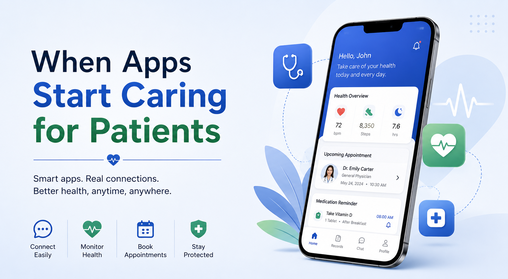
When Apps Start Caring for Patients
-

- June 27th, 2026
- 21 views

FREE SEO Topical Map Generator: Find Your Next Content Ideas
Healthcare ApplicationsThere was a time when healthcare existed entirely within hospital walls. Patients visited clinics, waited in crowded rooms, met doctors face-to-face, and returned home with prescriptions and instructions. Today, healthcare is beginning to move beyond physical spaces and into something far more personal: our smartphones.
Healthcare applications are no longer simple appointment schedulers or medication reminders. They are becoming companions that monitor health, provide guidance, encourage healthy habits, and connect patients with medical professionals whenever needed. As technology advances, one question becomes increasingly important:
What happens when apps start caring for patients?
The answer is transforming modern healthcare.
The Shift from Treatment to Continuous Care
Traditional healthcare often focuses on treating illnesses after they occur. Patients seek medical attention when symptoms become severe enough to require professional help.
Healthcare apps are changing this model by introducing continuous care.
Modern applications can track:
- Heart rate
- Sleep patterns
- Physical activity
- Blood glucose levels
- Medication schedules
- Mental health indicators
Instead of waiting for problems to appear, these applications help patients identify health concerns early and encourage preventive care.
Healthcare is gradually becoming proactive rather than reactive.
Healthcare Is Becoming More Accessible
Access to healthcare remains a challenge for millions of people. Long travel distances, appointment delays, and limited medical resources often prevent patients from receiving timely treatment.
Mobile healthcare applications reduce many of these barriers.
Patients can now:
- Schedule virtual consultations
- Receive prescription reminders
- Access medical records
- Monitor chronic conditions
- Communicate with healthcare providers
- Receive educational health content
This accessibility is especially valuable for elderly patients, people living in remote areas, and individuals managing long-term health conditions.
The Rise of Personalized Care
Every patient is different. Healthcare applications increasingly recognize that treatment and care should not follow a one-size-fits-all approach.
Artificial intelligence and data analytics allow healthcare apps to deliver personalized experiences based on:
- Medical history
- Lifestyle habits
- Activity levels
- Medication schedules
- Health goals
For example, a diabetes management app can provide different recommendations for different patients depending on their blood sugar trends and daily routines.
Personalized care improves engagement and helps patients make better decisions.
Reminders That Save Lives
One of the simplest yet most powerful features of healthcare applications is reminders.
Many patients forget to:
- Take medications
- Attend appointments
- Monitor symptoms
- Refill prescriptions
- Follow treatment plans
A timely notification can significantly improve treatment adherence.
For patients with chronic diseases, these reminders may prevent complications and improve long-term health outcomes.
Sometimes caring begins with something as simple as a reminder.
Mental Health Support in Your Pocket
Healthcare applications are also changing how people approach mental wellness.
Mental health apps now offer:
- Meditation sessions
- Mood tracking
- Anxiety management tools
- Sleep guidance
- Stress reduction exercises
- Therapy support
Many individuals who hesitate to seek traditional therapy feel more comfortable taking their first steps through digital platforms.
Technology cannot replace professional care entirely, but it can make support more accessible.
The Human Side of Digital Healthcare
Critics often argue that healthcare apps remove the human element from medicine. However, successful healthcare applications do not replace doctors—they strengthen the connection between patients and healthcare providers.
Telemedicine platforms enable:
- Faster consultations
- Better communication
- Regular follow-ups
- Remote monitoring
- Immediate support
Doctors gain access to valuable patient data, while patients remain connected to their care teams.
Technology becomes a bridge rather than a barrier.
Trust Remains the Foundation
When healthcare applications collect sensitive information, trust becomes essential.
Patients share highly personal data, including:
- Medical records
- Health conditions
- Medication history
- Lifestyle information
- Insurance details
Healthcare app developers must prioritize:
- Data encryption
- Secure authentication
- Regulatory compliance
- Privacy protection
- Transparent policies
Patients only embrace digital healthcare when they feel their information is safe.
Trust is the foundation of every successful healthcare application.
Artificial Intelligence and Predictive Care
Artificial intelligence is helping healthcare applications become smarter.
AI can:
- Detect health patterns
- Predict potential risks
- Analyze symptoms
- Recommend actions
- Support early diagnosis
For example, wearable devices connected to healthcare apps may identify irregular heart activity before symptoms become severe.
Predictive healthcare allows providers to intervene earlier and potentially prevent serious complications.
The future of healthcare may depend not only on treatment but also on prediction.
Challenges Still Exist
Despite the benefits, healthcare apps face several challenges:
- Data privacy concerns
- Regulatory requirements
- Technology adoption barriers
- Integration with healthcare systems
- Digital literacy issues
Not every patient is comfortable using technology, and not every healthcare system is fully prepared for digital transformation.
Developers must create solutions that are secure, simple, and accessible to everyone.
The Future of Caring Through Technology
The future of healthcare applications extends far beyond appointment scheduling.
We are entering an era where applications can:
- Monitor health continuously
- Provide personalized guidance
- Detect risks early
- Support doctors with data
- Improve patient engagement
Healthcare apps are becoming active participants in patient care.
While technology will never replace the compassion of doctors and nurses, it can extend care beyond hospitals and into everyday life.
Conclusion
When apps start caring for patients, healthcare becomes more personal, proactive, and accessible.
The smartphone is evolving from a communication device into a health companion. Through reminders, monitoring, virtual consultations, and personalized support, healthcare applications are helping patients stay informed and engaged.
The future of healthcare is not about replacing human care. It is about using technology to make care available whenever and wherever patients need it.
Because sometimes the most important healthcare intervention is not a hospital visit—it is an app that reminds someone they are not facing their health journey alone.