LWD Means: Full Form, Meaning, Importance & Complete Guide in HR (2026)
-

- July 30th, 2026
- 34 views

FREE SEO Topical Map Generator: Find Your Next Content Ideas
Have you ever wondered what happens after an employee submits their resignation? While most people focus on the resignation itself, one of the most important dates in the entire exit process is the Last Working Day (LWD). From completing the notice period to handing over responsibilities and receiving the relieving letter, the last working day plays a crucial role for both employees and employers.
Understanding LWD means is important whether you're an employee planning a career move or an HR professional managing employee exits. A well-planned exit process ensures a smooth transition, protects business continuity, and leaves a positive impression on both parties. It also helps avoid confusion related to full and final settlement, company assets, and documentation.
In this guide, we'll explain the LWD meaning, its importance in HR, when it is decided, the responsibilities of employees and employers, and how modern HRMS Software simplifies the entire employee exit process.
What Does LWD Mean?
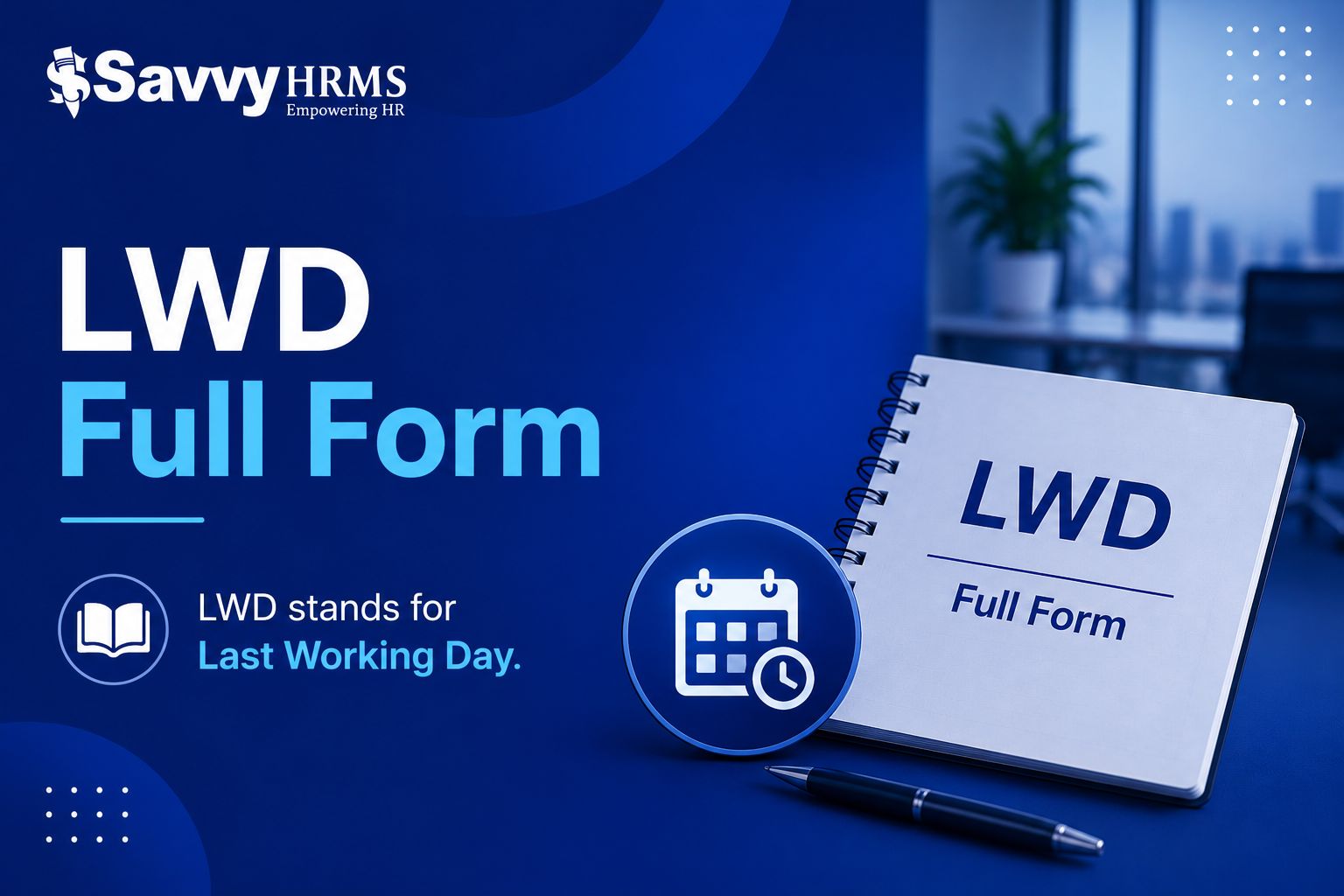
LWD means Last Working Day. It refers to the final day an employee officially works for an organization before leaving the company.
The Last Working Day marks the end of the employee's employment after completing all required formalities, such as serving the notice period, handing over responsibilities, returning company assets, and completing the exit process.
Although it sounds like just another date on the calendar, the LWD is an important milestone for both employees and employers. It ensures that all employment obligations are completed before the employee officially leaves the organization.
For example, if an employee resigns on 1st July with a 30-day notice period, the Last Working Day would generally be 31st July, unless both the employer and employee agree on an early release or another arrangement.
What Is the Full Form of LWD?
The full form of LWD is Last Working Day.
In HR, this term is commonly used during the resignation and employee offboarding process. Once an employee resigns, the HR team calculates the last working day based on several factors, including:
Notice period mentioned in the employment contract
Resignation date
Mutual agreement between the employer and the employee
Company policies
Early release requests
Garden leave, if applicable
The LWD serves as the official end date of employment and is recorded in HR systems and employee records.
Many HR departments communicate the Last Working Day through:
Resignation acceptance emails
HRMS portals
Exit process documentation
Relieving letters
Experience letters
Understanding the LWD full form helps employees know what to expect during the resignation process and allows HR teams to manage employee exits more efficiently.
What Is the Last Working Day (LWD)?
The Last Working Day (LWD) is the final day an employee reports to work before their employment officially ends. It marks the completion of all employment responsibilities and signals the beginning of the employee's transition out of the organization.
During this period, several important activities take place to ensure a smooth handover and maintain business continuity.
Some of these activities include:
Completing the notice period
Transferring ongoing work and responsibilities
Returning company-issued assets
Completing exit interviews
Processing the full and final settlement
Revoking access to company systems
Issuing the relieving letter and experience letter
A properly managed Last Working Day benefits both the employee and the employer. Employees leave the organization with all necessary documents, while businesses ensure that projects, clients, and internal operations continue without disruption.
In some cases, the Last Working Day may differ from the original notice period due to:
1. Early Release
Sometimes employers agree to release employees before the completion of their notice period. This usually happens through mutual agreement when work handovers are completed early, or business requirements allow for an earlier exit.
2. Garden Leave
In certain organizations, employees may remain on the company's payroll during their notice period but are not required to attend work or access business systems. This arrangement is commonly known as garden leave and is often used for employees in sensitive roles.
Regardless of whether an employee completes the full notice period, is granted early release, or is placed on garden leave, the LWD remains the official end date of employment.
Why Is the Last Working Day Important?
The Last Working Day is much more than an employee's final day at work. It ensures that the resignation process is completed professionally and that both the employer and employee fulfil their responsibilities.
Here are some reasons why the Last Working Day is important.
1. Ensures a Smooth Transition
Employees often manage ongoing projects, client relationships, and team responsibilities. The notice period leading up to the LWD provides enough time to transfer knowledge and complete pending work, minimizing disruptions for the organization.
2. Supports Business Continuity
A well-planned exit process helps teams continue their work without delays. Managers can reassign responsibilities, onboard replacements, or redistribute tasks before the employee leaves.
3. Completes Legal and HR Formalities
The Last Working Day is used to finalize important HR processes, such as:
Employee clearance
Asset return
Payroll updates
Full and Final Settlement
Exit interview
Issuing employment documents
Completing these formalities helps avoid future disputes and ensures compliance with company policies.
4. Maintains a Positive Employee Experience
A respectful and well-managed exit leaves a lasting impression. Employees who leave on good terms are more likely to recommend the organization, return in the future as "boomerang employees," or become valuable brand advocates.
5. Protects Company Information
Before an employee leaves, organizations revoke access to company systems, recover devices, and ensure confidential information remains secure. This reduces security risks and protects business data.
6. Strengthens Employer Branding
How a company handles employee exits reflects its workplace culture. A transparent and professional offboarding process builds trust among current employees and enhances the organization's reputation in the job market.
When Is an Employee's Last Working Day Decided?
An employee's Last Working Day (LWD) is usually decided after the resignation has been submitted and accepted by the employer. While the resignation date marks the day an employee formally informs the company about leaving, the LWD depends on several other factors, such as the notice period, company policies, and mutual agreement between both parties.
Here are the main factors that determine an employee's Last Working Day.
1. Notice Period
The notice period mentioned in the employment contract is the primary factor in deciding the LWD. Most organizations require employees to serve a notice period of 30, 60, or 90 days before leaving the company.
For example:
Resignation Date: 1st July
Notice Period: 30 Days
Last Working Day: 31st July
2. Mutual Agreement
Sometimes, both the employee and employer may agree to change the original Last Working Day. This can happen when projects are completed early or the organization no longer requires the employee to serve the full notice period.
3. Early Release
An employee may request an early release due to personal reasons or because they need to join another organization sooner. If the employer approves the request, the Last Working Day is revised accordingly.
4. Garden Leave
Certain organizations place employees on garden leave, where they remain employed and receive their salary during the notice period but are not required to attend work or access company systems. Even in this case, the official LWD remains the final date of employment.
5. Business Requirements
Sometimes organizations adjust the LWD based on project deadlines, client commitments, or workload to ensure a smooth transition without affecting business operations.
Regardless of how it is decided, the Last Working Day should always be communicated clearly through official HR communication or the company's HRMS portal to avoid misunderstandings.
Key Activities Before an Employee's Last Working Day
The period between resignation and the Last Working Day is known as the transition phase. During this time, several important activities take place to ensure both the employee and the organization complete all necessary formalities.
1. Complete the Notice Period
Employees are generally expected to complete their assigned duties during the notice period unless an early release has been approved. This allows sufficient time for work handovers and transition planning.
2. Knowledge Transfer
One of the most important steps before the Last Working Day is transferring knowledge to teammates or replacement employees.
Knowledge transfer may include:
Project updates
Client information
Process documentation
Password and system handovers
Pending task status
A structured handover helps ensure business continuity after the employee leaves.
3. Return Company Assets
Employees should return all company-issued assets before their Last Working Day.
These may include:
Laptop or desktop
Mobile phone
Identity card
Access cards
Security tokens
Company documents
Other office equipment
Returning assets on time helps complete the clearance process smoothly.
4. Exit Interview
Many organizations conduct an exit interview to understand why employees are leaving and gather feedback about their overall experience.
Exit interviews help HR teams identify areas for improvement related to workplace culture, employee engagement, leadership, and retention strategies.
5. Full and Final Settlement
The Full and Final Settlement is processed after verifying attendance, leave balances, salary, incentives, reimbursements, deductions, and any pending dues.
The settlement may include:
Salary up to the LWD
Leave encashment
Bonus or incentives (if applicable)
Expense reimbursements
Deductions for company assets or notice period recovery
6. Issue Employment Documents
Once all formalities are completed, the HR department provides important documents such as:
Relieving Letter
Experience Letter
Salary Slips
Full and Final Settlement Statement
Tax-related documents (if applicable)
These documents are often required when joining a new organization.
Employee Responsibilities Before the Last Working Day
Employees also have an important role in ensuring a smooth transition when leaving an organization.
1. Complete Assigned Work
Employees should make every effort to complete ongoing tasks or clearly document pending work before leaving.
2. Support Knowledge Transfer
Sharing information with colleagues or successors helps maintain business continuity and reduces disruptions after departure.
3. Return Company Property
Employees should return all company assets, documents, and equipment before their Last Working Day to avoid delays in the clearance process.
4. Follow Company Policies
Completing required forms, attending exit interviews, and following HR guidelines help ensure a smooth offboarding experience.
5. Maintain Professional Relationships
Leaving on good terms benefits both the employee and the employer. Professional conduct during the notice period helps preserve valuable workplace relationships and future networking opportunities.
Common Mistakes to Avoid During the Employee Exit Process
Even a well-planned resignation can become stressful if important steps are overlooked. Avoiding these common mistakes helps create a smoother exit for everyone involved.
1. Delaying Knowledge Transfer
Waiting until the last few days to hand over responsibilities can disrupt ongoing projects and place unnecessary pressure on colleagues.
2. Poor Communication
Employees should keep managers, HR teams, and relevant stakeholders informed throughout the resignation process to avoid confusion.
3. Ignoring Company Policies
Skipping required exit procedures, delaying asset returns, or failing to complete documentation can delay the Full and Final Settlement and the issuance of important employment documents.
4. Forgetting Company Assets
Returning laptops, ID cards, access cards, and other equipment before the Last Working Day helps complete the clearance process without delays.
5. Not Clarifying Final Documentation
Employees should confirm when they will receive their relieving letter, experience letter, and settlement statement to avoid unnecessary follow-ups later.
How HRMS Software Simplifies Last Working Day Management
Managing employee exits manually can be time-consuming and prone to errors, especially when multiple departments are involved. HR teams need to coordinate with managers, IT, finance, and administration to ensure every step of the offboarding process is completed before the employee's Last Working Day (LWD).
This is where a modern HRMS makes a significant difference. It automates the entire employee exit process, helping organizations manage resignations efficiently while ensuring compliance and a positive employee experience.
Here's how HRMS software simplifies Last Working Day management.
1. Centralizes the Exit Process
Instead of tracking resignations through emails and spreadsheets, an HRMS keeps every step of the offboarding process in one place.
HR teams can easily monitor:
Resignation Date
Notice Period
Last Working Day
Approval status
Clearance progress
Exit interview status
Full and Final Settlement
This improves visibility and reduces administrative effort.
2. Automates Notice Period Tracking
Calculating the Notice Period manually can sometimes lead to confusion, especially when early release or leave adjustments are involved.
An HRMS automatically calculates:
Notice period duration
Last Working Day
Pending leave adjustments
Early release requests
Notice buyout calculations (if applicable)
This minimizes errors and ensures consistency across the organization.
3. Streamlines Clearance Workflows
Before an employee leaves, approvals are often required from multiple departments.
An HRMS automates clearance workflows by sending requests to:
Reporting Manager
IT Department
Finance Team
Administration
Security
HR Department
Each department can update its clearance status, ensuring nothing is overlooked before the employee exits.
4. Simplifies Asset Management
Organizations often issue laptops, ID cards, access cards, mobile phones, or other equipment to employees.
HRMS software helps track these company assets and records whether they have been returned before the Last Working Day.
This reduces the chances of missing assets and delays in the exit process.
5. Supports Full and Final Settlement
Processing the Full and Final Settlement manually can take considerable time.
An HRMS automates calculations for:
Salary payable
Leave encashment
Reimbursements
Bonuses (if applicable)
Notice period recovery
Outstanding deductions
This helps finance teams complete settlements faster and more accurately.
6. Stores Exit Documents Securely
Important documents generated during employee offboarding can be securely stored within the HRMS.
These documents may include:
Relieving Letter
Experience Letter
Full and Final Settlement Statement
Exit Interview Records
Clearance Forms
Employees and HR teams can easily access these records whenever required.
7. Provides Exit Analytics
Modern HRMS platforms also generate reports on employee exits, helping organizations identify trends such as:
Employee turnover
Average notice period served
Reasons for resignation
Department-wise attrition
Exit completion timelines
These insights help businesses improve employee retention strategies and strengthen workforce planning.
Conclusion
Understanding LWD is essential for both employees and employers. The Last Working Day is more than just an employee's final day at work. It marks the successful completion of the resignation process, including the notice period, work handover, asset return, Full and Final Settlement, and the issuance of important documents like the Relieving Letter and Experience Letter. A well-managed exit process ensures a smooth transition while maintaining professionalism and positive relationships.
As organizations continue to digitize their HR operations, managing employee exits through an HRMS has become the preferred approach. Automated workflows reduce manual effort, improve accuracy, and help HR teams manage every stage of the employee lifecycle efficiently. From resignation acceptance to final settlement, an HRMS ensures that no critical step is missed.
If you're looking for a smarter way to streamline employee offboarding, Savvy HRMS offers a comprehensive HR solution with automated exit management, notice period tracking, clearance workflows, payroll integration, document management, and compliance support. It helps businesses simplify HR processes while delivering a seamless experience for both employees and HR teams.
Ready to simplify your employee exit process?
Book a free demo of Savvy HRMS today and discover how our all-in-one HRMS can automate Last Working Day management, streamline offboarding, and make every employee transition smooth and hassle-free.
Frequently Asked Questions (FAQs)
Q1. What does LWD mean in HR?
LWD means Last Working Day. It refers to the final day an employee officially works for an organization before their employment ends.
Q2. What is the full form of LWD?
The full form of LWD is Last Working Day.
Q3. Is the resignation date the same as the Last Working Day?
No. The resignation date is when an employee formally submits their resignation, while the Last Working Day is the final working day after completing the notice period or any mutually agreed changes.
Q4. Can the Last Working Day be changed?
Yes. The Last Working Day can change if both the employer and employee agree to an early release, notice period adjustment, or garden leave, depending on company policy.
Q5. What happens on the Last Working Day?
On the Last Working Day, employees typically complete pending work, hand over responsibilities, return company assets, participate in an exit interview, complete clearance formalities, and begin the process for receiving their Full and Final Settlement, Relieving Letter, and Experience Letter.
Q6. What is a Full and Final Settlement?
A Full and Final Settlement is the final payment made to an employee after they leave an organization. It usually includes salary up to the Last Working Day, leave encashment, reimbursements, incentives (if applicable), and any necessary deductions.
Q7. What is the difference between Garden Leave and Early Release?
Garden Leave refers to the period during which an employee remains on the company's payroll but is not required to work or access company systems. Early Release means the employee is officially relieved before completing the full notice period, provided the employer's approval is obtained.
Q8. How does HRMS help manage employee exits?
An HRMS automates resignation workflows, notice period tracking, clearance approvals, asset management, Full and Final Settlement, document generation, and exit reporting, making the offboarding process faster and more efficient.