Why Phone Screening Fails First When You Are Hiring at Scale In India
-
- July 01st, 2026
- 34 views

FREE SEO Topical Map Generator: Find Your Next Content Ideas
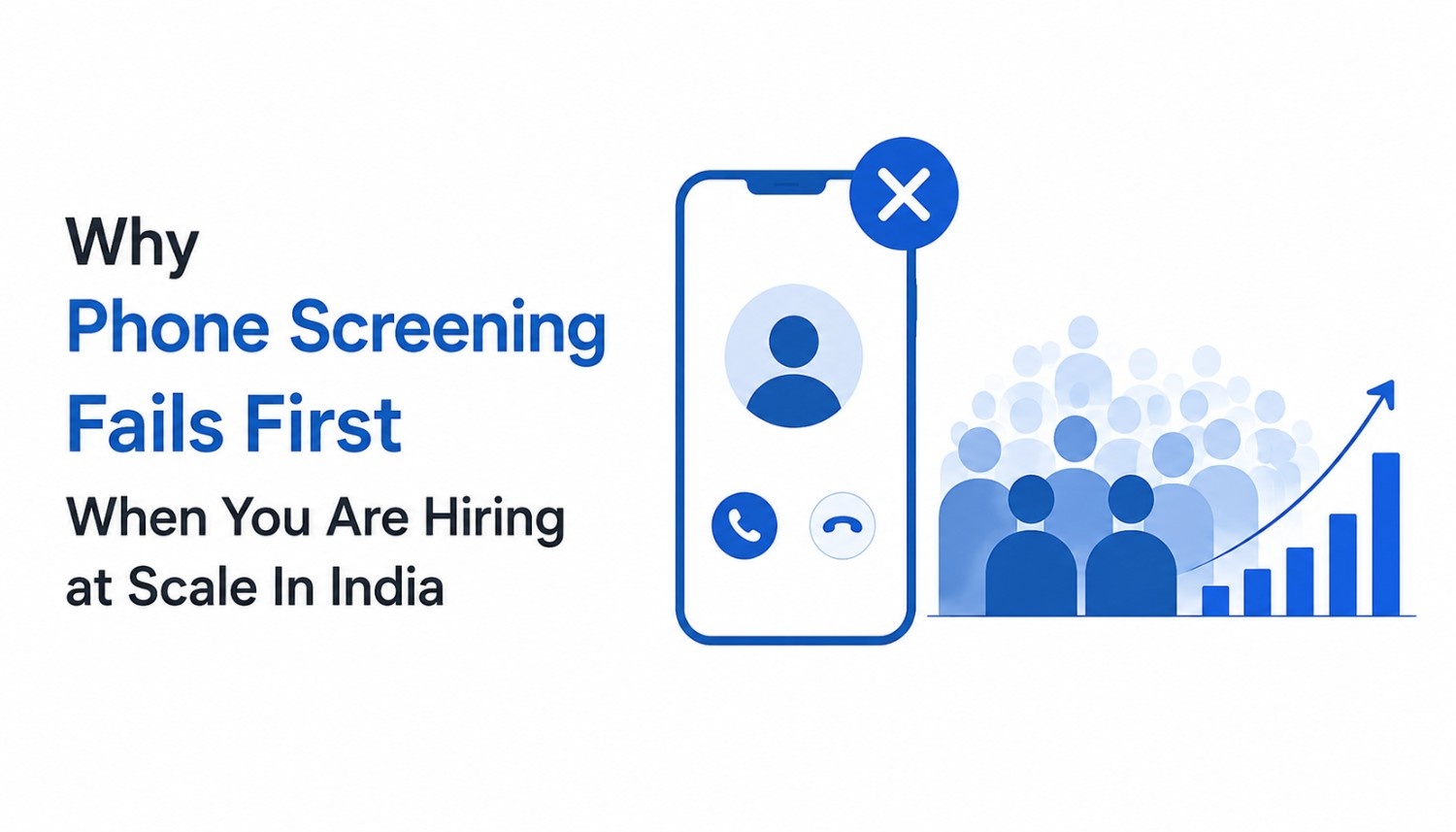
It's not the same in India when we post a role and the volume comes in as other markets. A single campus drive can net 2,000+ applications for colleges in 5-6 states. A staffing firm needs one week to screen candidates for frontline posts for a retail chain in Hindi, Tamil, Telugu and Marathi. A GCC running a bulk engineering hire is fielding resumes from Tier 1 metros and Tier 2 cities where the candidate’s first response to an unknown number is often not pick up at all.
Phone screening is the stage that absorbs all of that complexity, and it's usually the first thing to break.
The Math Doesn't Work Past a Certain Point
In reality a recruiter can have 20-30 structured screening calls a day. That works great with 50 applicants for a role. It doesn’t work at 500 and it certainly doesn’t work at 2,000 in a campus season where five roles are open at the same time.
let's break it down 500 candidates 15-20m per call 150-160 recruiter-hours just for round 1, before the first tech interview. Make it a hiring season with multiple open roles and it’s clear why “we’re short on recruiters” is often the wrong diagnosis. The team is not understaffed. The number of calls was more than any team, properly staffed or otherwise, could handle manually.
And this doesn’t get better as teams get more experienced at it, either. So another hiring season comes around and the queue resets to zero. The same math plays out again. A new batch of colleges, a new staffing mandate, a new bulk hire, and the same 20-30 calls a day ceiling in front of all of it.
The Indian Market Makes This Worse Specifically
Here the volume problem is compounded by three things that don’t exist in other, more homogenous, hiring markets:
Language and accent diversity. In one hiring drive, candidates may not have English as their first language and their comfort speaking English will vary a lot by region and educational background. A recruiter fluent in Hindi and English cannot screen a pool of Tamil speaking candidates with the same effectiveness and most teams don’t have recruiters covering 8-10 languages. That’s not a small gap. A candidate who can’t comfortably speak the language of the screening call is marked down on English fluency, not the thing the role actually requires.
WhatsApp-first candidate behaviour. WhatsApp is more likely to get responses from over 50% of the active job seekers in India, especially in non-metro cities, than calls from unknown numbers. Screening workflows that rely only on outbound calling miss a significant portion of qualified candidates, not because they’re not interested, but because the channel itself creates friction before the conversation even begins.
Spreading across the country and time zones. Campus recruiting and staffing pipelines often span colleges and candidate pools in multiple states, which means that screening windows must take into account varied schedules, exam periods and regional holidays that a single, centralized recruiting team cannot track at scale manually. A time that will work for the team in Delhi may fall right in the middle of a college's internal examination period three states away.
None of these problems are addressed when we hire more recruiters. These problems require a screening process that addresses issues of language, channel, and volume, and that’s a different kind of problem from "we need more people making calls."
What a Voice Screening Layer Should Actually Do
No matter what solution it is, whatever fills this gap, it should meet this particular requirement:
• Conducting structured yet adaptable conversations rather than following inflexible scripts that break at the first sign of an unconventional response from the candidate
• Working with the languages and accents spoken by your real candidates rather than being limited to English
• Conducting communication over the channel the candidates would actually reply to – be it calls or WhatsApp
• Returning a scored and structured report the recruiter could use right away in less than five minutes instead of a transcript they need to read
• Scaling up to multiple conversations simultaneously without compromising the quality
Most of the technologies for recruiting in large volumes were built with Western, English-speaking candidate pool in mind and treated other aspects as an afterthought. In the environment where language support and WhatsApp delivery aren’t some optional things but the actual deciding factors of whether the candidate would complete the interview or not, this becomes very important. The solution that looks great on paper but supports only English and outgoing calls would silently fail the recruitment campaign.
Where We Fit Into This
We're SkillBrew.AI, and BrewVoice was created especially for this – high volume screening in the Indian hiring scenario, not a repurposed US-first product.
BrewVoice conducts adaptive screening interviews via telephone or WhatsApp, in more than 10 regional languages, and assesses each interview along three dimensions: role fit, technical signals, and communication proficiency. The platform is integrated within a suite of other tools: CodeCollab for real-time technical assessment, AI Interviews for deeper resume-based interviews, and HireFlow, our free orchestration layer.
Here is the complete guide to our AI Voice Screening software: AI Voice Screening Tools. It describes how voice screening using AI is done, and how to choose among available platforms, including evaluating them vs. traditional, fully manual screening. You can also test out BrewVoice. If you are doing manual screening now and would like to see how well it performs against your actual JD and candidate pool, you can Book a live demo and we will conduct a live interview in your preferred language.