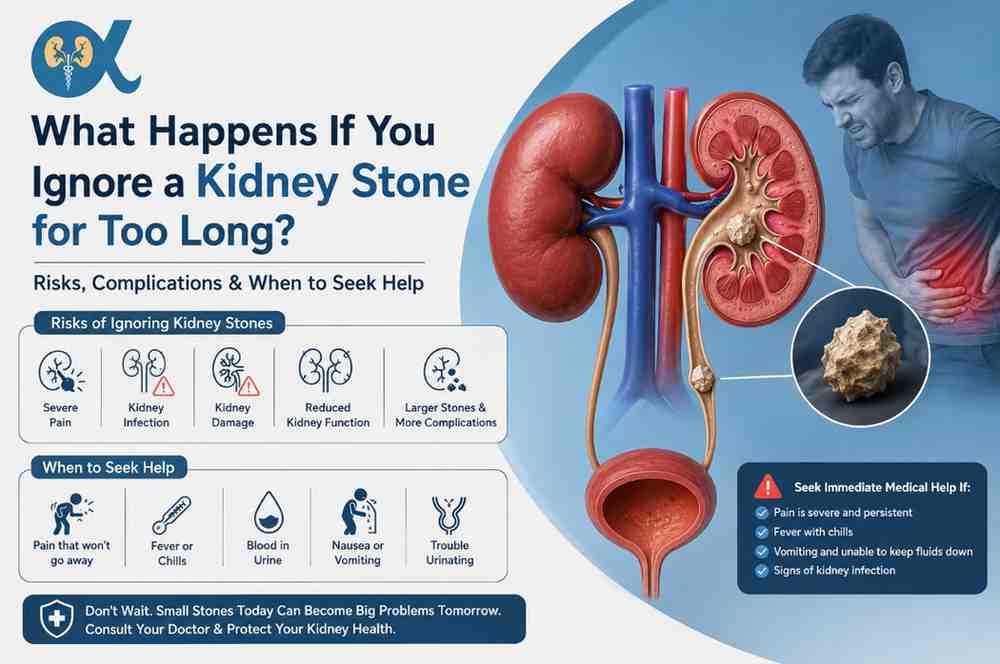
What Happens If You Ignore a Kidney Stone for Too Long? Risks, Complications & When to Seek Help
-

- July 23rd, 2026
- 28 views

FREE SEO Topical Map Generator: Find Your Next Content Ideas
Many people assume that a kidney stone will eventually pass on its own and choose to ignore the symptoms, especially when the pain comes and goes. While some small stones may pass naturally, delaying medical attention is not always safe. Ignoring a kidney stone for weeks or months can lead to serious complications that may affect your overall urinary and kidney health.
A kidney stone is a hard deposit made of minerals and salts that forms inside the kidneys. If left untreated, it can block urine flow, increase the risk of infection, and potentially cause permanent kidney damage. Understanding the warning signs and knowing when to seek help from a Kidney Specialist in Ahmedabad can make a significant difference in protecting your long-term kidney function.
What Happens When a Kidney Stone Remains Untreated?
Not all kidney stones cause immediate complications. However, when a stone becomes lodged within the urinary tract, it can create problems that worsen over time.
Urine Flow May Become Blocked
The urinary system depends on the smooth flow of urine from the kidneys to the bladder. A stone that becomes stuck in the ureter can partially or completely obstruct this flow.
As urine builds up behind the blockage, pressure inside the kidney increases. This condition can lead to swelling of the kidney, known as hydronephrosis, which may gradually impair kidney function.
Persistent and Severe Pain
One of the most recognized symptoms of kidney stones is intense pain that often begins in the back or side and may radiate toward the lower abdomen or groin.
Ignoring recurring pain episodes may allow the underlying stone to continue growing or moving through the urinary tract, increasing discomfort over time.
Increased Risk of Urinary Tract Infections
A blockage caused by a kidney stone creates an environment where bacteria can multiply more easily.
Symptoms may include:
- Fever
- Chills
- Burning during urination
- Cloudy urine
- Foul-smelling urine
An untreated infection combined with urinary obstruction can become a serious medical emergency.
Can Ignoring Kidney Stones Damage the Kidneys?
Yes. One of the biggest concerns associated with untreated kidney stones is their potential impact on kidney health.
Reduced Kidney Function
Long-term obstruction may reduce blood flow and increase pressure inside the kidney. Over time, this can affect how efficiently the kidneys filter waste products from the bloodstream.
Permanent Kidney Damage
Although not every untreated stone causes permanent harm, prolonged blockage can lead to irreversible damage in some patients.
Individuals with diabetes, high blood pressure, recurrent stone disease, or a single functioning kidney may face an even higher risk.
Increased Risk of Chronic Kidney Disease
Repeated episodes of stone-related obstruction and infection may contribute to declining kidney function over time, increasing the likelihood of developing chronic kidney disease.
Warning Signs You Should Never Ignore
Seek medical evaluation if you experience:
- Severe flank or back pain
- Blood in urine
- Fever and chills
- Persistent nausea or vomiting
- Difficulty urinating
- Frequent urinary infections
- Reduced urine output
These symptoms may indicate that the stone is causing complications requiring professional treatment.
Can Small Kidney Stones Be Left Alone?
Some small stones can pass naturally with adequate hydration and medical supervision. However, size is not the only factor that matters.
The location of the stone, associated symptoms, kidney function, and risk of infection must also be considered. This is why professional evaluation remains important even when a stone appears small.
How to Reduce Future Kidney Stone Risk
Simple lifestyle habits can help lower the chances of future stone formation:
Stay Properly Hydrated
Drinking sufficient water helps dilute minerals that contribute to stone formation.
Limit Excess Salt Intake
High sodium intake can increase the amount of calcium excreted in urine.
Maintain a Balanced Diet
Eating a diet rich in fruits and vegetables while limiting processed foods may help support urinary health.
Undergo Regular Kidney Checkups
Patients with a history of recurrent stones should have periodic evaluations to monitor kidney health.
Conclusion
Ignoring a kidney stone may seem harmless when symptoms are mild, but doing so can increase the risk of urinary obstruction, infections, recurring pain, and even long-term kidney damage. Early diagnosis and timely management are essential for protecting kidney function and avoiding unnecessary complications.
If you experience persistent symptoms or have a history of recurrent kidney stones, seeking professional medical advice is always the safest approach. Proactive treatment today can help prevent more serious kidney problems tomorrow.
Experiencing kidney stone symptoms or concerned about recurring stone formation? Consult Dr. Ravi Bhadania, an experienced Kidney Specialist in Ahmedabad, at Alfa Kidney Care for accurate diagnosis, advanced testing, and personalized treatment solutions.