How Custom Software Reduces Operational Costs
-

- August 04th, 2026
- 16 views

FREE SEO Topical Map Generator: Find Your Next Content Ideas
Every business wants to cut costs, but nobody wants to sacrifice quality or slow down operations. That's where custom software often proves its worth. Instead of paying for features you'll never use or forcing your team to work around limitations, custom software is built to fit the way your business actually operates.
Many companies still rely on spreadsheets, disconnected tools, and repetitive manual work. It gets the job done, but it also eats away at time and money. Custom software brings everything together, helping teams work faster with fewer mistakes.
It Eliminates Repetitive Manual Work
Employees spend hours every week entering the same information into different systems. That isn't just boring, it is expensive.
A custom solution can automatically transfer data between departments, generate invoices, update inventory, and send notifications without anyone lifting a finger.
A small wholesale distributor, for example, used to copy online orders into its accounting software every afternoon. It took one employee nearly two hours each day. After introducing automation through a custom application, the task finished in less than two minutes. The employee finally had time to focus on customer relationships instead of playing professional copy-and-paste champion.
Businesses looking for custom software development India often choose tailored solutions because they solve these everyday inefficiencies instead of forcing teams to adapt to generic software.
And Your Team Stops Switching Between Five Different Apps
Opening one application after another may not seem like a big deal until you do it 80 times a day.
Sales updates live in one system. Customer records sit somewhere else. Finance uses another platform. Before long, employees have more browser tabs open than actual work completed.
Custom software combines these workflows into one place, reducing delays and making information easier to find.
Less switching means fewer distractions and faster decisions.
Fewer Errors Mean Lower Costs
Human mistakes are expensive.
An incorrect invoice, duplicate order, or missing inventory update can create extra work that affects multiple departments.
Custom software uses validation rules and automated checks to catch problems before they become costly.
Imagine accidentally shipping 200 blue mugs instead of 20. Customers might enjoy the surprise, but your finance department probably won't.
By reducing these simple errors, businesses avoid unnecessary expenses while improving customer satisfaction.
Better Use of Employee Time
Hiring skilled employees is expensive. Spending their day on repetitive administrative work is even more expensive.
Custom software automates routine tasks so employees can focus on work that actually requires experience and judgment.
A customer support representative should be helping customers solve problems, not searching through four different databases to find an order number.
When employees spend more time creating value, productivity naturally improves.
Lower Software Subscription Costs
Many businesses pay monthly fees for several software products that only solve part of the problem.
CRM software, project management tools, reporting platforms, inventory systems, scheduling software, and document storage can quickly become a long list of recurring expenses.
A custom platform can replace multiple subscriptions with one integrated solution designed specifically for the company's needs.
While custom software requires an upfront investment, the long-term savings often outweigh years of subscription payments.
And Reporting Becomes Much Easier
Managers often spend hours collecting information from different systems before making decisions.
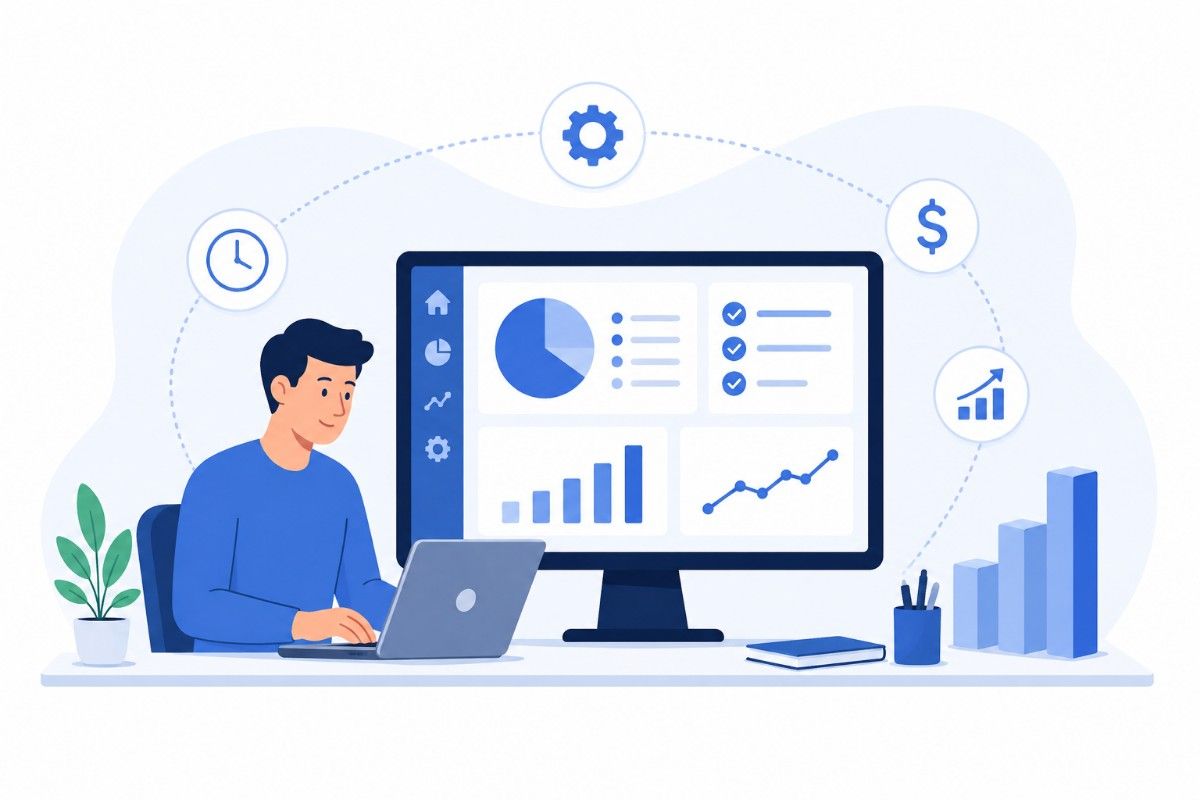
Custom dashboards automatically display sales performance, expenses, inventory levels, customer activity, and operational metrics in one place.
Instead of waiting until Friday to understand what happened on Monday, business leaders can see live information whenever they need it.
That means quicker decisions and fewer surprises.
Easier Growth Without Constant Replacements
Businesses evolve. New products are introduced, teams expand, and customer expectations change.
Off-the-shelf software doesn't always grow at the same pace. Eventually, businesses either pay for expensive upgrades or move to entirely new systems.
Custom software is built with future growth in mind. New features, integrations, and workflows can be added without replacing the entire platform.
That flexibility helps companies avoid major migration costs later.
Better Customer Experiences Save Money Too
Operational costs are not just about internal processes.
Slow service, delayed responses, and incorrect information can lead to unhappy customers who leave for competitors.
Custom software gives employees instant access to accurate customer data, helping them resolve issues more quickly.
And happy customers tend to complain less, which is excellent news for everyone, especially whoever answers the support phone on Monday mornings.
Small Improvements Add Up
Reducing operational costs rarely comes from one dramatic change. More often, it comes from dozens of small improvements that make everyday work easier.
Custom software reduces manual work, minimizes errors, simplifies reporting, lowers subscription costs, and helps employees spend more time on meaningful tasks. Those savings continue month after month, making the initial investment worthwhile for businesses focused on long-term efficiency.
Instead of asking employees to adapt to software that was built for everyone, custom software adapts to the business. And that is usually where the biggest savings begin.