CBAM Compliance: Why Green HR Coil and Steel Formwork Matter for Global Construction
-

- July 08th, 2026
- 36 views

FREE SEO Topical Map Generator: Find Your Next Content Ideas
Since January 1, 2026, the EU's Carbon Border Adjustment Mechanism (CBAM) has moved from a reporting formality into a financially binding regime. For any steel exporter, importer, or construction company sourcing hot rolled coil (HR coil) or steel formwork with EU exposure, this is no longer a future risk to plan around — it's a live cost sitting on every shipment.
What Changed on January 1, 2026
CBAM's transitional phase (October 2023–December 2025) only required quarterly emissions reporting, with no financial obligation attached. The definitive phase changes that fundamentally:
- Mandatory third-party verification of embedded emissions data — self-reported figures are no longer accepted. Verifiers must be ISO 14065-accredited or EU-recognized.
- Authorized CBAM Declarant status is now required for EU importers of covered goods, with certificate purchases tied to EU ETS carbon prices (currently averaging €65–90 per tonne of CO₂).
- A phased certificate cost, starting at just 2.5% of gross embedded emissions liability in 2026 but climbing sharply as EU ETS free allocation is phased out.
The math gets serious fast: at a consensus-forecast carbon price of ~€126/tonne CO₂e in 2030, an unmitigated BF-BOF steel importer faces a gross CBAM cost of roughly €172 per tonne — and by 2034, when free allocation disappears entirely, exporters bear the full carbon price on every tonne shipped to the EU.
For Indian steel exporters specifically, the exposure is significant: India ships an estimated 4.3+ million tonnes of steel to the EU annually, and — as of April 2026 — has no qualifying domestic carbon-pricing scheme that would let exporters claim a deduction under CBAM's Article 9. Without verified, product-level emissions data, EU importers default to fallback values that can run 30–80% higher than actual emissions, making unverified exporters dramatically less competitive.
Why Production Route Is the Deciding Factor
Indian steel produced via the conventional blast furnace–basic oxygen furnace (BF-BOF) route averages roughly 2.1 tonnes of CO₂ per tonne of crude steel — about double the EU average, and nearly 30 times the emissions intensity of a scrap-based electric arc furnace (EAF) route. A DRI-EAF route sits in between. Under CBAM's benchmark rules, whichever route accounts for more than 50% of the crude steel mass determines which benchmark applies to the whole batch — so the production method isn't just an environmental detail, it's a direct line item in the final landed cost of the steel in Europe.
This is precisely why "green steel" — HR coil and formwork produced using renewable power, hydrogen-based reduction, or high-recycled-content EAF routes — has stopped being a sustainability talking point and become a genuine pricing lever.
Where HR Coil Fits In
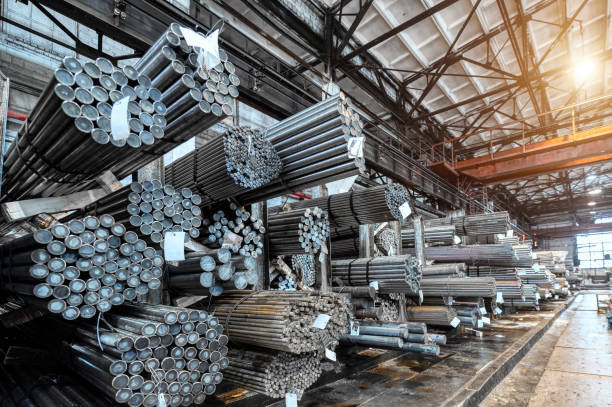
Hot rolled coil is one of CBAM's core covered products, and it's also the base input for a huge share of downstream construction steel — including the tubes, sections, and structural components used in scaffolding and formwork systems. That matters for two reasons:
- Direct exposure: HR coil producers exporting to the EU face CBAM certificate costs tied directly to their furnace route and power mix.
- Downstream exposure is coming: The European Parliament's ENVI Committee has already proposed extending CBAM to roughly 180 additional downstream steel and aluminium products — including fabricated construction components — from January 2028. Formwork, scaffolding fittings, and structural fabrications currently sit just outside CBAM's scope, but manufacturers serving EU-linked projects should treat that as a matter of when, not if.
Producers who can already document low embedded-carbon HR coil — through solar-powered melting operations, high scrap ratios, or verified emissions data — are positioning themselves ahead of that expansion rather than scrambling once it lands.
Why Steel Formwork Itself Is a Sustainability Story
Separately from CBAM, steel formwork has its own environmental case that's gaining traction with contractors chasing green building certifications:
- Steel forms can be reused for up to roughly 150 pours, compared with 25–50 for plywood systems — and the steel is fully recyclable at end of life.
- Reusable, high-durability systems can cut construction waste by up to 30% compared with traditional single-use formwork.
- Faster strip-and-reuse cycles can shorten total project timelines by 30–50%, reducing the embodied carbon associated with prolonged site activity.
Combine a low-carbon HR coil feedstock with a reusable steel formwork system, and the carbon savings compound at both the material-production stage and the construction-site stage — which is exactly the kind of full-lifecycle story that EU developers, under growing pressure from their own green building mandates, are starting to ask suppliers for directly.
What This Means for Manufacturers and Buyers
If you manufacture HR coil or formwork for export:
- Verified, installation-level emissions data is now a competitiveness issue, not just a compliance box — the gap between default values and verified actuals can be the difference between a viable EU order and an unviable one.
- Investment in renewable power (solar, in particular), higher scrap ratios, or hydrogen-ready reduction technology directly reduces your CBAM exposure, and that advantage compounds as the phase-in factor climbs toward 100% by 2034.
If you're a contractor or developer sourcing steel for EU-linked projects:
- Ask suppliers for their production route and verified emissions intensity, not just price — a marginally higher HR coil cost from a low-carbon producer can be cheaper landed once CBAM certificate costs are added to a high-emission alternative.
- Favor reusable steel formwork systems where feasible; the waste and lifecycle-cost advantages stack with the carbon case.
Either way: CBAM's phase-in gives the industry a runway, not a cliff — but that runway gets shorter every year the certificate factor climbs. Producers and buyers who move early on verified, low-carbon steel are the ones who'll avoid the "competitive cliff edge" that unprepared exporters are already starting to feel.