Bus Wrap vs Bus Panel Advertising: Which Bus Ad Format Should Brands Choose?
-

- July 03rd, 2026
- 30 views

FREE SEO Topical Map Generator: Find Your Next Content Ideas
Bus advertising remains one of the most practical ways for brands to build visibility across busy urban markets. Since buses move through commercial roads, residential areas, shopping districts, and high-traffic routes every day, they create repeated opportunities for consumers to notice a brand message. For businesses looking to improve awareness at scale, bus campaigns continue to offer strong city-wide exposure and consistent commuter reach.
However, choosing bus advertising is only the first step. Brands also need to decide which format suits their campaign better. The two most common options are bus wrap advertising and bus panel advertising. While both formats help businesses gain visibility on the road, they differ in terms of impact, cost, coverage style, and creative possibilities.
Understanding these differences is important because the right format depends on what a campaign is trying to achieve. A product launch, for example, may need maximum visual dominance, while a regional awareness campaign may benefit more from a cost-efficient format with repeated visibility.
What Is Bus Wrap Advertising?
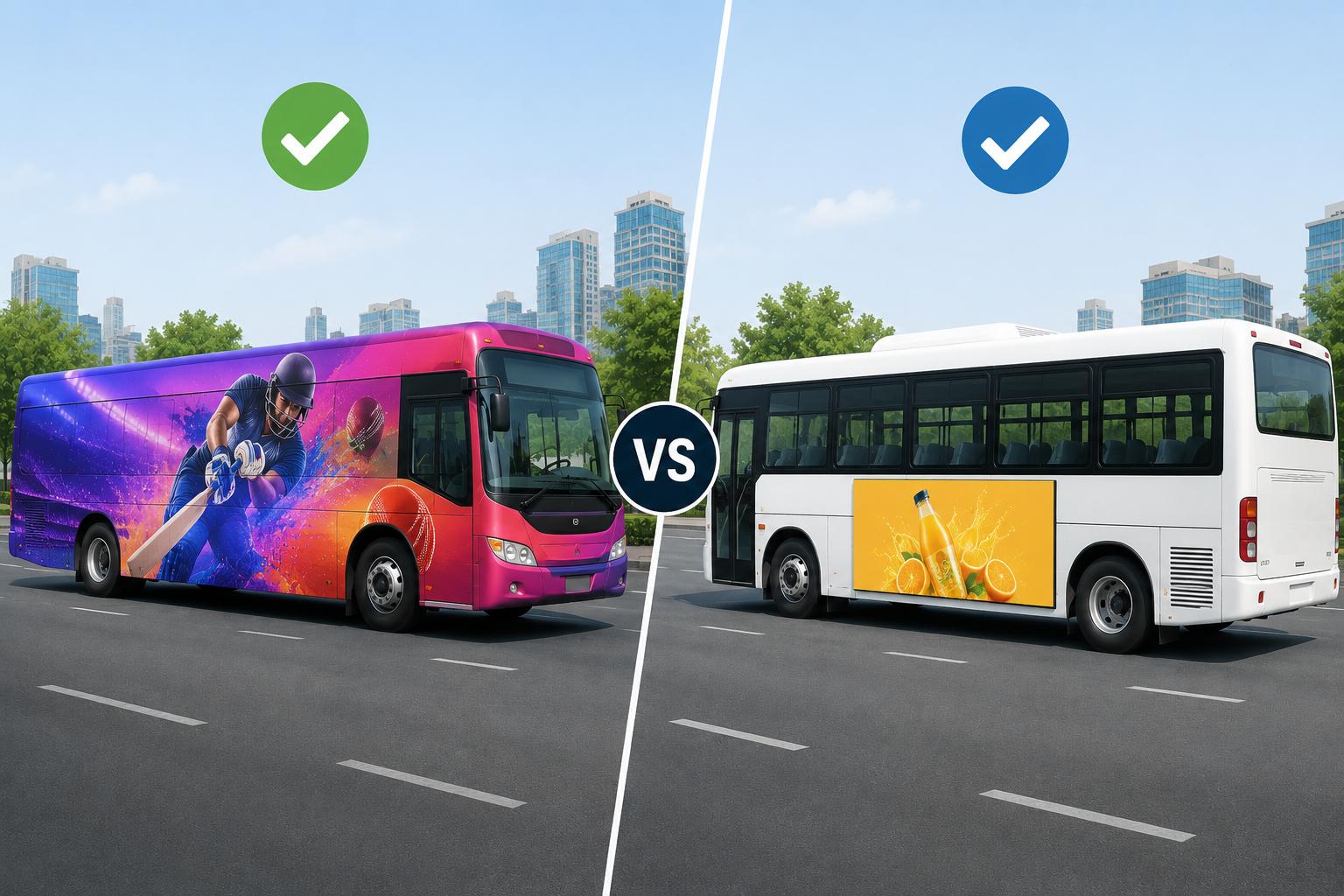
Bus wrap advertising covers a large portion of the bus exterior, and in some cases, almost the entire vehicle. This makes it one of the most attention-grabbing forms of transit media because the advertisement becomes hard to miss in traffic.
The main strength of bus wraps is visual impact. Since the creative occupies a large surface area, brands can create a bold presence across city roads. This format works especially well for campaigns focused on brand launches, high-visibility promotions, festive campaigns, and businesses wanting a strong city-wide statement.
Because of its size, a bus wrap can also support larger visuals, stronger branding, and more memorable design execution. In crowded traffic conditions, that larger display often helps the campaign stand out.
What Is Bus Panel Advertising?
Bus panel advertising uses smaller ad spaces placed on selected sections of the bus, usually on the sides, back, or specific exterior panels. While it does not offer the same visual dominance as a full wrap, it remains a popular and effective option for brands that want road visibility at a lower investment.
Bus panel ads are usually simpler in design because the available space is more limited. This often works well for businesses focusing on short, direct messaging such as a brand name, offer, app promotion, or call to action.
For brands planning wider route coverage on a more controlled budget, bus panels can be a practical choice because they allow exposure across multiple vehicles without the higher cost of full wraps.
The Biggest Difference: Impact vs Efficiency
The key difference between bus wraps and bus panels is the kind of visibility they deliver.
A bus wrap creates stronger visual impact. It turns the entire vehicle into a moving advertisement, making it ideal for campaigns that want dominance, memorability, and strong presence. If the objective is to make a bold impression in a competitive city environment, a wrap usually has the advantage.
Bus panels, on the other hand, are more efficiency-focused. They still provide repeated visibility as buses move through the city, but they do so in a more budget-friendly way. For brands that want broad route coverage, repeated exposure, and cost control, bus panels can deliver strong value.
So the decision often comes down to whether the campaign needs maximum impact or wider efficiency.
Which Format Works Better for Brand Awareness?
Both formats can support awareness, but they do it differently.
Bus wraps often perform better for large-scale brand awareness because they are more noticeable and visually memorable. A full-bus creative is easier to spot in traffic and can leave a stronger first impression.
Bus panels are effective when awareness depends more on repeated exposure than visual dominance. If the same panel advertisement appears across several buses on frequently used routes, it can still build strong recall over time.
For launch campaigns, premium branding, or highly competitive sectors, wraps may offer an edge. For sustained awareness campaigns with a focus on repetition, panels can still work very well.
Budget Plays a Major Role
Cost is one of the most practical factors in this decision.
Bus wrap advertising generally requires a higher budget because of the larger print area, more extensive installation, and premium visual impact. It is often chosen when a brand wants fewer buses with stronger presence.
Bus panel advertising is usually more affordable, which means businesses can often place ads on more buses or run campaigns for longer durations within the same budget.
This makes panel ads useful for brands that want to balance visibility with cost efficiency. A business may not get the same dramatic impact as a wrap, but it may gain more route coverage or longer campaign duration.
Creative Flexibility Also Matters
A wrap gives designers more space to build a stronger visual story. Large imagery, bold brand colors, and bigger creative elements can all work together to create a memorable moving advertisement.
Panels require tighter messaging. Since the space is smaller, the creative needs to be simpler and more direct. In some cases, this can actually be an advantage because commuters only have a few seconds to notice the ad. A short, focused message may be easier to process quickly.
So the format should also match the kind of message you want to communicate.
Conclusion
Bus wrap and bus panel advertising both offer strong advantages, but the right choice depends on your campaign goals, budget, and visibility needs. Bus wraps are ideal for brands that want high-impact road presence, bold visual branding, and stronger first impressions. Bus panels work well for businesses looking for repeated exposure, route coverage, and better cost efficiency.
Instead of asking which format is universally better, brands should ask which format aligns better with the role bus advertising is meant to play in the campaign. When chosen strategically, either format can help improve awareness, recall, and city-wide brand visibility.