How to Get BIS ISI Certification in Brazil for the Indian Market?
-

- July 02nd, 2026
- 39 views

FREE SEO Topical Map Generator: Find Your Next Content Ideas
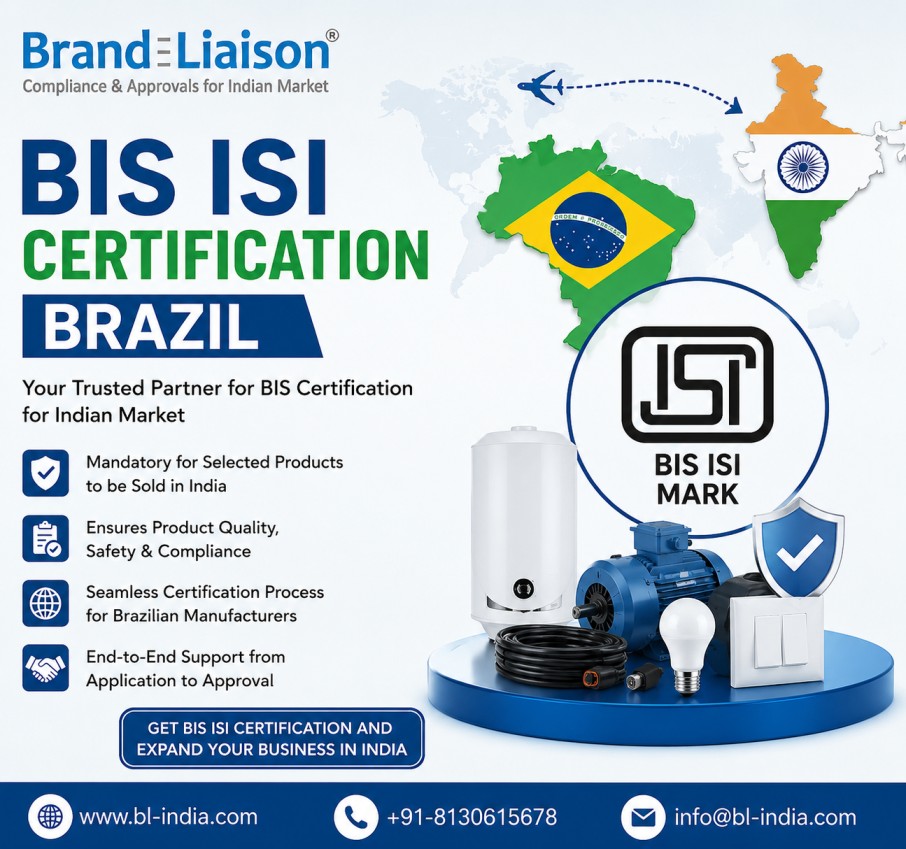
India is one of the fastest-growing markets for imported products, but many products that have been notified by the BIS cannot enter the country without meeting the required quality and safety standards. The Bureau of Indian Standards (BIS) regulates these standards through the BIS ISI certification scheme. If you are a manufacturer in Brazil planning to export products such as electrical appliances, steel products, chemicals, or other notified items to India, obtaining BIS certification is essential.
BIS ISI certification confirms that a product complies with Indian standards of quality and performance and is safe for consumers. It also helps manufacturers gain trust among Indian buyers, distributors, and government authorities.Additionally, BIS certification provides a competitive advantage to manufacturers entering the Indian market. Products carrying the ISI mark are widely recognized for their quality and reliability, making it easier for businesses to establish strong relationships with importers and distributors. The certification also reduces the risk of customs delays, product recalls, and regulatory penalties due to non-compliance. For Brazilian manufacturers, obtaining BIS certification demonstrates a commitment to international quality standards and enhances brand reputation in India. As India's demand for quality products continues to grow, BIS certification becomes an essential requirement for long-term business success and market expansion.
Process to Obtain BIS ISI Certification in Brazil
The BIS certification process generally includes the following steps:
Step 1: Check Product Eligibility
Determine whether your product falls under the mandatory BIS certification scheme.
Step 2: Prepare Documentation
Collect all technical documents, company details, and manufacturing information required for the application.
Step 3: Submit the Application
File the BIS application along with supporting documents and prescribed fees.
Step 4: Product Testing
Samples may need to be tested in BIS-recognized laboratories to verify compliance with Indian standards.
Step 5: Factory Inspection
BIS officials will inspect the manufacturing facility to evaluate production processes and quality control measures.
Step 6: Grant of BIS License
After successful verification and approval, BIS issues the license and permits the manufacturer to use the ISI mark on certified products.
Note: All foreign manufacturers who are planning to export products for sale in India are required to appoint an Authorized Indian Representative (AIR) in order to proceed with the BIS application.
Documents Required for BIS ISI Certification
Before applying for the BIS certification, manufacturers should prepare the following documents:
Company registration certificate.
Manufacturing license and factory details.
Product specifications and technical drawings.
Quality control and testing procedures.
List of manufacturing machinery and equipment.
Product test reports, if available.
Details of the authorized Indian representative (AIR) for foreign manufacturers.
Trademark or brand authorization documents.
Having complete and accurate documentation helps avoid delays during the approval process.
Why is BIS ISI Certification Important for Manufacturers in Brazil?
BIS certification is important for Brazilian manufacturers because it:
Allows legal import and sale of products in India.
Demonstrates compliance with Indian quality and safety standards.
Reduces the risk of customs delays and product rejections.
Increases business opportunities in the Indian market.
Builds credibility and trust among customers and distributors.
For Brazilian companies looking to expand their operations in India, BIS ISI Certification in Brazil is an important step toward achieving regulatory compliance and strengthening their market position.
How Can Brand Liaison Help?
Obtaining BIS certification can be challenging for foreign manufacturers because of complex documentation, testing requirements, and regulatory procedures. Brand Liaison provides complete consultancy services to simplify the entire process.
The team assists with product evaluation, documentation preparation, application filing, coordination with testing laboratories, and communication with BIS authorities. Their expert guidance helps manufacturers avoid unnecessary delays and obtain certification efficiently. If you are planning to export products from Brazil to India, Check Your Eligibility For BIS ISI certification in Brazil with Brand Liaison and get professional support for your BIS certification requirements.
Frequently Asked Questions (FAQs)
1. Is BIS certification mandatory for exporting products from Brazil to India?
Yes, it is mandatory for products covered under India's compulsory BIS certification scheme.
2. How long does the BIS certification process take?
The timeline varies depending on the product category and documentation, but it generally takes a few months.
3. Can a Brazilian manufacturer apply directly for BIS certification?
No, foreign manufacturers can apply for a BIS certification through an Authorized Indian Representative (AIR).
4. What happens if a product is sold in India without BIS certification?
The product may be stopped at customs, rejected by authorities, or face legal penalties.
5. Why should manufacturers hire a BIS consultant?
A consultant helps manage documentation, ensures regulatory compliance, and speeds up the certification process.Additionally, BIS certification provides a competitive advantage to manufacturers entering the Indian market.