AI Robot Assistant Is Changing the Way You Buy Cars at Dealerships
-

- August 06th, 2026
- 44 views

FREE SEO Topical Map Generator: Find Your Next Content Ideas
Buying a car involves more than choosing a model. Customers need to understand variants, features, colours, powertrain options, safety systems, financing, ownership costs, availability, and test-drive schedules. A buyer may enter a dealership with a clear preference, while another visitor may still be comparing several vehicle categories.
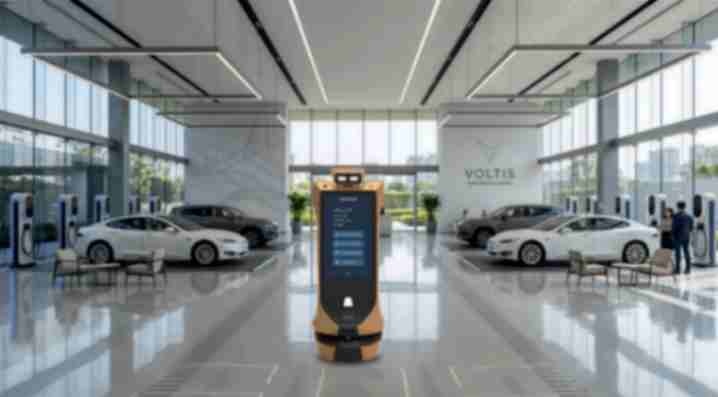
A robotic assistant by Kody Robots can support this complex buying journey by giving customers immediate access to structured vehicle information. The robot can welcome visitors, help them explore models, record their preferences, and connect them with a sales consultant who already understands their interests.
A Robot Assistant for Car Showroom does not replace the dealership team. The robot supports the early stages of customer engagement while sales consultants focus on demonstrations, finance discussions, negotiations, and relationship-building.
This combination of self-service discovery and human consultation can make the dealership experience more organized, informative, and customer-friendly.
Key Takeaways
- A robotic assistant can engage showroom visitors when sales consultants are busy.
- Customers can explore models, variants, features, colours, and offers through a guided digital experience.
- The robot can collect buyer preferences and create a more informed sales handoff.
- A smart Robot Assistant by Kody Robots can support product education, lead capture, test-drive requests, and multilingual customer engagement.
- Dealership employees remain essential for physical demonstrations, negotiations, finance guidance, and final purchase decisions.
- The strongest showroom automation model combines robotic support with skilled sales consultants.
Why the Traditional Car-Buying Experience Needs Improvement?
Car dealerships often depend heavily on sales consultants to manage the complete customer journey. A consultant welcomes the visitor, asks questions, introduces models, explains specifications, presents finance options, and arranges a test drive.
This model works well when a salesperson is immediately available. Problems begin during weekends, promotional events, vehicle launches, or peak showroom hours.
Visitors may experience:
- Long waiting periods
- Inconsistent product explanations
- Limited access to model comparisons
- Difficulty finding current offers
- Repeated questions about common features
- Delays in arranging test drives
- Incomplete recording of walk-in interest
- Pressure to begin a sales conversation too early
Some customers prefer to explore independently before speaking with a consultant. Others want quick answers without waiting for a complete sales presentation.
A robotic assistant gives these customers a starting point. The robot can help them understand the available options while the dealership team completes other conversations.
What Is a Robotic Assistant for Car Dealerships?
A robotic assistant for a car dealership is a customer-engagement system designed to support vehicle discovery, product education, buyer qualification, and sales-team coordination.
The robot may combine mobility with an interactive digital interface. Customers can use the interface to browse information, choose preferences, or request assistance.
A showroom robotic assistant may support:
- Customer greetings
- Vehicle model discovery
- Variant comparison
- Feature education
- Colour selection
- Offer communication
- Finance-interest capture
- Electric vehicle education
- Test-drive requests
- Customer-detail collection
- Sales consultant notification
- Multilingual interactions
The purpose is not to complete the entire vehicle sale automatically. Car buying still involves emotional preferences, physical inspection, negotiation, documentation, and trust.
The robot supports the informational stage so customers and sales consultants can begin a more relevant conversation.
How a Robotic Assistant Changes the Buyer Journey
A dealership robot can support several stages of the buying process.
Stage 1 Welcoming the Visitor
The first few minutes inside a showroom shape the customer’s impression. A visitor who receives no acknowledgement may feel ignored, even if the sales team is genuinely busy.
A robotic assistant can provide immediate engagement by welcoming visitors and asking what they would like to explore.
The robot may allow customers to choose options such as:
- Browse available vehicles
- Compare models
- Explore electric cars
- View current promotions
- Request a test drive
- Speak with a consultant
- Explore finance options
This gives the visitor a clear starting point instead of leaving them to walk around without guidance.
Stage 2 Understanding Customer Intent
Not every showroom visitor has the same requirement. One customer may need a compact city car. Another may want a premium SUV. A family may prioritize space and safety, while a business buyer may focus on operating costs.
The robot can ask structured questions to understand the buyer’s general intent.
Questions may cover:
- Preferred vehicle category
- Expected budget
- Number of passengers
- Daily driving needs
- City or highway usage
- Preferred fuel or powertrain
- Interest in electric vehicles
- Required features
- Expected purchase timeline
This information helps narrow the available options and creates useful context for the sales team.
Stage 3 Supporting Vehicle Discovery
Large dealerships may display only part of the available lineup. Some models, colours, or variants may not be physically present at the time of the visit.
A robotic assistant can give customers a broader view of the dealership’s vehicle range.
Customers may explore:
- Hatchbacks
- Sedans
- SUVs
- Electric vehicles
- Commercial vehicles
- Entry-level models
- Premium variants
- Available colours
- Interior options
- Accessory categories
The robot can organize information into a simple journey rather than showing every detail on one screen.
This helps buyers move from a broad interest to a smaller group of relevant vehicles.
Stage 4 Comparing Models and Variants
Vehicle comparison is one of the most time-consuming parts of the buying journey. Customers may struggle to understand why one variant costs more or which features matter for their needs.
A robotic assistant by Kody Robots can present comparisons in a structured format.
The comparison may include:
- Vehicle size
- Seating capacity
- Powertrain type
- Transmission options
- Key convenience features
- Safety-related features
- Infotainment options
- Boot space
- Available colours
- Variant positioning
The robot should not overwhelm customers with excessive technical language. Information should remain clear enough to support the next sales conversation.
A salesperson can then explain the finer differences and recommend the most suitable choice.
Stage 5 Educating Electric Vehicle Buyers
Electric vehicle customers often have questions that differ from traditional car buyers.
They may ask about:
- Driving range
- Charging options
- Home charging
- Public charging
- Battery considerations
- Daily commuting suitability
- Long-distance travel
- Ownership planning
- Available variants
- Test-drive experience
A robotic assistant can organize these topics into a guided educational flow. Customers can review the basics at their own pace before discussing personal requirements with an EV specialist.
The robot should avoid presenting general information as a guarantee. Actual vehicle performance, charging time, and ownership conditions can vary. Sales consultants should confirm model-specific information.
Stage 6 Capturing Customer Preferences
Many showroom conversations generate valuable information, but not every detail is recorded consistently.
A robotic assistant can help capture structured buyer preferences such as:
- Name
- Contact details
- Preferred model
- Preferred variant
- Colour interest
- Budget range
- Purchase timeline
- Finance interest
- Exchange requirement
- Test-drive request
- Preferred contact method
The dealership should clearly explain how customer information will be used and protected.
Structured lead capture helps the sales team follow up with more relevant information instead of sending generic messages.
Stage 7 Booking a Test Drive
A test drive is often the point where product interest becomes serious purchase consideration.
The robot can help customers submit a test-drive request by selecting:
- Vehicle model
- Preferred date
- Preferred time
- Contact details
- Showroom location
- Additional requirements
The final appointment may still need employee confirmation because vehicle availability and sales schedules can change.
However, the robotic assistant reduces friction by collecting the initial request immediately.
Stage 8 Creating a Better Sales Handoff
A sales consultant should not need to restart the conversation from the beginning after a customer has interacted with the robot.
The robot can provide the team with a summary of the visitor’s interests.
For example, the consultant may learn that the customer:
- Wants a five-seat SUV
- Has a defined budget
- Is comparing two models
- Prefers an automatic transmission
- Is interested in finance
- Wants a weekend test drive
This allows the salesperson to begin with a more focused discussion.
Instead of asking broad introductory questions, the consultant can validate the requirements, present the relevant vehicle, and address specific concerns.
Benefits for Car Buyers
Immediate showroom engagement
Customers receive a starting point even when the dealership is busy.
Independent product discovery
Visitors can explore vehicles without feeling pressured to begin a sales conversation immediately.
Clearer comparisons
Structured comparisons can make model and variant differences easier to understand.
Faster access to information
Customers can review common product topics without waiting for a consultant.
More relevant assistance
Sales consultants receive context before joining the discussion.
Easier test-drive requests
The robot provides a clear way to register test-drive interest.
More comfortable multilingual interaction
A digital experience can support customers who prefer different languages.
Better use of waiting time
Visitors remain productively engaged while a sales representative becomes available.
Benefits for Dealership Sales Teams
A robotic assistant can also support sales consultants.
Reduced repeated explanations
The robot can introduce basic product categories, allowing consultants to focus on detailed questions.
Better lead quality
Structured customer preferences help the team understand buyer intent.
Improved floor coverage
The dealership can engage more walk-in visitors during busy periods.
More focused sales conversations
Consultants begin with useful information rather than a completely cold interaction.
Better follow-up
The sales team can send model-specific information based on the visitor’s recorded interests.
Consistent initial presentation
Customers receive a structured introduction to available models and dealership services.
Stronger consultant productivity
Employees can spend more time on demonstrations, negotiations, finance discussions, and purchase support.
How a Smart Robot Assistant Supports Showroom Operations
A smart robot assistant should be connected to a practical dealership workflow.
The robot may support:
- Visitor reception
- Product browsing
- Model comparison
- Offer communication
- Lead capture
- Test-drive requests
- Salesperson handoff
- Event engagement
- New vehicle launches
- Customer feedback
The word “smart” should not suggest that the robot can answer every possible question. The system remains limited by its content, software, configured workflows, and available information.
Complex questions should be transferred to a trained dealership employee.
Using a Robotic Assistant During Vehicle Launches
Vehicle launches often bring higher visitor traffic into showrooms. Sales consultants must manage demonstrations, existing buyers, enquiries, and event guests at the same time.
A robotic assistant can support launch events by:
- Introducing the new vehicle
- Displaying key highlights
- Showing available colours
- Sharing launch schedules
- Collecting test-drive interest
- Recording customer details
- Directing visitors toward the display area
- Connecting interested buyers with consultants
The robot helps maintain engagement without reducing the importance of the physical vehicle experience.
Using a Robotic Assistant During Peak Hours
Weekend afternoons and promotional periods can create a gap between showroom footfall and consultant availability.
An AI robot can help the dealership manage this gap.
While visitors wait, they can:
- Explore the model lineup
- Compare options
- Review features
- Understand current campaigns
- Submit contact details
- Request a test drive
- Ask for sales assistance
This reduces unproductive waiting and helps the dealership record interest that could otherwise be missed.
The Role of Human Sales Consultants
A robotic assistant cannot replace the human side of automotive retail.
Sales consultants remain responsible for:
- Understanding personal preferences
- Demonstrating the physical vehicle
- Explaining model-specific details
- Confirming current pricing and availability
- Discussing finance
- Evaluating exchange vehicles
- Handling negotiations
- Managing documentation
- Building customer trust
- Supporting final purchase decisions
The robot handles structured discovery and initial engagement. The consultant handles judgment, persuasion, trust, and relationship-building.
This hybrid approach creates a stronger buying experience than either technology or human service can provide alone.
What Dealerships Should Evaluate Before Adoption
The main customer problem
The dealership should identify whether the robot needs to solve waiting time, product education, lead capture, or floor coverage.
Showroom layout
The robot should operate in an area where visitors can approach it comfortably.
Product content
Vehicle information must be organized, clear, accurate, and easy to update.
Sales-team workflow
Employees should know how leads and customer requests will reach them.
Language requirements
The experience should reflect the languages used by showroom visitors.
Data handling
Customer information should be collected through a transparent and responsible process.
Staff training
The sales team should understand how to introduce the robot and continue the customer journey.
Measurement
The dealership should track meaningful outcomes such as interactions, test-drive requests, lead completion, and consultant handoffs.
Measuring the Value of a Dealership Robotic Assistant
Dealerships can evaluate robotic assistance by Kody Robots through practical indicators.
Possible measures include:
- Number of visitor interactions
- Completed customer profiles
- Test-drive requests
- Models explored
- Most-viewed features
- Sales consultant handoffs
- Lead follow-up completion
- Customer feedback
- Peak-hour engagement
- Event participation
The robot should be evaluated across regular showroom use. A one-day demonstration may attract attention, but long-term use reveals whether the system improves the buyer journey.
Why Kody Robots Fits Car Showroom Automation
Kody Robots, a robotics company in India, focuses on autonomous robotic solutions for commercial and customer-facing environments.
A robotic assistant developed for car showrooms can help dealerships combine vehicle education, customer engagement, lead capture, and sales-team coordination within one guided experience.
The strongest deployment begins with a clear workflow and a defined role for the robot. The system should help customers move confidently from initial interest to a meaningful conversation with a sales consultant.
The Future of Buying Cars at Dealerships
The future dealership will combine physical vehicles, skilled consultants, digital product content, customer data, and robotic assistance.
Future showroom experiences may include:
- Guided vehicle discovery
- Personalized model recommendations
- Multilingual customer journeys
- Connected test-drive requests
- Digital finance interest
- Customer preference summaries
- Faster employee handoffs
- Integrated showroom analytics
- Virtual product demonstrations
- Follow-up automation
Technology will not remove the emotional and personal nature of car buying. Instead, technology can make the process more organized and easier to navigate.
Conclusion
A robotic assistant by Kody Robots is changing the way customers explore and buy cars by making the early showroom journey more informative, structured, and accessible.
The robot can welcome visitors, present available models, compare options, explain features, capture buyer preferences, and support test-drive requests. Sales consultants then continue the journey with better customer context and more time for high-value conversations.
A Robot Assistant for Car Showroom by Kody Robots works best when the robot supports employees rather than attempts to replace them. Human expertise remains essential for physical demonstrations, finance discussions, negotiation, and purchase decisions.
For dealerships seeking better visitor engagement, stronger lead capture, and smoother sales handoffs, robotic assistance offers a practical path toward a more modern automotive retail experience.