How to Choose the Right Acoustic Panel Adhesive in Qatar
-

- July 21st, 2026
- 44 views

FREE SEO Topical Map Generator: Find Your Next Content Ideas
Installing acoustic panels involves more than selecting the right sound-absorbing material. The adhesive used during installation plays a critical role in determining whether panels remain securely bonded for years or begin detaching after only a short period. This is particularly important in Qatar, where high temperatures, thermal expansion, and constant air-conditioning cycles place additional stress on adhesive bonds. Choosing the correct acoustic panel adhesive improves installation reliability, protects expensive acoustic materials, and helps maintain long-term acoustic performance. Whether you’re fitting out a recording studio, office, cinema, educational facility, or commercial building, understanding adhesive selection is just as important as selecting the acoustic panels themselves.
Why Acoustic Panel Adhesives Matter More Than Most Buyers Realize
Many buyers focus entirely on the acoustic panel while overlooking the importance of the installation system behind it. However, adhesives are responsible for keeping foam panels securely attached despite environmental changes and regular building movement. Standard construction adhesives may lose strength when exposed to sustained heat, making them unsuitable for many applications in Qatar’s demanding climate. Professional-grade acoustic foam adhesives are specifically formulated to provide strong initial tack, durable bonding, and compatibility with polyurethane acoustic foam without damaging the material. Using an adhesive designed for acoustic applications helps prevent panel sagging, edge lifting, or complete detachment, reducing maintenance costs and ensuring the acoustic treatment continues performing as intended over the long term.
Choosing the Right Adhesive for Different Acoustic Panel Types
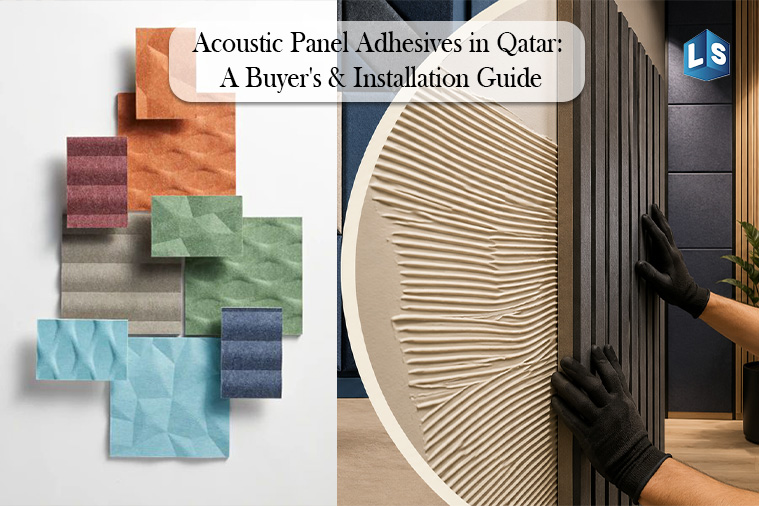
Not every acoustic product requires the same installation method. Lightweight foam products, including acoustic foam panels in Qatar, are commonly installed using spray contact adhesives or high-performance foam adhesives that distribute bonding pressure evenly across the panel. Larger or heavier acoustic systems may require solvent-based adhesives with greater holding strength, while timber or composite acoustic panels often rely primarily on mechanical fixings supported by adhesive at critical contact points. Specialist products such as anechoic foam wedges used in testing laboratories and precision measurement rooms require secure installation to preserve accurate acoustic performance throughout the life of the facility. Selecting the correct adhesive should always consider panel weight, substrate type, installation orientation, and manufacturer recommendations rather than assuming one product suits every application.
Common Installation Mistakes That Reduce Performance
Poor installation practices are one of the leading causes of premature acoustic panel failure. One common mistake is applying general-purpose construction adhesive that is not compatible with acoustic foam, potentially causing material degradation or insufficient bond strength. Another frequent issue is installing panels onto dusty, damp, or uneven surfaces without adequate preparation, significantly reducing adhesion. Installers also sometimes fail to respect the manufacturer’s recommended open time before bonding surfaces together, weakening the final connection. Heavy acoustic products are occasionally installed using adhesive alone, even when mechanical fixing is required for long-term safety and durability. Careful surface preparation, compatibility testing, and adherence to installation guidelines help ensure the acoustic treatment performs reliably for many years.
Installation Considerations for Qatar’s Climate
Qatar’s environmental conditions demand greater attention during acoustic installations than many other regions. Wall cavities, ceiling voids, and sun-exposed building surfaces can experience significantly elevated temperatures, while indoor air-conditioning creates repeated thermal expansion and contraction cycles. These conditions place continuous stress on adhesive bonds, making product selection particularly important. Installers should store adhesives and acoustic panels in conditioned environments before installation, allow materials to acclimatize, and ensure substrates remain clean and dry before application. In commercial buildings, hotels, educational facilities, studios, and industrial environments, installation planning should also account for future maintenance access, fire performance requirements, and long-term serviceability. Selecting adhesives specifically formulated for acoustic applications helps maintain secure panel installation despite Qatar’s demanding environmental conditions.
Choosing the Right Acoustic Installation Solution for Your Project
Successful acoustic installations depend on the combined performance of the acoustic material, the installation method, and the adhesive system that holds everything in place. Choosing the right adhesive ensures panels remain securely fixed while preserving their sound absorption characteristics throughout the life of the installation. Whether you’re fitting out a recording studio, office, auditorium, hospitality venue, educational institution, or industrial facility, selecting products designed for Qatar’s climate provides greater confidence in long-term performance. L S Trading (LST) supplies professional acoustic foam adhesives alongside a comprehensive range of acoustic foam panels, anechoic wedges, and other soundproofing materials to support projects across Qatar. Consulting experienced acoustic specialists helps ensure every component—from panel selection to adhesive specification—is matched to your project’s technical requirements for reliable, long-lasting results.
Originally published on : https://www.lstcco.com/acoustic-panel-adhesives-in-qatar-a-buyers-installation-guide/