What Materials are Blast Windows Made From?
-

- July 22nd, 2026
- 201 views

FREE SEO Topical Map Generator: Find Your Next Content Ideas
A maintenance engineer at a coastal power station inspects damaged façade glazing after an explosion at a neighbouring facility. The operations team needs to know whether the replacement glazing should be standard safety glass or something more resilient. For critical infrastructure—control rooms, substations, data centres and government buildings—the choice of materials determines survivability. Understanding what materials blast windows are made from clarifies how they absorb energy, retain fragments and interface with structural frames.
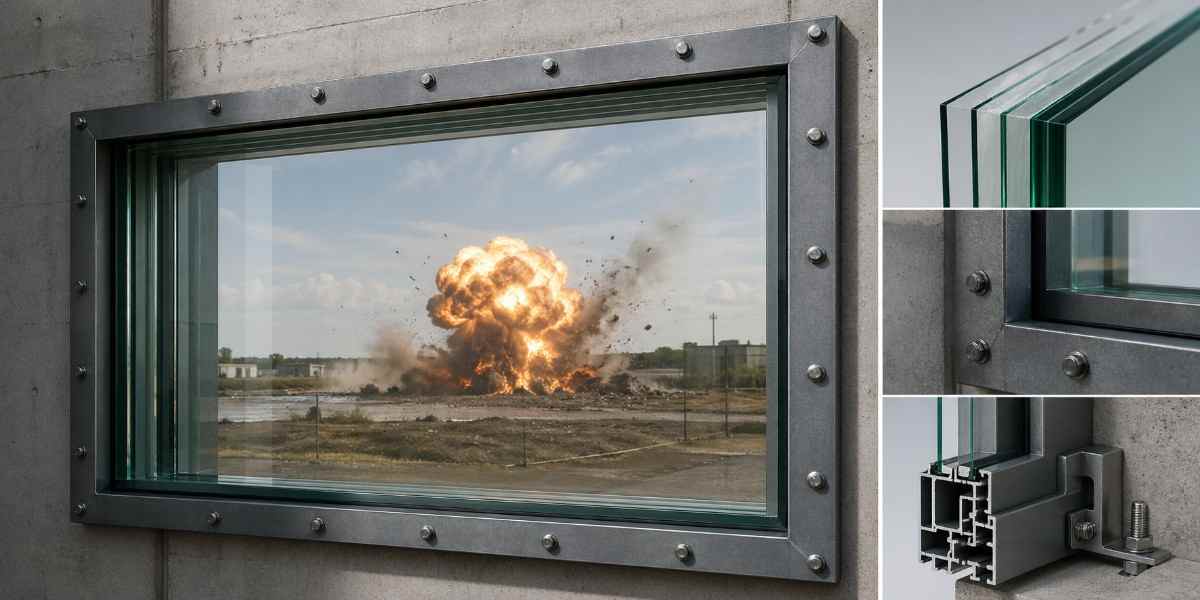
Blast resistant glass is the engineered glazing core of a blast window. It combines multiple glass plies, high‑performance interlayers and compatible frame materials to manage overpressure, limit inward deflection and retain hazardous fragments. Specifying the right materials is fundamental to blast window design, long‑term durability and operational performance across industrial, defence and residential contexts.
Primary materials in blast resistant glass assemblies
Glass plies: Typical assemblies use annealed, heat‑strengthened or toughened glass plies. Multiple thin plies are preferred over single thick panes because they crack progressively under blast loading, dispersing energy and reducing large fragment generation.
Interlayers: These bond plies into laminated units and provide post‑breakage strength and fragment retention.
PVB (polyvinyl butyral): Widely used for low‑to‑moderate threat levels; economical and optically clear.
SGP (SentryGlas® ionoplast): Offers much higher post‑breakage stiffness and load transfer, enabling slimmer stacks for a given rating.
Polyurethane and hybrid interlayers: Engineered for enhanced energy damping and tear resistance in some bespoke designs.
Insulating components: For thermal and acoustic performance, laminated units are often configured as insulated glass units (IGUs) with spacers and low‑E coatings. IGUs must be considered in tested assemblies to ensure blast performance remains valid.
Frame and structural materials
Structural steel: Preferred for high‑rating applications due to stiffness and predictable plasticity; steel frames handle dynamic loading and permit welded backing plates and heavy anchorage.
Reinforced aluminium: Used where weight savings and corrosion resistance matter; sections are often reinforced with steel inserts or plates for blast-rated assemblies.
Stainless steel and composites: Selected for corrosive or specialised environments; composite frames can offer tailored stiffness and thermal separation but require careful verification.
Backing plates and anchors: Critical components that transfer loads into host structure—typically high‑strength steel plates, through‑bolts, chemical anchors or welded connections sized per structural calculations.
Sealants, gaskets and ancillary materials
Dynamic-capable sealants: Silicone or polyurethane sealants formulated for movement and UV resistance; brittle sealants degrade post-blast and compromise secondary protection.
High‑performance gaskets: EPDM or engineered elastomers selected for long-term compression set resistance and durability under thermal cycling.
Protective coatings: Anti‑reflective, low‑iron glass, and solar-control coatings are compatible but must be included in test specimens to confirm no adverse blast effects.
Energy‑absorption and connection materials
Dissipative interlayers and tuned adhesives: For specific performance goals, manufacturers may use interlayers with higher shear damping to increase energy absorption.
Load-distribution plates and stiffeners: Steel inserts or plates in frames spread anchor loads and reduce local substrate failure.
Why material combinations matter
Blast window design is system‑centric: glazing materials, interlayers, frame sections and anchors must be engineered together. For example, using SGP interlayers allows designers to reduce total ply thickness while maintaining residual load capacity, which reduces overall weight and can enable slimmer frame sections. Conversely, installing laminated glazing in an inadequate frame or without proper backing transforms a strong glazing panel into a weak link.
Environmental and durability considerations
Site exposure dictates material selection. Coastal petrochemical or offshore facilities demand stainless steel or coated steel frames and UV‑stable interlayers. High temperatures or chemical exposure influence interlayer choice—polyurethane systems may tolerate some environments better than PVB. Long service life relies on corrosion protection, UV-stable sealants and maintenance-friendly hardware.
Performance verification and testing
Materials must be shown to perform as part of an assembly under relevant blast loads. Accredited laboratories conduct full‑scale tests that include the glazing stack, frame, anchors and sealing systems. Test reports document peak overpressure, impulse, deflection and fragment retention. Buyers should insist on assembly‑level evidence rather than glass‑only data.
Applications and material selection
Military and high‑risk government facilities: thick multi‑ply laminates with SGP interlayers, heavy steel frames, and robust anchorage.
Petrochemical and power plants: combinations balancing corrosion resistance and stiffness—stainless or coated steel frames with laminated IGUs.
Data centres and control rooms: high optical clarity needs, so low‑iron glass with SGP interlayers and reinforced aluminium frames may be chosen.
Residential or staff housing adjuncts: lower-rated laminated units with PVB interlayers and upgraded frames provide life-safety benefits with attention to aesthetics.
Buyer’s guide: what to evaluate
- Verify interlayer type and long‑term UV/durability performance.
- Require assembly‑level test reports showing glass, frame and anchorage.
- Confirm frame material corrosion protection and anchorage design.
- Assess compatibility of coatings and IGU components with blast testing.
Choose manufacturers with quality control, traceability and installation support—consider local options among blast resistant window manufacturers or reputable blast window manufacturers in India for regional projects.
Common mistakes to avoid
- Assuming thicker monolithic glass is superior to engineered laminated systems.
- Installing certified glass without upgrading frames or anchors.
- Neglecting environmental compatibility of interlayers and sealants.
- Using film retrofits as a substitute for certified assemblies in high‑risk settings.
Practical reference
For residential applications near industrial sites, engineered domestic options exist; consult certified assemblies when considering a Blast window for home to ensure appropriate materials and installation.
Conclusion
Blast resistant glass assemblies use carefully selected combinations of glass plies, interlayers (PVB, SGP, polyurethane), frames (steel, reinforced aluminium) and ancillary materials to manage energy, retain fragments and transfer loads to structure. Material choice affects performance, durability and cost; therefore, specify system‑level designs backed by assembly testing and professional engineering to ensure predictable protection, long service life and compliance with facility requirements.