Yoga Mat Bag or Strap? What You Actually Need for Getting to Class
-

- August 02nd, 2026
- 42 views

FREE SEO Topical Map Generator: Find Your Next Content Ideas
Rolling a yoga mat under your arm works fine until it doesn't. It slips, it unrolls halfway down the street, or it just feels like carrying a pool noodle to work. At some point almost everyone who does yoga regularly ends up looking at either a bag or a strap, and then wondering if they actually need both.
Short answer: probably not both, at least not right away. Here's how to figure out which one actually solves your problem.
They're Not the Same Thing, Even Though They Get Lumped Together
A strap and a bag look like they do the same job, holding a rolled mat together, but they're really built for different situations.
A strap is light, cheap, and fast. You loop it around the mat, clip it, and go. That's it. No pockets, no extra weight, nothing to think about.
A bag does more. It protects the mat from rain, dirt, and general wear, and usually gives you somewhere to stuff a towel, keys, or a water bottle. It's heavier and costs more, but it's solving a bigger problem than just "keep the roll from unrolling."
If your walk to class is short and dry, a strap probably does everything you need. If you're on public transport, walking a distance, or the mat needs protecting from weather, a bag earns its price.
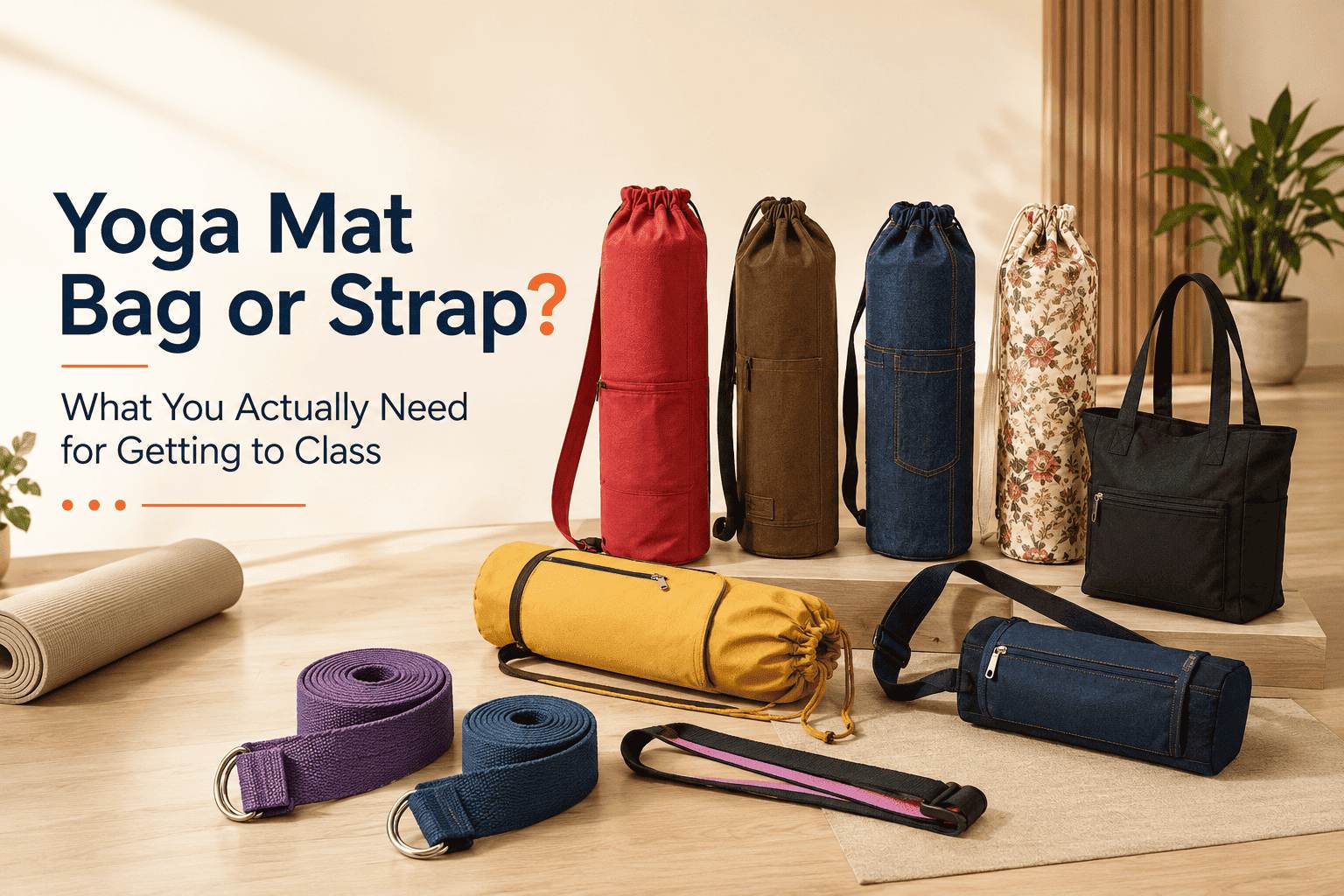
Adjustable Yoga Mat Straps: What the Buckle Type Actually Means
Most straps use either a D-ring or a cinch buckle, and the difference matters more than it looks.
A D-ring strap loops through two metal rings and pulls tight, similar to a backpack strap. It holds firm and doesn't slip once tightened, which matters if you're carrying it any real distance.
A cinch buckle strap clips together with a plastic or metal buckle and adjusts with a quick pull. Faster to use, but can loosen slightly over a long day if the mat shifts.
Either one works fine for most people. If you're rough on gear or carry your mat daily, the D-ring version tends to hold up longer. If you just want to grab it and go, cinch buckle is simpler.
Bags: Material Actually Changes What You're Getting
Not all yoga accessories bags are built the same, and the material tells you a lot before you even check the price.
Cotton and canvas bags are breathable, which matters more than people expect, a mat sealed in plastic-lined fabric all day can start to smell. These are a solid everyday pick.
Waterproof bags matter if you're walking to class in the rain regularly, or storing your mat somewhere damp. Otherwise it's a feature you're paying for and rarely using.
Denim and printed cotton bags are mostly about how you want to carry it, some people want their gear bag to look like an actual bag, not just gym equipment. Worth it if that matters to you, unnecessary if it doesn't.
Do You Need a Full Yoga Mat Carrier, or Just a Strap?
A proper yoga mat carrier, the backpack-style ones with a strap you wear cross-body, makes sense if you're carrying more than just the mat, a towel, water, maybe a change of clothes. If it's just the mat and your phone, that extra structure is just extra weight you're hauling around for no reason.
This is really the core decision when shopping yoga equipment online. Buy for what you're actually carrying on a normal day, not for the one time a year you might need more room.
Small Extras Worth Knowing About
A couple of smaller items show up alongside bags and straps that are worth a mention.
Storage racks make sense if you've got more than one or two mats at home and they're currently just leaning in a corner. Not essential, but tidy if you've got the space.
Carabiner clips are a small add-on for clipping a strap to a bag or bag to itself, useful if you're the type who loses track of loose gear.
Neither of these matters if you've only got one mat and nowhere particular to store it. Skip them until you actually feel the need.
A Simple Way to Decide
If you're not sure where to start:
- Short, dry commute, one mat: a basic strap is enough
- Longer commute or unpredictable weather: a cotton or canvas bag
- Carrying extra gear along with the mat: a proper mat carrier with pockets
- Multiple mats at home: consider a small storage rack, otherwise skip it
None of this needs to be complicated. Most people are better served by matching the gear to their actual daily routine rather than buying the most feature-packed option available. A simple search through general yoga equipments and accessories will usually turn up more options than you need, the trick is narrowing it down to what your actual commute looks like, not what looks impressive in a product photo.
If you're comparing options, checking a dedicated yoga gear bag and strap range side by side makes it easier to see material, size, and buckle type in one place before deciding.