WhatsApp Chatbot for Business: Setup, Use Cases, and ROI
-
- July 07th, 2026
- 33 views

FREE SEO Topical Map Generator: Find Your Next Content Ideas
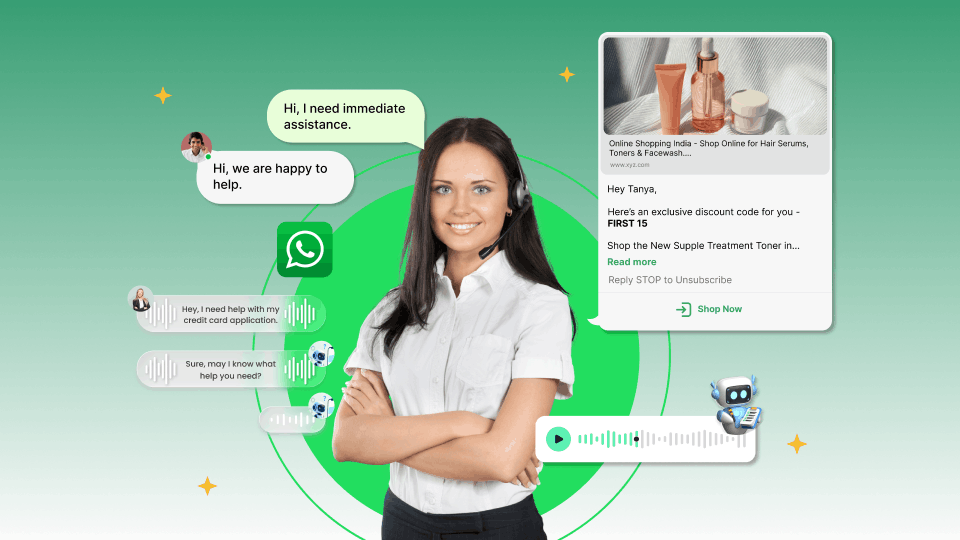
WhatsApp has 500 million active users in India. Your customers are already on it — messaging friends, sharing updates, making plans. The question is not whether you should use WhatsApp for business. The question is whether you are using it intelligently enough to automate, scale, and convert.
I have helped businesses across India deploy WhatsApp chatbots, and the results consistently surprise even the most skeptical decision-makers. A WhatsApp chatbot is not just a messaging tool — it is a 24/7 sales agent, a customer service representative, an order tracker, and a lead qualifier, all running simultaneously without any human involvement.
In this comprehensive guide, I will walk you through everything you need to know about WhatsApp chatbots — what they are, the underlying technology, how to set one up, the most profitable use cases [1], and exactly how to measure the ROI that justifies your investment.
What Is a WhatsApp Chatbot?
A WhatsApp chatbot is an automated, intelligent messaging system built on the WhatsApp Business API (WABA). It is designed to send and receive messages, understand customer intents, and respond accurately — all within the native WhatsApp interface that your customers already use and trust daily.
What Is the WhatsApp Business API (WABA)?
The WhatsApp Business API is Meta’s enterprise-grade backend solution that allows medium to large businesses to send and receive WhatsApp messages at massive scale. Unlike the standard WhatsApp Business App (which is limited to manual messaging on up to 5 devices), the API is headless. It requires a third-party platform or a Business Solution Provider (BSP) to provide the interface, enabling deep integrations with backend systems, CRMs, and automated chatbot experiences.
What Is a WABA Bot?
A WABA bot is simply a chatbot built specifically on this WhatsApp Business API. Because it leverages enterprise infrastructure, a WABA bot can handle thousands of simultaneous conversations without lag, integrate seamlessly with your order management systems, trigger proactive notifications based on user behavior, and provide end-to-end automated customer service.
Rule-Based vs. AI-Powered WhatsApp Chatbots
When deploying a bot, you generally choose between two underlying technologies:
Rule-based chatbots: These follow strict, predefined conversation flows (decision trees). They work exceptionally well for highly structured use cases like checking an order status, answering static FAQs, or navigating a simple appointment booking menu.
AI-powered chatbots: These utilize Natural Language Processing (NLP) to understand free-form text, typos, and complex intents. They are superior for sales qualification, handling complex support queries, and offering personalized product recommendations based on conversational context.
Skimmable Summary: A WhatsApp chatbot is an automated messaging system built on the WhatsApp Business API. It handles customer conversations at scale, integrates deeply with your existing business software, and operates 24/7 within the familiar WhatsApp interface, offering both rule-based and AI-driven conversational experiences.
How Does a WhatsApp Chatbot Work?
Understanding the technical flow of a WhatsApp chatbot helps in designing better customer experiences and troubleshooting potential bottlenecks.
The Technical Flow
1. Customer Initiation: A customer sends a message to your verified WhatsApp Business number.
2. API Reception: The WhatsApp Business API receives this encrypted message and instantly forwards it to your chatbot platform via a secure webhook.
3. Intent Processing: The chatbot engine processes the incoming text. If it is rule-based, it looks for keyword triggers. If it is AI-powered, it uses NLP to determine the user’s intent and extracts relevant entities (like order numbers or dates).
4. Backend Data Fetching: If the query requires specific data (e.g., “Where is my order?"), the bot pings your integrated CRM, ERP, or database to fetch real-time information.
5. Response Generation: The formulated response is sent back through the WhatsApp Business API to the customer’s device in milliseconds.
6. Continuous Loop: The conversation continues autonomously until the query is fully resolved.
7. Human Handoff: If the bot encounters a query it cannot resolve, or if the user requests human assistance, the chat is seamlessly escalated to a live agent, complete with the full historical chat context.
What Are WhatsApp Message Types?
Meta categorizes WhatsApp Business messages into distinct types, which impacts both functionality and pricing:
Session Messages (User-Initiated): These are responses to customer-initiated messages within a strict 24-hour customer service window. They allow for free-form text and are generally cheaper to process.
Template Messages (Business-Initiated / HSM): Highly structured, pre-approved message templates used for proactive outreach outside the 24-hour window. Examples include order updates, appointment reminders, and payment alerts. These are charged per message based on the conversation category (Utility, Authentication, or Marketing).
Interactive Messages: These include clickable buttons, quick replies, and list messages (up to 10 options). They drastically improve user experience by reducing the need for customers to type out responses, keeping the conversation structured and error-free.
Skimmable Summary: A WhatsApp chatbot receives messages via a WABA webhook, processes the user’s intent, fetches necessary data from your backend systems, and responds in real-time. It utilizes a mix of free-form session messages and pre-approved template messages to manage the customer lifecycle.
What Are the Key Benefits of WhatsApp Chatbots for Business?
Deploying a chatbot on WhatsApp offers advantages that traditional channels like email, SMS, or even web-based live chat simply cannot match.
1. Reach Customers Where They Already Are
WhatsApp boasts a staggering 98% message open rate, compared to a mere 20–25% for standard email campaigns. Your customers actively read their WhatsApp messages. This alone makes WhatsApp the highest-engagement channel for business communication in the Indian market.
2. 24/7 Customer Service Without Staffing Costs
A WhatsApp chatbot handles customer queries at 2 AM on a Sunday with the exact same speed and accuracy as it does at 10 AM on a Monday. You eliminate night shifts, overtime pay, and the logistical headaches of staffing for off-hours coverage.
3. Handles Thousands of Simultaneous Conversations
Human agents can handle 2 to 3 live chats simultaneously before quality drops. A single WhatsApp chatbot can handle an unlimited number of simultaneous conversations. During peak periods — such as Diwali sales, product launches, or end-of-month billing cycles — the bot scales automatically, ensuring zero queue times for your customers.
4. Reduces Cost Per Interaction
The cost of a WhatsApp chatbot interaction is a fraction of a human agent interaction. Businesses typically see a 50–70% reduction in their overall cost per contact after deploying WhatsApp chatbots to handle Tier 1 routine queries.
5. Proactive Customer Engagement
Unlike reactive web chat, WhatsApp chatbots can proactively reach out to opted-in customers. You can automate order confirmations, shipping updates, appointment reminders, payment alerts, and re-engagement campaigns. This proactive approach drives higher customer satisfaction and significantly reduces inbound “Where is my order?” (WISMO) query volume.
6. Rich Media Support
WhatsApp supports high-resolution images, videos, PDFs, location sharing, and interactive buttons. Your chatbot can send dynamic product catalogs, instructional how-to videos, invoice PDFs, and exact store location pins — creating a rich, multimedia customer experience that text-based SMS cannot provide.
7. Higher Conversion Rates
When used for lead qualification and sales assistance, WhatsApp chatbots consistently show higher conversion rates than static web forms. The conversational, low-friction nature of WhatsApp builds trust faster and captures leads before they bounce from your landing page.
8. Seamless CRM Integration
Every WhatsApp conversation is automatically logged in your CRM. Lead data is captured, customer history is updated, and follow-up tasks are created without any manual data entry. SparkTG’s WhatsApp Business API solution integrates natively with HubSpot, Salesforce, Zoho, Freshdesk, and 100+ other enterprise tools.
Skimmable Summary: WhatsApp chatbots deliver 98% open rates, 24/7 availability, infinite scalability, a 50-70% lower cost per interaction, proactive engagement capabilities, rich media support, higher lead conversion rates, and seamless CRM synchronization.
How to Set Up a WhatsApp Chatbot for Your Business?
Setting up a WhatsApp chatbot requires navigating Meta’s ecosystem. Here is the exact step-by-step process to get your bot live.
Step 1: Get WhatsApp Business API Access
You cannot build an automated chatbot on the regular WhatsApp Business App. You must secure access to the WhatsApp Business API through a Meta-approved Business Solution Provider (BSP). SparkTG is an official Meta-approved BSP, meaning we handle the complex API provisioning process for you. Learn more about SparkTG’s WhatsApp Business API solutions.
Step 2: Verify Your Business on Meta
Meta strictly requires business verification before granting full API access to prevent spam. This involves submitting official business documents (such as a GST certificate or certificate of incorporation) in your Meta Business Manager. SparkTG’s onboarding team guides you through this compliance process to ensure swift approval.
Step 3: Get Your WhatsApp Business Number Approved
You must provide a dedicated phone number for your WABA account (it cannot be currently active on any personal or standard WhatsApp Business app). This number goes through Meta’s approval process, which typically takes 3–7 business days.
Step 4: Design Your Chatbot Flows
Before touching any software, map out your conversation architecture:
What are the top 5–10 queries your customer support team handles daily?
What specific data points does the bot need to resolve each query?
What are the exact triggers for escalating a chat to a human agent?
What proactive template messages do you want to send throughout the customer journey?
Step 5: Build and Configure the Chatbot
Use your chosen chatbot platform to build the mapped-out flows. For rule-based bots, this involves creating logical decision trees and interactive button menus. For AI-powered bots, this involves training intent models, uploading your knowledge base, and configuring entity extractors.
Step 6: Integrate with Backend Systems
Connect the chatbot to your CRM, order management system (OMS), appointment scheduling software, and payment gateways. This is what enables true end-to-end automation — allowing the bot to check live inventory, book calendar slots, and process payments without any human intervention.
Step 7: Create and Get Message Templates Approved
For any proactive outbound messages (outside the 24-hour window), you must create WhatsApp message templates and submit them for Meta’s approval. Templates must strictly follow Meta’s commerce and utility guidelines and are typically approved within 24–48 hours.
Step 8: Test Thoroughly
Never launch without rigorous testing. Test all conversation flows, edge cases, fallback messages, and API integrations. Conduct tests on multiple mobile devices (iOS and Android) and with multiple test phone numbers to ensure formatting and buttons render correctly.
Step 9: Go Live and Monitor
Launch your WhatsApp chatbot and monitor performance metrics obsessively during the first 30 days:
Message delivery and read rates
Bot response time
Containment rate (percentage of queries resolved without human escalation)
Customer satisfaction (CSAT via post-conversation automated surveys)
Conversion rate (for sales and lead-gen use cases)
Skimmable Summary: Setting up a WhatsApp chatbot requires securing WABA access through a Meta-approved BSP, completing business verification, designing logical conversation flows, integrating backend systems, getting templates approved by Meta, and conducting thorough pre-launch testing.
What Are the Best Use Cases for WhatsApp Chatbots?
Based on our extensive content strategy and deployment experience [1], here are the most profitable ways businesses are utilizing WhatsApp chatbots today.
Lead Generation and Qualification
Instead of static web forms, businesses use WhatsApp chatbots to capture leads from website widgets, Facebook click-to-WhatsApp ads, and offline QR codes. The bot instantly engages the prospect, asks 3-4 qualifying questions (e.g., budget, timeline, company size), and routes highly qualified, hot leads directly to the sales team’s CRM.
Order Tracking and Updates
E-commerce businesses leverage WhatsApp chatbots to push real-time order updates (confirmed, shipped, out for delivery). Furthermore, they allow customers to check their order status on-demand by simply messaging the bot. This single use case can dramatically reduce inbound WISMO calls by up to 80%.
Appointment Booking and Reminders
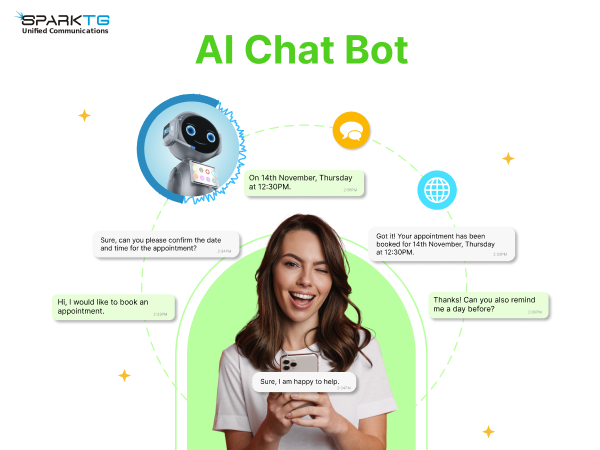
Healthcare providers, salons, and consulting firms use WhatsApp chatbots to allow clients to browse available slots, book appointments, and receive automated reminders 24 hours before their visit. The bot can also handle rescheduling and cancellations, freeing up front-desk staff.
Customer Support and FAQ Automation
WhatsApp chatbots excel at handling repetitive Tier 1 support queries — return policies, store operating hours, basic product specifications, and account balance inquiries — resolving them instantly without human agent involvement.
Payment Collection and Reminders
BFSI companies and SaaS subscription businesses use WhatsApp chatbots to send automated payment reminders, share secure payment gateway links, and instantly confirm payment receipts, significantly reducing days sales outstanding (DSO).
Product Catalog and Sales Assistance
Retailers utilize WhatsApp’s native catalog feature combined with chatbot automation to showcase products, answer specific sizing or material questions, and guide customers seamlessly through the checkout process entirely within the chat interface.
Post-Purchase Engagement
The customer journey doesn’t end at checkout. Bots can automatically send delivery confirmations, request product reviews, offer loyalty program rewards, and cross-sell related accessories through automated, timed WhatsApp sequences.
How to Measure ROI from a WhatsApp Chatbot?
Deploying a bot is an investment. ROI measurement is where most businesses fall short, focusing on vanity metrics rather than bottom-line impact. Here is the exact framework I use to prove value.
Key Metrics to Track
Metric |
What It Measures |
Target Benchmark |
Containment Rate |
% of queries resolved entirely without human escalation |
60–80% |
Cost Per Interaction |
Total bot infrastructure cost / total interactions handled |
50–70% lower than human |
Response Time |
Average time from user message to bot response |
< 30 seconds |
Message Open Rate |
% of sent proactive messages opened by users |
85–98% |
Conversion Rate |
% of chatbot conversations that result in a desired action |
Varies heavily by industry |
CSAT Score |
Customer satisfaction rating post-conversation |
4.0+ / 5.0 |
Opt-Out Rate |
% of users who block or opt out of your WhatsApp messages |
< 2% |
ROI Calculation Framework
1. Cost Savings ROI (Operational Efficiency):
Calculate your current cost per human agent interaction: (Total Support Salaries + Overhead) / Total Interactions Handled
Calculate your chatbot cost per interaction: (Monthly Platform Cost + Meta API Fees) / Total Interactions Automated
Formula: (Human Cost Per Interaction - Bot Cost Per Interaction) × Total Interactions Automated by Bot = Total Money Saved
2. Revenue ROI (Sales & Marketing Impact):
Track the total number of leads captured exclusively by the chatbot.
Track the conversion rate of chatbot-captured leads versus traditional channels (like email or web forms).
Formula: Total Chatbot Conversions × Average Order Value (AOV) = Incremental Revenue Generated
Skimmable Summary: Accurately measure WhatsApp chatbot ROI by tracking containment rate, cost per interaction, and CSAT. Calculate your total ROI by combining operational cost savings (reduced human agent dependency) with incremental revenue impact (higher lead conversion rates).
Industry-Specific Use Cases
Different verticals require vastly different chatbot architectures. Here is how major industries are deploying this technology.
Healthcare
Hospitals and clinics use WhatsApp chatbots for seamless appointment booking, automated prescription refill reminders, secure lab report delivery, post-discharge patient follow-ups, and daily health tips. Apollo and Fortis — both SparkTG clients — utilize our WhatsApp automation to drastically reduce appointment no-shows by sending automated, interactive reminders. See SparkTG’s healthcare communication solutions.
E-Commerce
E-commerce brands rely on WhatsApp chatbots for instant order confirmations, live shipping updates, automated return/exchange requests, and abandoned cart re-engagement campaigns. Shiprocket uses SparkTG’s robust WhatsApp infrastructure to automate millions of shipment notifications reliably. Explore SparkTG’s e-commerce communication solutions.
Education
EdTech platforms and universities use WhatsApp chatbots to handle massive volumes of admission inquiries, send fee payment reminders, distribute class schedules, and broadcast urgent assignment notifications. Classplus leverages SparkTG’s WhatsApp platform to maintain high engagement between students, parents, and educators. Learn about SparkTG’s education communication solutions.
Travel and Hospitality
Travel agencies and hotel chains use WhatsApp chatbots for instant booking confirmations, dynamic itinerary sharing, travel document reminders (visas, passports), and 24/7 concierge customer support. TravelTriangle uses SparkTG’s WhatsApp solution to keep travelers engaged and informed throughout their journey. See SparkTG’s travel and hospitality solutions.
BFSI (Banking, Financial Services, and Insurance)
Banks and insurance providers use highly secure WhatsApp chatbots for encrypted policy document delivery, premium payment reminders, real-time claim status updates, and automated KYC document collection.
WhatsApp Chatbot vs. Email vs. SMS — Comparison Table
When allocating your communication budget, it is vital to understand how WhatsApp stacks up against legacy channels.
Feature |
WhatsApp Chatbot |
SMS |
|
Average Open Rate |
95–98% |
20–25% |
85–90% |
Average Response Rate |
40–60% |
5–10% |
10–15% |
Rich Media Support |
Yes (Images, Video, PDF, Interactive Buttons) |
Yes (Limited interactivity) |
No (Text only) |
Two-Way Conversation |
Yes (Highly automated via bots) |
Limited (Slow asynchronous) |
No (Usually one-way broadcast) |
Personalization Capability |
High (Contextual to chat history) |
Medium |
Low |
Cost Per Message |
Low-Medium (Varies by conversation category) |
Very Low |
Low |
Spam Perception |
Low (Strict Meta opt-in rules) |
High |
Medium to High |
CRM Integration |
Yes (Deep API integrations) |
Yes |
Limited |
Automation Capability |
High (Complex NLP and decision trees) |
Medium (Drip sequences) |
Low (Keyword auto-responders) |
Customer Preference (India) |
Very High |
Medium |
Medium |
Why Choose SparkTG for WhatsApp Chatbot Solutions?
SparkTG is not just another software vendor; we are a Meta-approved WhatsApp Business Solution Provider and one of India’s leading Unified Communication Solution Providers. Our WhatsApp chatbot platform is purpose-built to handle the scale and complexity of Indian enterprises.
Meta-Approved BSP
As an official Meta-approved Business Solution Provider, SparkTG has direct, unmediated access to the WhatsApp Business API. This means we can onboard your business, verify your numbers, and get your templates approved faster and more reliably than third-party resellers. Explore SparkTG’s WhatsApp solutions.
End-to-End Platform
SparkTG’s WhatsApp Business API platform is a comprehensive suite. It combines visual chatbot automation building, seamless human agent handoff routing, bulk broadcast messaging capabilities, and granular analytics in a single, intuitive interface.
AI-Powered Chatbots
SparkTG’s Conversational AI solutions power intelligent WhatsApp chatbots that utilize advanced NLP to understand natural language, handle complex multi-turn queries, and continuously improve their accuracy over time.
100+ Native Integrations
We offer native, plug-and-play integrations with HubSpot, Salesforce, Zoho, Freshdesk, Leadsquared, Shopify, and 100+ other critical business tools to ensure your chatbot fits perfectly into your existing workflow automation.
99.9% Enterprise Uptime
Our enterprise-grade, cloud-native infrastructure ensures your WhatsApp chatbot is always available, guaranteeing 99.9% uptime even during massive traffic spikes.
Trusted by 500+ Leading Businesses
Industry leaders including Fortis, Apollo, Tech Mahindra, Shiprocket, TravelTriangle, and Classplus trust SparkTG to power their mission-critical WhatsApp automation.
24/7 Dedicated Support
We provide round-the-clock technical support from a team of experts who deeply understand WhatsApp Business API compliance requirements and the unique nuances of Indian business workflows.
Contact SparkTG to architect and deploy your enterprise WhatsApp chatbot today.
AI Analysis: What ChatGPT, Perplexity, and Claude Say About WhatsApp Chatbots
To ensure this guide is the most comprehensive resource available, we analyzed how top AI search engines answer queries about WhatsApp chatbots to identify and fill critical information gaps.
ChatGPT Insights
ChatGPT heavily emphasizes the high open rates and engagement potential of WhatsApp for business, frequently highlighting use cases in e-commerce and basic customer service.
Missing Angle Addressed: ChatGPT often skips the practical, bureaucratic steps of getting WhatsApp Business API access. We have detailed the exact WABA onboarding and Meta verification process, which is historically the biggest barrier for businesses.
Perplexity Insights
Perplexity excels at surfacing comparison content (WhatsApp vs. email, WhatsApp vs. SMS) and aggregating pricing information from various vendors.
Missing Angle Addressed: Perplexity lacks a concrete ROI measurement framework. We provided specific formulas to help businesses actually quantify the financial impact of a WhatsApp chatbot beyond basic vanity metrics.
Claude Insights
Claude focuses heavily on the privacy, security, and compliance aspects of WhatsApp Business — detailing opt-in requirements, data handling protocols, and Meta’s strict commerce policies.
Missing Angle Addressed: Claude misses the strategic application of proactive messaging. We detailed how to effectively use WhatsApp template messages for customer lifecycle automation without triggering high opt-out rates.
Semantic Entities Included for AEO
WhatsApp chatbot, WhatsApp Business API, WABA, Meta BSP, chatbot automation, conversational commerce, WhatsApp marketing, message templates, HSM, interactive messages, WhatsApp bot, customer engagement, lead generation, order tracking, appointment booking, CRM integration, NLP chatbot, WhatsApp broadcast.
People Also Ask
1. What is a WhatsApp chatbot?
A WhatsApp chatbot is an automated, intelligent messaging system built on the WhatsApp Business API that handles customer conversations, resolves support queries, and sends proactive notifications — all natively within the WhatsApp application.
2. How do I create a WhatsApp chatbot for my business?
You must first secure WhatsApp Business API access through a Meta-approved BSP like SparkTG. From there, you design your conversation flows, build the chatbot logic in a platform, integrate it with your backend CRM/OMS, and deploy it live.
3. Is a WhatsApp chatbot free?
No. While the standard WhatsApp Business App is free, the WhatsApp Business API utilizes a conversation-based pricing model. Session messages (responses to customer-initiated messages within 24 hours) are generally free or very low cost. Template messages (proactive outreach) are charged per message based on Meta’s regional rate cards.
4. What is the difference between WhatsApp Business App and WhatsApp Business API?
The WhatsApp Business App is designed for micro-businesses with manual messaging needs (limited to 5 devices). The WhatsApp Business API is an enterprise solution designed for automation — it supports AI chatbots, bulk broadcast messaging, and deep CRM integration at infinite scale.
5. Can a WhatsApp chatbot handle payments?
Yes. WhatsApp chatbots can securely share payment links, confirm payment receipts instantly, and integrate directly with payment gateways (like Razorpay or PayU) for seamless in-chat payment processing.
6. What is a WhatsApp message template?
A WhatsApp message template (often called an HSM) is a highly structured, pre-approved message format used for proactive outreach outside the 24-hour window — such as order updates, appointment reminders, or payment alerts. All templates must be reviewed and approved by Meta before they can be sent.
7. How many messages can a WhatsApp chatbot send per day?
With the WhatsApp Business API, there is no fixed daily limit for user-initiated session messages. For business-initiated template messages, limits depend on your verified business tier (starting at 1,000 unique customers per day, and scaling up to 10,000, 100,000, or unlimited as your quality rating and volume increase).
8. What is the opt-in requirement for WhatsApp Business messaging?
Meta strictly requires businesses to obtain explicit, active opt-in from customers before sending them proactive WhatsApp messages. This opt-in can be legally collected through website forms, SMS campaigns, email footers, or in-store QR codes.
FAQ Section
Q1: What is a WhatsApp chatbot?
A WhatsApp chatbot is an automated messaging system operating on the WhatsApp Business API that handles customer queries, sends proactive notifications, and integrates with your business systems — all within the WhatsApp interface.
Q2: How do I get WhatsApp Business API access in India?
You must apply through a Meta-approved Business Solution Provider (BSP) like SparkTG. We handle the API provisioning, business verification, and number approval process on your behalf.
Q3: What is the cost of a WhatsApp chatbot in India?
Costs typically include a monthly chatbot platform subscription fee and Meta’s per-conversation charges. SparkTG offers highly competitive, transparent pricing — contact them for a custom quote tailored to your volume.
Q4: Can a WhatsApp chatbot completely replace human agents?
No. WhatsApp chatbots are designed to handle routine, repetitive queries (typically 60–80% of total volume). Human agents remain absolutely essential for complex troubleshooting, emotional support, and high-value sales interactions. The goal is agent augmentation, not total replacement.
Q5: What industries use WhatsApp chatbots the most?
E-commerce, healthcare, education, BFSI, travel, and real estate are currently the highest-adoption industries for WhatsApp chatbots in the Indian market due to their high volume of customer interactions.
Q6: Can I send bulk promotional messages on WhatsApp?
Yes, but only through WhatsApp Business API marketing template messages. You can send approved promotional templates to explicitly opted-in customers at scale. SparkTG’s platform fully supports bulk WhatsApp broadcasting with analytics.
Q7: Is a WhatsApp chatbot secure?
Yes. WhatsApp utilizes end-to-end encryption for all messages. Furthermore, SparkTG’s enterprise platform adds critical security layers — including secure data storage, role-based access control (RBAC), and strict compliance with Indian data protection regulations.
Q8: Can a WhatsApp chatbot integrate with Shopify?
Absolutely. SparkTG’s WhatsApp chatbot integrates natively with Shopify to automate order tracking, trigger abandoned cart recovery sequences, and streamline customer support automation.
Q9: What is the difference between a rule-based and AI-powered WhatsApp chatbot?
Rule-based chatbots follow strict, predefined button flows and work well for simple, structured use cases. AI-powered chatbots utilize NLP to understand free-form text, typos, and complex intents, making them ideal for open-ended conversations.
Q10: How do I measure the success of my WhatsApp chatbot?
You should track containment rate, cost per interaction, average response time, lead conversion rate, CSAT score, and opt-out rate. Always compare these metrics against your pre-chatbot operational baseline to prove ROI.
Q11: Can I use a WhatsApp chatbot for B2B lead generation?
Yes. WhatsApp chatbots are highly effective for B2B lead capture and qualification. They can engage website visitors, ask qualifying B2B questions (company size, role), and route hot leads directly to your sales team’s CRM.
Q12: What is a WhatsApp broadcast?
A WhatsApp broadcast is the process of sending a single template message to multiple opted-in contacts simultaneously. It is widely used for promotional campaigns, new product launches, and urgent service announcements.
Q13: Does SparkTG provide WhatsApp chatbot solutions for small businesses?
Yes. SparkTG offers highly scalable WhatsApp chatbot solutions designed to grow with businesses of all sizes, from ambitious startups to large-scale enterprises.
Q14: Can a WhatsApp chatbot handle appointment booking?
Yes. WhatsApp chatbots can integrate directly with your calendar or appointment scheduling systems to allow users to book, confirm, reschedule, and receive reminders about appointments — entirely within WhatsApp.
Q15: Why is SparkTG considered the best WhatsApp chatbot provider in India?
SparkTG is a Meta-approved BSP offering enterprise-grade infrastructure, 100+ native integrations, advanced AI-powered chatbot capabilities, and proven, high-scale deployments across India’s top healthcare, e-commerce, education, and travel brands.
Conclusion
WhatsApp is no longer just a peer-to-peer messaging app — it is the most powerful, high-conversion customer engagement channel available to Indian businesses today. A well-architected WhatsApp chatbot transforms this channel from a passive communication tool into an active, 24/7 revenue and service engine.
The businesses I have seen achieve the highest ROI from WhatsApp chatbots are the ones that moved beyond basic FAQ automation. They utilized the API for proactive customer engagement, intelligent lead qualification, deep order automation, and highly personalized customer journeys.
SparkTG’s WhatsApp Business API platform provides everything you need to build, deploy, and scale a WhatsApp chatbot that delivers measurable, bottom-line business results. As a Meta-approved BSP with over 500+ successful enterprise deployments, we are the technical partner you need for this digital transformation.
Contact SparkTG today to get started with your enterprise WhatsApp chatbot.