Tracking Social Media Performance On Google Search Console
-

- August 04th, 2026
- 22 views

FREE SEO Topical Map Generator: Find Your Next Content Ideas
Google Search Console has long been one of the most important tools for website owners, publishers, SEO professionals, and digital marketers. It helps them understand how Google Search users discover their webpages, which queries generate visibility, how often people click on their results, and where their content appears in search rankings. For years, however, this measurement largely revolved around websites and domains.
That model is becoming less representative of how content is created and consumed today. Audiences increasingly discover information through short-form videos, creator posts, social profiles, and platform-native content. Many creators also operate successful digital businesses without maintaining a traditional website. Google's expansion of Search Console with platform properties is designed to address this shift by giving eligible users greater visibility into how their content performs across Google Search.
The development is particularly significant for brands and creators that depend on Social Media as part of their content strategy. Instead of treating social platforms and search as completely separate channels, marketers can now examine how Google contributes to the discovery of content published on supported platforms. This creates a new layer of insight for teams trying to understand the complete journey between search behavior and social content.
What Are Google Search Console Platform Properties?
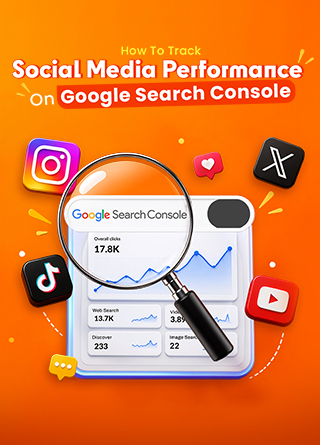
Google Search Console platform properties allow eligible users to connect supported social media accounts and video channels to Search Console and analyze how those properties perform through Google's ecosystem.
The concept is relatively straightforward. A website can already be added to Search Console as a property, allowing its owner to review search performance. With platform properties, a qualifying social account or video channel can also be connected and treated as an individual property.
This gives brands and creators another way to understand how Google users discover their content. Rather than relying exclusively on the analytics provided by Instagram, TikTok, X, or YouTube, users can examine the Google Search activity associated with their connected property.
The feature is especially relevant for creators whose primary digital presence exists on social platforms. A creator may have thousands of followers but no dedicated website, making traditional SEO reporting less useful. Platform properties provide an additional way to understand whether Google Search is helping audiences discover that creator's content.
Google announced the platform properties feature in July 2026, with global availability following later that month. Its arrival reflects a broader change in search behavior: Google is increasingly surfacing content from platforms beyond traditional websites, including videos, creator profiles, and public social posts.
However, this does not mean Search Console is becoming a replacement for native social analytics. Instead, it provides a different perspective.
Which Platforms Can Be Connected?
Google Search Console currently supports four major platforms through its platform properties feature: Instagram, TikTok, X, and YouTube.
Instagram users can gain insight into how eligible public content and profile pages are discovered through Google. This can be useful for brands and creators that publish Reels, posts, and other publicly accessible content.
TikTok provides another important opportunity. As TikTok increasingly functions as a search destination in its own right, its content can also appear in traditional search results. Search Console can help users understand the Google queries associated with public TikTok content.
X, formerly known as Twitter, is also supported. Public posts and profiles can receive visibility through Google Search, allowing account owners to examine how users arrive at their content from search.
YouTube is particularly relevant because video has become a major part of Google's search experience. Creators can analyze the search visibility of their videos, including both short-form and longer video content, through the Search Console environment.
At present, the platform property functionality does not cover every social network. Platforms such as Facebook, LinkedIn, Pinterest, and Threads are not included in the supported list.
Another important detail is that each account or channel must be connected and verified independently. Connecting one social account does not automatically provide access to other accounts managed by the same brand or creator.
How Does Social Media Tracking Work?
The process of connecting a platform property follows the same basic principle as adding other properties to Google Search Console.
Users first access Search Console and open the property selector. From there, they can choose the option to add a new property and select a supported platform.
The next step involves choosing the specific account, profile, or channel that the user wants to monitor. Because every property is handled separately, brands managing multiple accounts may need to complete the process for each individual account.
Users must then authorize the connection and verify that they control the selected property. This generally involves signing in through the relevant platform and completing the authorization process.
Once verification is successful, the connected account becomes available inside Search Console. Users can then access the property's reporting interface and begin examining its performance.
The data may not appear immediately. Search Console can require some time to process and populate information for a newly connected property. Users should therefore avoid assuming that an empty report means the account has received no Google visibility.
Ownership verification also needs to remain active. If authorization expires or the external connection is interrupted, reporting may pause until the account is verified again. Reverification can restore access to the existing reporting environment.
What Data Can Marketers See?
The most valuable aspect of platform properties is the ability to examine Google-driven discovery signals for social content.
The Performance report provides metrics such as clicks, impressions, click-through rate, and average position. These metrics can help users determine whether their content is appearing in Google Search and whether people are choosing to visit it.
Search queries are another important source of information. Marketers can see the types of searches associated with their content and identify patterns in the language audiences use.
This information can be useful for content planning. For example, if a creator discovers that a particular video is receiving impressions for a specific question, that insight could influence future content topics. Similarly, a brand might discover that users are finding its social posts through product-related searches that were not previously part of its content strategy.
Search Console also allows users to examine data using different filters. Depending on the available reporting options, users can analyze performance by date, country, device, query, content, and search surface.
The Insights report offers a more simplified way to understand recent activity. It can help users identify content that is attracting attention and understand broader traffic patterns.
Achievements can also highlight milestones based on performance activity, providing an additional way to monitor progress over time.
Together, these reports give marketers a broader picture of how social content participates in Google's search ecosystem.
Why Is This Important For Creators?
The creator economy has changed the traditional definition of an online presence.
A creator may have a large following on TikTok, a growing YouTube channel, and an active Instagram profile without ever building a conventional website. Traditional SEO tools often provide limited visibility into this kind of content because they are primarily designed around websites.
Platform properties help close that gap.
Creators can identify the queries that lead audiences to their public content and use those insights when developing future posts. If certain topics repeatedly generate search visibility, creators may choose to produce additional content around related questions.
The information can also help creators understand the long-term value of older content. A post or video that is no longer receiving significant attention inside an app may still attract Google Search traffic months after publication.
This creates an opportunity to think beyond the short lifespan of algorithm-driven social feeds.
However, creators should not assume that adding popular keywords to captions or titles will automatically improve rankings. Search visibility depends on many factors, and Search Console data is primarily useful for understanding performance rather than guaranteeing it.
What Does It Mean For Brands?
For brands, the biggest opportunity may be cross-channel measurement.
Marketing teams traditionally manage website SEO, social media, video, and paid campaigns through different tools. Each channel provides its own data, making it difficult to build a complete picture of how audiences discover content.
Search Console platform properties add another layer to this measurement process.
A company could compare the search visibility of a website article with a YouTube video, Instagram post, TikTok video, or X post addressing a similar topic. This may reveal which content formats are gaining visibility for particular searches.
The insights could also influence content repurposing strategies. If a topic performs well as a webpage but receives little attention on social platforms, marketers may experiment with different formats. Conversely, a social video receiving strong search visibility could inspire a longer article, product guide, or video series.
For executives, this can make social content easier to connect with broader search visibility. It provides evidence that social content can contribute to organic discovery beyond likes, comments, shares, and follower counts.
What Search Console Still Cannot Tell You
Despite its usefulness, platform properties have clear limitations.
Search Console focuses on Google's contribution to discovery. It does not replace the native analytics systems provided by social platforms.
A marketer looking for information about likes, comments, shares, follower growth, watch time, or in-app engagement will still need to use the relevant platform's analytics tools.
The feature also does not provide complete conversion or revenue attribution. A click from Google Search does not automatically demonstrate that a user purchased a product, subscribed to a service, or became a customer.
Brands should therefore treat Search Console as one component of a larger measurement strategy.
The strongest approach is to combine Google Search Console data with native social analytics, website analytics, conversion tracking, CRM data, and revenue reporting. Together, these sources can provide a more complete understanding of the customer journey.
The Bigger Shift In Digital Discovery
Google's move toward platform properties reflects a larger transformation in how people discover information.
Search is no longer limited to blue links pointing toward traditional websites. Users increasingly encounter videos, creator content, social profiles, and other forms of digital media during their search journeys.
At the same time, social platforms are becoming search engines themselves. People use them to find product recommendations, tutorials, reviews, entertainment, and answers to everyday questions.
The boundaries between search and social are therefore becoming less distinct.
For marketers, this means measurement strategies must evolve alongside audience behavior. Understanding where content is published is no longer enough. Teams also need to know where that content is discovered and what role each platform plays in the journey.
Google Search Console's platform properties do not solve the entire attribution challenge, but they provide a valuable missing piece.
Conclusion
Google Search Console's expansion into social platform properties gives brands and creators a new way to understand how public content performs across Google Search. By supporting Instagram, TikTok, X, and YouTube, the feature brings social content into an environment traditionally dominated by websites and domains.
The biggest advantage is visibility. Creators can discover which queries lead people to their content, while brands can compare search performance across multiple content formats and channels.
Still, the feature should be viewed as an additional measurement layer rather than a replacement for native analytics. Search Console explains how Google contributes to discovery, while social platforms provide deeper information about engagement and audience behavior.
As search continues to incorporate more creator and social content, the ability to track these interactions will become increasingly important. For brands and creators, the lesson is simple: audiences may discover content in many places, and understanding those discovery paths can lead to better content decisions, smarter optimization, and more effective cross-channel strategies.