How Retail Management Software Improves Sales and Inventory for Indian Retailers
-

- July 27th, 2026
- 14 views

FREE SEO Topical Map Generator: Find Your Next Content Ideas
Ask any retailer where profit quietly leaks out of the business, and two answers come up again and again: inventory that's either sitting unsold or missing when a customer wants it, and sales opportunities lost to slow counters or guesswork pricing. Both problems trace back to the same root cause — a lack of real-time, connected information. Retail Management Software solves this by putting sales and inventory data on the same platform, so decisions are based on what's actually happening in the store, not what a spreadsheet said last week.
This article breaks down exactly how that connection translates into stronger sales performance and tighter inventory control for retailers across India.
The Cost of Disconnected Systems
Many retail businesses still run billing on one tool, track stock in a separate register or Excel file, and manage customer follow-ups through memory or WhatsApp. Each disconnect creates a blind spot:
- Stock counts drift from reality within days, leading to overselling or overordering.
- Staff can't tell a customer whether a size or variant is available without walking to the shelf.
- Best-selling products run out while slow movers pile up in the back room.
- Owners find out about a bad sales week only after it's over.
A connected Business Management Software platform closes these gaps by updating stock and sales figures the moment a transaction happens, anywhere in the store network.
How It Improves Sales Performance
Faster, More Reliable Checkout
At the counter, speed directly affects conversion. A modern Retail POS System processes barcode scans, applies discounts, and completes split payments in seconds rather than minutes, which matters most during festival rushes and weekend peaks when queues form quickly.
Selling What Customers Actually Want
Retail Sales Software gives owners visibility into which products move fastest by location, season, and time of day. Instead of guessing at promotions, retailers can push offers on items with proven demand and quietly phase out ones that aren't performing.
Fewer Missed Sales at the Shelf
When staff can check real-time stock across branches from the counter, a "we don't have it" moment becomes a "we can get it from our other store" moment. That single shift keeps revenue in the business rather than sending the customer to a competitor.
Consistent Pricing Across Every Channel
Manual price updates are error-prone, especially across multiple locations or an online storefront. Centralized pricing controls ensure a promotion or price change reflects everywhere at once, protecting both margin and customer trust.
Data That Sharpens Every Sales Decision
With historical trends on hand, retailers can time seasonal campaigns, staff schedules, and stock pushes around actual demand patterns rather than intuition alone.
How It Improves Inventory Control
Real-Time Stock Accuracy
Every sale, return, and transfer updates stock counts instantly. This alone eliminates the most common source of inventory errors: information that's technically correct but already outdated by the time someone acts on it.
Automated Reordering Before Shelves Go Empty
Inventory Management Software can trigger purchase suggestions automatically once stock crosses a set threshold, so replenishment happens on schedule instead of after a customer walks away empty-handed.
Less Capital Tied Up in Slow-Moving Stock
By surfacing which items aren't turning over, retailers can adjust purchasing early, freeing up cash that would otherwise sit on a shelf for months.
Multi-Location Visibility From One Screen
For retailers with more than one outlet, a single dashboard showing stock across all branches removes the need to call each store individually or reconcile numbers manually at month-end.
Reduced Shrinkage and Discrepancies
Automated tracking makes it easier to spot mismatches between recorded and physical stock early, before small discrepancies become significant losses.
Where Automation Multiplies the Impact
Retail Automation Software takes these gains further by removing repetitive manual work: auto-generating GST-compliant invoices, syncing inventory across online and offline channels, and compiling daily sales reports without anyone pulling numbers by hand. The time this frees up typically goes straight back into customer service and floor operations — the parts of retail that actually drive repeat business.
Bringing Sales and Inventory Together With PACT REVENU
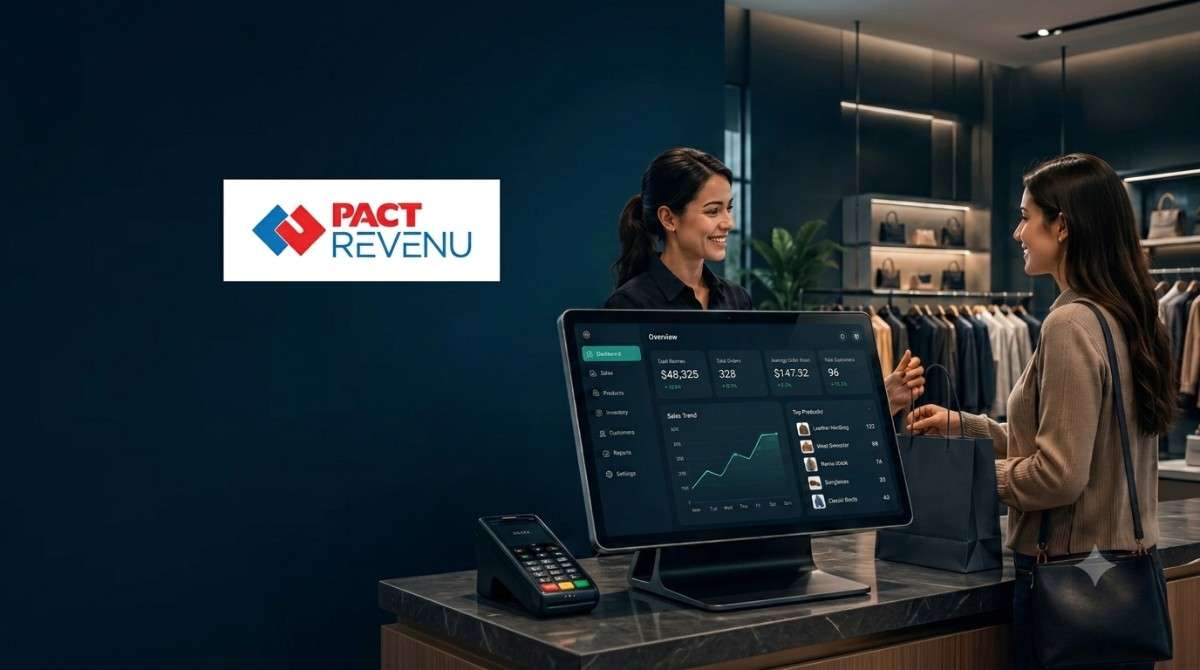
PACT REVENU connects point-of-sale, inventory, purchasing, and reporting into one system built for how Indian retailers actually operate — including GST compliance, multi-location management, and the pace of a busy retail counter. Rather than treating sales and inventory as separate problems, PACT REVENU treats them as two views of the same real-time data, which is where the actual efficiency gains come from.
For retailers ready to stop losing revenue to disconnected systems, the shift to a unified platform is one of the highest-impact changes they can make this year.
Frequently Asked Questions
1. How does retail management software increase sales? It speeds up checkout, surfaces which products are actually selling, keeps pricing consistent across locations, and gives staff real-time stock visibility to avoid lost sales at the counter.
2. What role does inventory management software play in reducing costs? It prevents overordering and stockouts by tracking stock levels accurately in real time and automating reorder alerts based on actual demand.
3. Is a retail POS system necessary for small retail businesses? Yes. Even single-location stores benefit from faster billing, accurate stock counts, and GST-compliant invoicing that a modern POS system provides.
4. Can retail automation software reduce manual errors? Yes. Automating tasks like invoicing, stock updates, and reporting removes the manual entry errors that come with spreadsheets and disconnected tools.
5. How does business management software help multi-location retailers? It consolidates sales and inventory data from every branch into a single dashboard, removing the need for manual reconciliation between locations.
6. Does PACT REVENU support both online and offline retail sales? Yes. PACT REVENU syncs inventory and sales data across online and offline channels, keeping stock counts accurate no matter where a sale happens.
7. How quickly can retailers see results after adopting retail management software? Many retailers notice faster checkout times and improved stock accuracy within the first few weeks, with sales and inventory trends becoming clearer over subsequent months.