Beyond London: Regional Chefs Redefining British Food
-

- July 30th, 2026
- 37 views

FREE SEO Topical Map Generator: Find Your Next Content Ideas
For decades, anyone asked to name a great British restaurant would default to London. It made sense — the capital had the money, the critics, and the Michelin inspectors. But the more interesting story has always been happening elsewhere: in converted mill buildings in Yorkshire, seafront shacks in Cornwall, and pubs on B-roads that most people would drive straight past.
The rise of regional British cuisine isn't a recent trend so much as a fifty-year slow burn. To understand where the country's best places to eat in the UK are right now, it helps to look at how we got here — one decade at a time.
The 1980s: A Country Still Eating in the Dark
British food in the 1980s had a reputation problem, and mostly it was deserved. Pub food meant a microwaved pie and a bag of crisps behind the bar. Restaurant food, where it existed outside London hotels, tended to mean either stiff, French-inflected fine dining aimed at expense-account diners, or nothing at all.
The First Cracks in the Old System
Yet a handful of regional operators were already pushing against this. Chefs like the Roux brothers had trained a generation of cooks who would eventually scatter across the country, and small pockets of ambition were forming in places like the Lake District and the Cotswolds, where country house hotels began hiring serious kitchen talent to attract weekend guests. These weren't yet household names, but they planted an idea that would matter enormously later: that good food didn't have to live in London to find an audience.
Regional producers, too, were quietly organising themselves, even if nobody was calling it a movement yet. Smallholders in the West Country kept traditional cheesemaking alive through years when supermarket shelves were dominated by mass-produced, mild alternatives. Butchers and fishmongers in market towns held onto relationships with local farms and boats that would later become the backbone of the farm-to-table story. None of this made headlines at the time, but it meant the raw materials for a regional food renaissance were still there, waiting for chefs willing to use them properly.
The traditional British pub, meanwhile, was heading toward crisis. Breweries owned most of them, food was an afterthought — a curling ham sandwich under a plastic dome, if food was offered at all — and as the decade wore on, changing drinking habits and licensing law reform began chipping away at footfall. Younger drinkers were spending more time in wine bars and city-centre chains, leaving traditional locals reliant on an ageing, shrinking customer base. Nobody could have called it yet, but the pub as Britain had known it for a century was starting to die, and it would take a genuine reinvention — not a rescue plan — to bring it back.
The 1990s: The Gastropub Revolution Begins
If the 1980s planted seeds, the 1990s is when they broke through the concrete. The opening of The Eagle in Clerkenwell in 1991 is usually cited as the birth of the modern gastropub — a pub that served proper, seasonal, chef-led food rather than reheated ready meals. The idea spread fast, but its real significance was regional, not metropolitan.
Why the Gastropub Revolution Mattered Outside London
Struggling pubs across England suddenly had a lifeline. Landlords who'd watched their trade collapse could bring in a trained cook, rip up the microwave menu, and reposition the pub as a genuine dining destination. This mattered more in market towns and villages than it did in the capital, because in rural England the pub was often the only public gathering space left. Saving the pub, in many cases, meant saving the last piece of shared village life — the one building where the whole community, not just drinkers, still had a reason to turn up.
The model spread with surprising speed. A pub in Shropshire or Suffolk could watch what was happening in Clerkenwell, borrow the basic idea — good ingredients, a short seasonal menu, a chef rather than a caterer — and adapt it to whatever the local area actually produced well. It didn't require London money or a London postcode, which is exactly why it took hold so widely and so fast.
This is also the decade regional British cuisine started acquiring a public identity separate from "posh London dining." Chefs increasingly leaned into what their region actually produced — Herefordshire beef, Cornish crab, Lakeland lamb — rather than imitating a French template. It was less about invention and more about permission: regional produce could headline a menu, not just supply it. A menu built around a local herd or a local boat's catch stopped looking parochial and started looking like a point of pride, something worth putting front and centre rather than apologising for.
The 2000s: The Regional Renaissance Takes Root
By the 2000s, the gastropub had matured from a novelty into an established category, and something bigger was building alongside it — a genuine regional renaissance in British food writing, broadcasting, and dining.
Farmers' Markets, Food Festivals, and a New Food Media
Television played an outsized role here. Cookery programmes filmed chefs foraging on Cornish cliffs or visiting Yorkshire smallholdings, quietly reframing "local" as aspirational rather than parochial. Farmers' markets multiplied across market towns, and food festivals in places like Ludlow and Abergavenny gave regional producers a public stage they'd never had before.
Chefs Who Chose to Stay
Crucially, some of the era's most talented cooks began deliberately building careers outside London rather than treating the capital as an obligatory stop. A chef opening a restaurant in the Lake District, the Scottish Borders, or rural Hampshire was no longer seen as settling for less — it was starting to look like a strategic, even enviable, choice. Lower rents made it possible to take risks on tasting menus and long-form cooking that a cramped London site simply couldn't afford. Space, quiet, and proximity to genuinely exceptional produce turned out to be worth more than footfall.
This is the decade the phrase "modern British cuisine" started meaning something specific: confident, produce-led cooking that wore its regional roots openly instead of disguising them under continental technique. Menus began naming the farm, the boat, or the smallholding a dish came from, treating provenance as part of the story rather than small print. Diners responded to it, and so did critics, who increasingly made the trip out of London to review these openings rather than waiting for their chefs to relocate to the capital.
The pub sector, meanwhile, was entering a rougher patch. The 2007 smoking ban and the 2008 financial crash hit traditional locals hard, and closures accelerated. But the gastropub model, by contrast, largely held steady or grew — proof that food-led pubs had built a more resilient business than drink-led ones.
The 2010s: Farm-to-Table Goes Mainstream
The 2010s is where the regional story stopped being a side note and became the headline. Farm-to-table stopped being a niche selling point and became close to a baseline expectation, especially outside major cities where supply chains to local farms were often shorter and easier to build.
The Rise of the Destination Restaurant
This decade produced a new archetype: the destination restaurant that people would drive two or three hours to reach, precisely because it wasn't in London. Cumbria, in particular, became a genuine dining region in its own right, helped along by chefs willing to build serious, ambitious kitchens far from any major city. Coastal Wales, the Scottish Highlands, and rural Devon followed similar patterns, each developing a recognisable culinary identity tied to what grew, swam, or grazed nearby.
Social media accelerated this considerably. A striking plate of food photographed in a converted barn in the Yorkshire Dales could travel just as far online as one shot in a Mayfair dining room, and often generated more curiosity precisely because of the setting. Suddenly, remoteness was an asset rather than an obstacle — a reason to book well in advance and plan a weekend around a single meal, rather than a reason to stay away.
UK Regional Chefs Find Their Voice
It's in this decade that the idea of UK regional chefs as a distinct, celebrated category really solidifies. Food media stopped treating regional openings as curiosities and started covering them with the same seriousness as London launches. Award shortlists began reflecting this shift too, with local, independent restaurants increasingly recognised for their own merits rather than as an alternative to the capital.
The traditional pub, unfortunately, kept struggling through much of this period. Business rates, rising costs, and shifting social habits closed thousands of locals across Britain. But where a pub had genuinely reinvented itself around food — real gastropub territory — it tended to survive, and often thrive, becoming exactly the kind of place worth travelling for.
The 2020s: Beyond London, Properly
Which brings us to now. The pandemic accelerated a shift that had been building for thirty years: people rediscovered the value of eating well close to home, supporting independent, regional places rather than defaulting to big-city dining. Staycations turned domestic travellers into serious diners, hunting out the best restaurants outside London with the same enthusiasm once reserved for international city breaks.
A New Generation of Regional Chefs
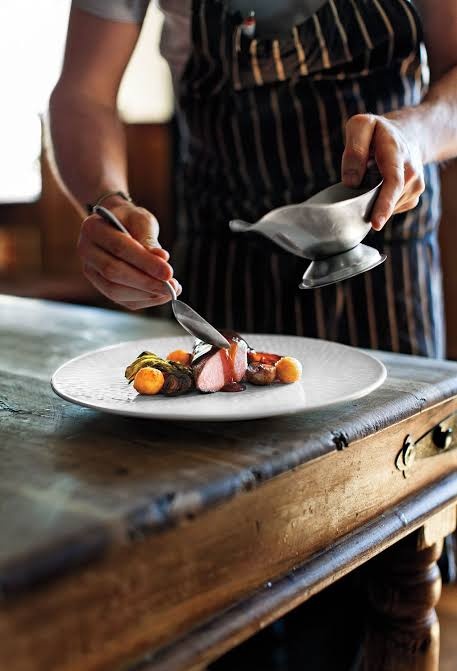
Today's most interesting cooking in Britain is arguably happening away from the capital altogether — in a converted chapel in Wales, a harbourside spot in the Scottish Highlands, or a reinvented coaching inn in the Peak District. These regional chefs aren't positioning themselves as London's understudies; they're building distinct, confident identities rooted in place, season, and local supply chains that London simply can't replicate.
Many trained in top kitchens in London, Paris, or Copenhagen before making a deliberate choice to return to the region they grew up in, bringing serious technique home to apply to ingredients they'd known their whole lives. That combination — outside experience paired with genuine local knowledge — is producing some of the most distinctive cooking the country has seen, precisely because it isn't trying to imitate anywhere else.
The Pub, Reborn
The pub, too, has largely completed its transformation. The best surviving examples now sit somewhere between restaurant and local — serious kitchens with proper wine lists, still welcoming someone in for just a pint. It's a genuinely British hybrid, and it took the better part of five decades, several recessions, and a global pandemic to get there.
For anyone planning a UK trip built around food rather than sightseeing, this shift matters. The best places to eat in the UK right now are as likely to be two hours outside a major city as inside one, and increasingly, that's the whole point of going.
Planning Your Own Regional Food Trail
If this decade-by-decade journey has you rethinking where to eat on your next UK visit, the good news is that regional dining has never been easier to plan around. Whether you're chasing seafood on the Cornish coast, a reinvented gastropub in the Cotswolds, or a chef-led restaurant in the Highlands, the trip itself can become the itinerary.
For a broader look at where to base a UK visit and what else is worth seeing along the way, About UK is a useful starting point for planning routes around the country's regions. And for a curated look specifically at where to eat, the full guide to restaurants in the UK breaks down standout spots by area, making it easier to build a food-led trip rather than an afterthought squeezed between sightseeing stops.
British cuisine's real story was never confined to one postcode. It just took the rest of the country a few decades to make its case — and it's making it louder than ever now.