Recruitment Management Software: A Complete Guide (2026)
-

- July 17th, 2026
- 29 views

FREE SEO Topical Map Generator: Find Your Next Content Ideas
Introduction
Hiring rarely fails because of one bad decision. It fails through accumulation — a job posting that only reached one platform, a strong candidate who went cold because nobody followed up for a week, an interview that got double-booked because two people were coordinating calendars separately. Individually, none of these looks like a crisis. Together, across a hiring season, they're the difference between filling a role quickly with someone genuinely good and losing that person to a competitor who moved faster.
This is the gap that recruitment management software exists to close. This guide covers what it actually does, how it differs from the applicant tracking systems many teams already use, the core features worth evaluating, and how to think about choosing one for your organization.
What Recruitment Management Software Actually Is
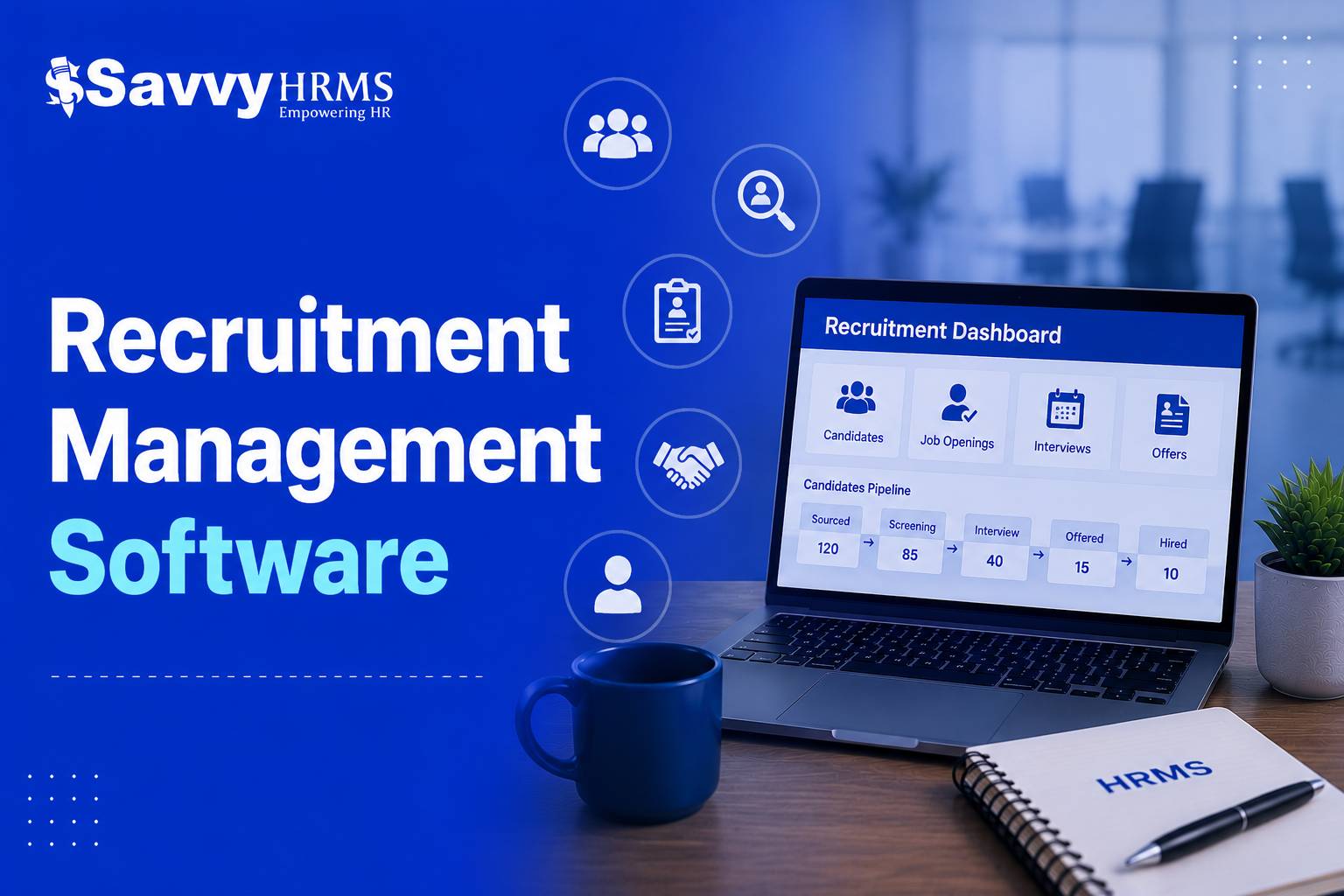
At its core, a recruitment management system serves as a centralized hub for all aspects of hiring, including job postings, candidate communication, resume storage, screening, interview coordination, and reporting, thereby replacing the patchwork of spreadsheets, email threads, and disconnected tools that would otherwise be used.
For organizations juggling multiple open roles at once, that centralization isn't a convenience; it's the difference between a hiring process anyone can actually track and one where candidates quietly fall through the cracks because nobody has full visibility into where things stand.
How This Differs From a Basic Applicant Tracking System
The terms "recruitment management system" and "applicant tracking system" get used almost interchangeably, which causes real confusion when teams are comparing vendors. They're related, but not the same thing.
An ATS is largely built around the mechanics of tracking applicants — posting jobs, logging applications, moving candidates through defined stages, and generating offer letters. It does this well, but it's fundamentally a record-keeping and workflow tool.
A recruitment management system builds on that foundation and extends further into candidate engagement and matching — actively helping recruiters find the right candidates for a role, communicate with them meaningfully throughout the process, and automate a larger share of the workflow beyond simple status tracking. In practice, most modern platforms blend both functions, but understanding the distinction helps when a vendor's feature list needs closer scrutiny.
Core Features Worth Understanding
1. Job Posting and Distribution
A capable system doesn't just host a job description — it distributes it. Templates and customizable forms let recruiters input role details once, then push that posting across multiple job boards, career pages, and social platforms simultaneously, rather than manually re-posting the same listing on five different sites. This consistency also matters for employer branding: candidates encountering the same polished posting everywhere reinforces a more professional impression than a listing that looks different depending on where they found it.
2. Candidate Communication
Recruitment stalls most often not from a lack of candidates, but from communication gaps. Automated, triggered messaging — an acknowledgment when an application is received, an interview invitation, a timely rejection notice — keeps candidates informed without requiring a recruiter to manually send every update. This matters more than it might seem: a candidate left waiting without any update is a candidate who assumes the worst and starts looking elsewhere.
3. Resume Management and Parsing
Rather than a folder of PDFs, a proper system stores resumes in a structured, searchable format. Resume parsing technology extracts key details — skills, experience, education — directly into structured fields automatically, which turns resume screening from a manual read-through-everything task into something recruiters can filter and search efficiently.
4. Candidate Search
Robust search functionality lets recruiters filter the existing candidate pool by skills, experience level, location, or keywords — useful not just for a current opening, but for identifying strong past applicants who might fit a role that opens later. This is one of the more underused features in practice; a well-maintained candidate database becomes a real asset over time, not just a record of past hiring.
5. Screening and Assessment
Built-in pre-screening questionnaires or assessments let recruiters evaluate candidates against specific criteria before investing interview time. This isn't about replacing human judgment — it's about surfacing the most qualified candidates from a large pool more efficiently, so interview time goes to people who've already cleared a reasonable bar.
6. Applicant Tracking Through the Pipeline
A centralized view of every candidate's status — application received, screening, interview scheduled, offer extended — gives the whole hiring team visibility without needing a separate spreadsheet update every time something changes. This transparency matters most when multiple people are involved in a hiring decision; nobody wants to discover mid-process that a candidate they liked was already rejected by someone else on the team.
7. Interview Scheduling
Integrated calendar tools let candidates select from available interviewer slots directly, removing the back-and-forth email chain that otherwise eats days out of a hiring timeline. For roles requiring multiple interview rounds with different stakeholders, this coordination becomes considerably harder to manage manually as team size grows.
Why This Actually Matters: The Real Benefits
1. A faster, more consistent hiring process. Automating the repetitive mechanics of recruiting — posting, tracking, scheduling — reduces time-to-hire meaningfully, which matters directly for competitive roles where strong candidates often have multiple offers in play simultaneously.
2. A noticeably better candidate experience. Candidates who apply through a smooth, mobile-friendly process and receive timely updates form a more favorable impression of the company, regardless of whether they're ultimately hired. In a market where candidates compare notes and leave reviews about their hiring experience, this compounds over time into real employer brand value.
3. Genuine data-driven decision-making. Centralized candidate data makes it possible to actually measure recruitment metrics — time-to-fill, source effectiveness, where candidates drop out of the pipeline — rather than relying on impressions. This is what allows a hiring strategy to actually improve over time instead of repeating the same approach regardless of results.
Who Actually Benefits Most
Recruitment management software isn't equally valuable to every organization, and it's worth being honest about where it matters most:
1. Companies hiring at real scale — multiple open roles across departments or locations — get the clearest return, since manual coordination breaks down fastest here.
2. Organizations with layered, multi-stakeholder hiring processes benefit from the coordination and visibility a centralized system provides.
3. Employers prioritizing candidate experience and brand gain from consistent, professional communication and branded application portals.
4. Data-driven HR teams get genuine value from analytics that would otherwise require manual tracking to produce.
A very small team hiring for a single role occasionally may not need the full weight of a dedicated system — but the moment hiring becomes a recurring, multi-role activity, the case for one becomes considerably stronger.
What to Actually Look For When Choosing a Platform
- Different organizations need different depth from a recruitment system — a company hiring a handful of specialized roles a year has different needs than one running continuous, high-volume recruitment across multiple locations. Before choosing, be explicit about:
- Does the platform distribute postings across the specific job boards and channels your candidates actually use?
- Is resume parsing accurate enough to reduce manual review, or does it still require significant manual correction?
- Can the system handle your specific interview coordination complexity — multiple rounds, multiple interviewers, different departments?
- Does reporting cover the metrics your team actually needs to track, not just generic dashboards?
- How well does it integrate with your broader HR stack, including onboarding once a candidate is hired?
- Platforms built to support the full employee lifecycle — SavvyHRMS among them — position recruitment as one connected piece of a broader HR system, rather than an isolated tool that requires a separate handoff once a candidate accepts an offer. That continuity matters in practice: a new hire's data shouldn't need to be re-entered manually into a different onboarding system the moment they sign.
Frequently Asked Questions
Is a recruitment management system the same as an ATS?
Related but not identical — an ATS focuses on tracking applicants through defined stages, while a recruitment management system typically extends further into candidate engagement, matching, and broader workflow automation. Many modern platforms combine both.
Is this worth it for a small company hiring only occasionally?
It depends on volume and complexity more than company size. A small company running a handful of hires a year through a straightforward process may not need the full feature set, but one managing several concurrent roles with multiple stakeholders often benefits regardless of overall headcount.
How much does resume parsing actually reduce manual work?
Meaningfully, when it's accurate — it turns unstructured resumes into searchable, filterable data, cutting down significantly on manual review time. Accuracy varies by platform, so it's worth testing directly with real resumes rather than trusting a marketing claim.
Does better candidate communication really affect hiring outcomes?
Yes — candidates left without updates for extended periods often disengage or accept other offers, especially for competitive roles. Consistent, automated communication keeps strong candidates engaged through what can otherwise be a slow process.
Conclusion
Hiring well isn't really about any single tool or feature — it's about removing the coordination failures that quietly cost good candidates: the slow follow-up, the double-booked interview, the strong applicant who got lost in an inbox. Recruitment management software exists specifically to close those gaps, and the right platform for your organization depends less on which has the longest feature list and more on which actually fits the scale and complexity of how your team hires.