
PST to EST: Convert Time in Seconds
-

- July 22nd, 2026
- 17 views

FREE SEO Topical Map Generator: Find Your Next Content Ideas
Here's the truth. PST to EST conversion is simple. People overcomplicate it. They do the math half-asleep, five minutes before a meeting starts.
Why This Trips People Up in the First Place
Time zones feel weird. Not "quirky weird." Just arbitrary.
So your brain glitches when you convert PST to EST. That's not bad math. You're fighting a system built for steam engines, not Zoom calls.
The Rule That Actually Matters
Write this down. Tattoo it somewhere if you have to.
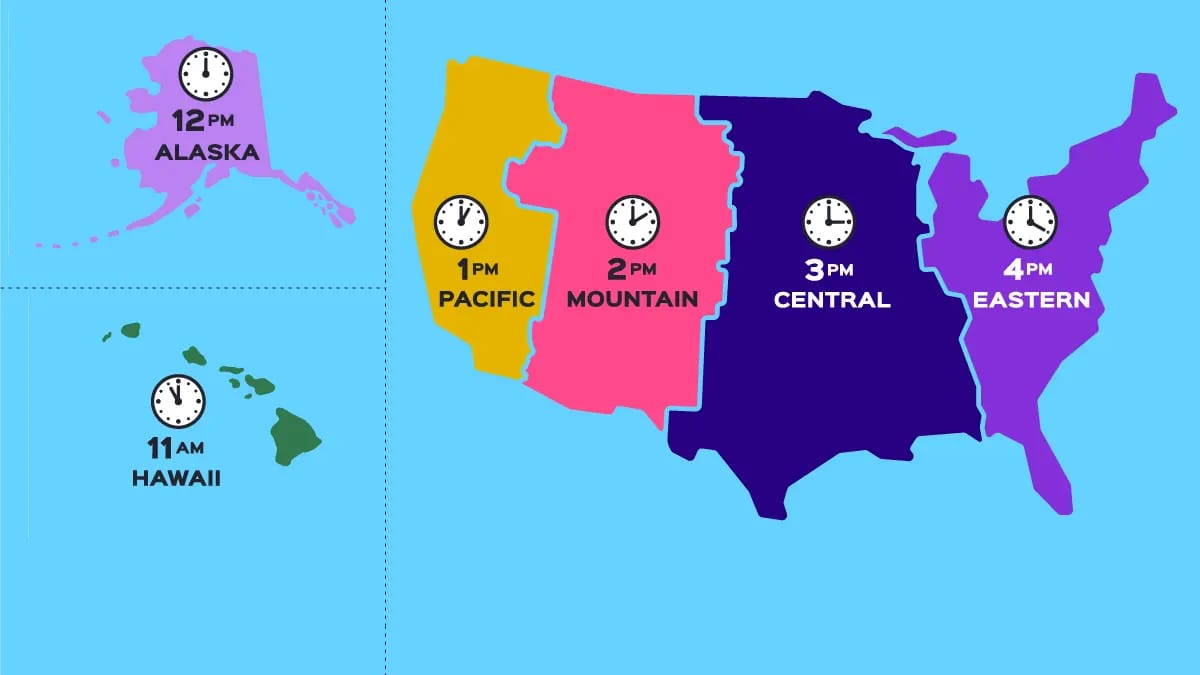
EST sits 3 hours ahead of PST. Always. That's the whole thing. LA hits 9 AM. New York hits noon. Clean and simple.But there's always a catch. One detail catches almost everyone off guard.
The Formula (It Really Does Take Seconds)
Add 3 hours to a PST time. You get EST.
Going the other way? Subtract 3.
Two moves. That's it. Let's run through it fast:
- 6 AM PST becomes 9 AM EST
- Noon PST becomes 3 PM EST
- 8 PM PST becomes 11 PM EST
- 11 PM PST becomes 2 AM EST, the next day
That last one's the trap. Late PST hours roll into the next date on the East Coast. Miss it, and you join a meeting a full day late. I've done this. It's embarrassing.
The Daylight Saving Wrinkle
Quick gut check here. People always ask about this.
Both PST and EST shift for daylight saving. Clocks spring forward. Clocks fall back.
Good news: they move together. The 3-hour gap stays put.
Bad news: during the actual switch week, clocks feel off. This happens mostly in mid-March and early November. It gets tricky when you also juggle international time zones that switch on a different schedule.
So trust the 3-hour rule most of the year. Just watch closely during transition weeks.
Your Quick Cheat Sheet
Paragraphs work fine. But sometimes you just need a table.
|
PST Time |
EST Time |
|
12:00 AM |
3:00 AM |
|
3:00 AM |
6:00 AM |
|
6:00 AM |
9:00 AM |
|
9:00 AM |
12:00 PM |
|
12:00 PM |
3:00 PM |
|
3:00 PM |
6:00 PM |
|
6:00 PM |
9:00 PM |
|
9:00 PM |
12:00 AM (next day) |
|
11:00 PM |
2:00 AM (next day) |
Screenshot it. Save it. Send it to that one coworker who always gets confused.
Where This Actually Costs You (Real Situations)
This isn't internet trivia. Getting PST to EST wrong brings real consequences. Not the fun kind.
Meetings You Almost Missed
A 2023 Buffer survey found something wild. Over 40% of remote workers said they showed up late, or missed a meeting entirely, because of a time zone mix-up.
Forty percent. That's nearly half of remote workers. At some point, they stared at a calendar invite that made zero sense.
Why does this happen so much? People do the math under pressure. Stress plus rushed math equals mistakes.
That Flight Layover You Thought You Had
You book a flight. You feel great about your three-hour buffer. Then you realize you don't actually have three hours.
Airlines list times locally. Your brain skips the conversion. That buffer vanishes into thin air.
Missing the Live Stream
Product launches happen. Big game nights happen. Award shows happen. Companies schedule these events once, in one time zone. Then they broadcast everywhere else.
Get the PST to EST math wrong, and you load the stream just as the credits roll.
Remote Teams Split Across the Country
Here's a bigger one. Some companies keep people in Seattle and Boston. Some freelancers in San Francisco work with agencies in Miami.
One wrong hour, and somebody sits alone in an empty Zoom room. They wonder where everyone went. This happens more than people admit.
What the Data Actually Shows
Let's look at numbers. They tell a wild story.
A 2022 World Economic Forum estimate pegged a huge cost on this problem. Poor cross-timezone coordination costs global businesses billions of dollars a year in lost productivity. Billions. Not a typo.
Here's how those scheduling errors break down:
- 62% happen with meetings booked more than a week ahead. People forget to double-check closer to the actual day.
- 28% happen during daylight saving transition weeks.
- 10% come from plain math errors. No real excuse there.
Why do advance-booked meetings fail so often? You set the reminder weeks ago. Your brain filed it away and moved on. The day arrives. You trust that old reminder blindly. You skip the recheck.
This comes down to habit, not math skill. And habits change.
Mistakes People Keep Making
Let's call these out directly. No sugarcoating here.
- You assume PST and EST never shift. They do. Twice a year. Together.
- You forget the date rollover. Late PST hours land in the next EST day.
- You trust auto-adjust blindly. Phones glitch sometimes. Especially after updates.
- You confuse PST with PDT. They're not the same thing. Same goes for EST and EDT.
- You do the math while stressed. Convert ahead of time. Not five minutes before the call.
Each mistake seems small. Stack a few together, though, and you become the person who shows up an hour late to their own meeting.
Mental Math vs. Apps:
Honestly? Don't choose. Use both.
Mental math moves fast. You skip the wifi. You skip the app.
But tools catch the tricky stuff. They catch daylight saving oddities. They catch date rollovers. They catch weird international overlaps.
Try this: do the quick mental math first. Then double-check with a converter before anything important. This takes two seconds. It saves you an awkward apology email later.
A Trick That Actually Sticks
Here's one worth stealing.
Picture EST as "PST plus a coffee break and a commute." Three hours. That's the gap.
Sounds silly? Maybe a little. But silly tricks stick better than dry formulas. Ask anyone who used a mnemonic to pass a test.
Or try this instead. Picture a clock face. Move the hour hand forward three notches. You land on EST. Move it back three notches from EST. You land back on PST. Visual thinking works better for a lot of people.
Why This Skill Matters More Than It Used To
Remote work keeps growing. It won't slow down soon.
More companies now hire across both coasts. They didn't do this five years back. PST to EST conversion used to sit as a nice-to-know skill. Now it works as a basic job skill for remote workers in the U.S.
Learn this now. Future-you will thank present-you.
FAQs
How many hours ahead is EST compared to PST?
EST sits 3 hours ahead of PST, all year long. That gap holds steady during daylight saving and standard time, since both zones shift together.
Does daylight saving time mess with the PST to EST gap?
Not really. Both zones spring forward and fall back around the same time. The 3-hour difference barely moves.
What's the actual difference between PST and PDT?
PST stands for Pacific Standard Time. People use it in winter months. PDT stands for Pacific Daylight Time. People use it in summer. Either way, East Coast time stays 3 hours ahead. It just carries the label EST or EDT depending on the season.
Why do late-night PST times confuse people so much?
They roll into the next calendar day on the East Coast. Most people shift the hour but forget to shift the date. An 11 PM PST call turns into 2 AM EST the next day. This catches even experienced schedulers off guard.
