The Ultimate Guide to Polytrack: Master the Low-Poly Racing Phenomenon
-
- July 24th, 2026
- 16 views

FREE SEO Topical Map Generator: Find Your Next Content Ideas
In the vast and ever-expanding universe of browser-based gaming, few titles manage to capture the perfect balance of accessible gameplay, creative freedom, and adrenaline-pumping speed. Polytrack has emerged as a standout title in this space, offering a minimalist yet deeply engaging racing experience that keeps players coming back for "just one more lap." Heavily inspired by classic time-trial racers like Trackmania, Polytrack strips away the unnecessary clutter of modern AAA titles to deliver pure, unadulterated racing joy.
Whether you are a casual gamer looking to kill some time during a break or a hardcore speedrunner aiming to shave milliseconds off your personal best, this game has something for everyone. In this comprehensive guide, we will dive deep into what makes Polytrack a must-play, explore its core mechanics, and provide tips to help you dominate the leaderboards.
What is Polytrack?
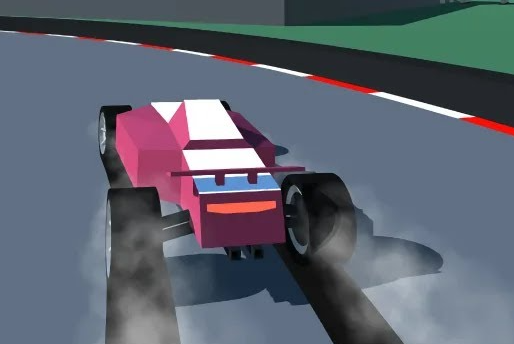
At its core, Polytrack is a high-speed, physics-based racing game built around time trials. Unlike traditional racing games where you compete directly against AI or other players on a single track, your only opponent here is the clock. The game features a striking low-poly, flat-shaded aesthetic that is both visually pleasing and highly optimized, allowing it to run smoothly on almost any device directly through a web browser.
The premise is brilliantly simple: start at the beginning, navigate a series of twists, turns, loops, and jumps, and reach the finish line as fast as possible. However, beneath this simple exterior lies a highly tuned physics engine that demands precision, timing, and an intimate understanding of momentum.
Core Gameplay Mechanics
To truly appreciate Polytrack, you must understand the underlying mechanics that govern how your car interacts with the track. The controls are straightforward—typically just the arrow keys or WASD—but mastering them takes practice.
Time-Trial Perfection
Every millisecond counts in Polytrack. The game is meticulously designed around the concept of time-trial perfection. There are no power-ups, no rubber-banding AI, and no random elements to disrupt your run. It is entirely skill-based. When you set a new personal record, it is because you drove better, took a tighter line, or managed your speed more efficiently. This creates an incredibly satisfying feedback loop.
Precision Driving and Drifting
The handling model in Polytrack is arcade-leaning but heavily physics-dependent. Cars feel lightweight yet responsive. Drifting is a crucial component of navigating tight corners without losing too much momentum. Knowing when to tap the brake to initiate a slide, and how to counter-steer to maintain your exit speed, separates the beginners from the pros. Grip is your best friend on straightaways, but controlled sliding is essential for the winding chicanes.
The Power of Instant Restarts
Perhaps the most dangerously addictive feature of Polytrack is the instant restart button. Making a mistake, hitting a wall, or messing up a jump does not mean sitting through a loading screen. With a single keystroke, you are instantly teleported back to the starting line. This eliminates frustration and encourages experimentation, pushing players to take risky lines and try daring maneuvers without the fear of a time penalty.
The Track Builder: Unleash Your Creativity
While the pre-built levels offer a fantastic introduction to the game's physics, the true heart and soul of Polytrack lies in its custom Track Builder. This tool transforms the game from a simple racer into a sandbox of infinite possibilities.
Intuitive Design Tools
The level editor features an intuitive, grid-based placement system. Players are given access to a wide array of track pieces, including straightaways, banked turns, steep inclines, and massive jumps. The interface is user-friendly, allowing you to snap pieces together seamlessly. You can construct a basic circuit in a matter of minutes, or spend hours tweaking a complex, multi-layered masterpiece.
Defying Gravity
One of the defining characteristics of Polytrack is its verticality. The track builder allows you to construct gravity-defying elements like massive 360-degree loop-de-loops, vertical wall-rides, and terrifying drops. Designing a track that flows perfectly through these extreme elements requires trial and error, ensuring that the car has exactly enough speed to make a jump without overshooting the landing.
Community and Custom Tracks
A game with a level editor is only as strong as its community, and the Polytrack community is thriving. Because the game is easily accessible, thousands of players are constantly creating and sharing their custom tracks.
Endless Replayability
By copying and pasting simple track codes, you can instantly load up a course designed by someone on the other side of the world. This means the content is virtually limitless. One moment you might be playing a relaxing, scenic route, and the next you could be sweating through a brutal, "kaizo-style" obstacle course designed to test the absolute limits of the game's physics engine. The community aspect ensures that Polytrack never grows stale, as there is always a new challenge waiting to be conquered.
Why Polytrack is Extremely Addictive
What is the secret sauce that makes Polytrack so hard to put down? It comes down to a few key factors:
Accessibility: No downloads, no installations, no accounts required. You can go from clicking a link to driving a car in less than five seconds.
Performance: The minimalist low-poly graphics mean the game runs at a blisteringly fast framerate, even on older hardware or standard office laptops.
The "Flow State": When you string together a perfect series of corners, hit every jump perfectly, and maintain your top speed, the game induces a deeply satisfying "flow state." It is a rhythmic, almost meditative experience.
Tips for Beginners to Improve Lap Times
If you find yourself constantly crashing or falling behind the top times, do not get discouraged. Improving at Polytrack is all about refinement. Here are a few essential tips to help you shave off those precious seconds.
Master the Racing Line
The shortest distance between two points is a straight line. Always try to visualize the optimal path through a corner. Start wide, cut close to the apex (the inside of the turn), and exit wide. Minimizing the amount of steering you do will keep your speed high. Avoid erratic movements and try to drive as smoothly as possible.
Control Your Airtime
While flying through the air looks incredibly cool, it is actually the slowest way to travel in Polytrack. When your wheels leave the ground, you can no longer accelerate. Try to take jumps at speeds that allow you to clear the gap but land as quickly as possible. Sometimes, letting off the gas right before the lip of a jump can save you valuable time.
Smooth Drifting
Do not force a drift if you do not have to. Drifting scrubs off speed. Use it sparingly on the sharpest corners where regular steering simply won't cut it. When you do drift, aim to straighten the car out as early as possible on the exit to get back on the throttle.
Conclusion
Polytrack is a masterclass in minimalist game design. By focusing intensely on core mechanics—speed, physics, and user-generated content—it delivers an experience that rivals games with vastly higher budgets. Its blend of high-speed time trials and creative track building ensures that players are constantly engaged, whether they are gripping the steering wheel or placing the next piece of track. If you haven't yet experienced the thrill of a perfect lap in Polytrack, open a new tab, hit the accelerator, and prepare to lose track of time.