How to Know If You're Eligible to Become a Pilot in India
-
- July 28th, 2026
- 21 views


FREE SEO Topical Map Generator: Find Your Next Content Ideas
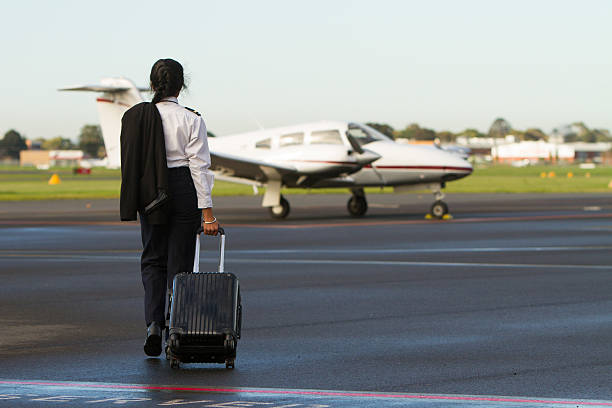
Every year, thousands of students in India quietly drop the idea of becoming a pilot — not because they lack the passion, but because they assume they don't qualify. Most of these assumptions turn out to be wrong. Aviation training organisations like GetWings Aviation, which work with aspiring pilots through DGCA ground classes and flight training pathways, regularly see students walk in convinced they're ineligible, only to find out the actual requirements are far more accessible than they expected.
If you're genuinely curious about a career in aviation, here's a clear, honest look at what pilot eligibility in India actually involves — from education and age to medical fitness and language proficiency.
Understanding the Pilot Training Journey
Before diving into eligibility criteria, it helps to understand the overall path. Becoming a commercial pilot in India typically progresses through a Student Pilot License (SPL), a Private Pilot License (PPL), a Commercial Pilot License (CPL), and eventually a Type Rating specific to the aircraft you'll fly for an airline. Each stage has its own training goals, but all of them begin with meeting the DGCA's baseline eligibility requirements.
Education: less restrictive than most people think
You'll need to have completed 10+2 (or an equivalent) with Physics and Mathematics. But if you came from an Arts or Commerce background, that doesn't shut the door — these subjects can be completed later through DGCA-recognized open education pathways, and plenty of students have gone on to fly successfully after doing exactly that.
Interestingly, pilot training doesn't demand exceptionally high board exam scores the way many professional courses do. Most flying academies focus on whether you meet the required educational criteria rather than a specific percentage, though some airline cadet programs may layer on their own aptitude tests or academic benchmarks.
Age: no upper limit, only minimums
There's no maximum age to start pilot training in India. What exists are minimum thresholds tied to specific licenses — 16 for a Student Pilot License, 17 for a Private Pilot License, and 18 for a Commercial Pilot License. Starting earlier simply means building flight hours and career momentum sooner, not that later starters are excluded. This is genuinely good news for career-changers and graduates who discover their interest in aviation later than school-age students might.
Medical fitness: two stages, and vision isn't the dealbreaker people assume
Medical fitness is one of the most important eligibility factors, since pilots are directly responsible for aircraft operations and passenger safety. Aspiring pilots go through two medical assessments.
The Class 2 Medical, usually completed early — often before joining a flying academy — checks general physical health, vision, hearing, blood pressure, and medical history. The Class 1 Medical, required before obtaining a Commercial Pilot License, is far more comprehensive, covering eye examinations, ECG, chest X-ray, blood investigations, urine tests, hearing assessment, cardiovascular evaluation, and overall physical fitness.
One persistent myth worth addressing directly: pilots need flawless eyesight. In reality, corrected vision through glasses or contact lenses is accepted, as long as it meets the required standard — including distance vision, near vision, colour vision, depth perception, and binocular vision — during a formal DGCA-approved medical test.
English proficiency
Since aviation communication — from cockpit instruction manuals to interactions with air traffic controllers — happens in English globally, comfort with reading, writing, speaking, and listening in English is treated as a core requirement, not an optional skill. It's an area many aspiring pilots overlook while focused on technical preparation, but it plays a real role in both training success and long-term career performance.
What commercial pilot eligibility adds on top
Beyond the basics, a Commercial Pilot License requires clearing DGCA theory examinations, completing a set number of flight hours, cross-country navigation training, instrument flying, night flying, Radio Telephony (RTR) qualification, and a skill test administered by a qualified examiner. Training must also happen at a DGCA-approved Flying Training Organisation — it's worth double-checking that any institute you're considering, including established names like GetWings Aviation, is genuinely DGCA-approved, since training at an unapproved organisation won't count toward your license.
Common mistakes that delay people unnecessarily
The most frequent one is assuming only science students can become pilots — arts and commerce backgrounds are entirely workable with the right preparatory coursework. Another is postponing the medical exam until after already investing time and money into coaching or admission; getting medically cleared early avoids wasted resources if an issue does come up. Choosing an unapproved flying school is another costly mistake, as is simply starting the eligibility research too late — students who explore requirements while still in school tend to plan their finances, courses, and medical timeline far more smoothly than those who scramble later.
The bottom line
Most people who think they don't qualify for pilot training actually do — they just never checked the real requirements against their own assumptions. Aviation consultants and training academies such as GetWings Aviation frequently work with students from science, arts, and commerce backgrounds alike, which reflects just how flexible the actual eligibility framework is. If aviation is something you've been curious about, it's worth spending twenty minutes confirming your eligibility rather than ruling yourself out based on a myth.