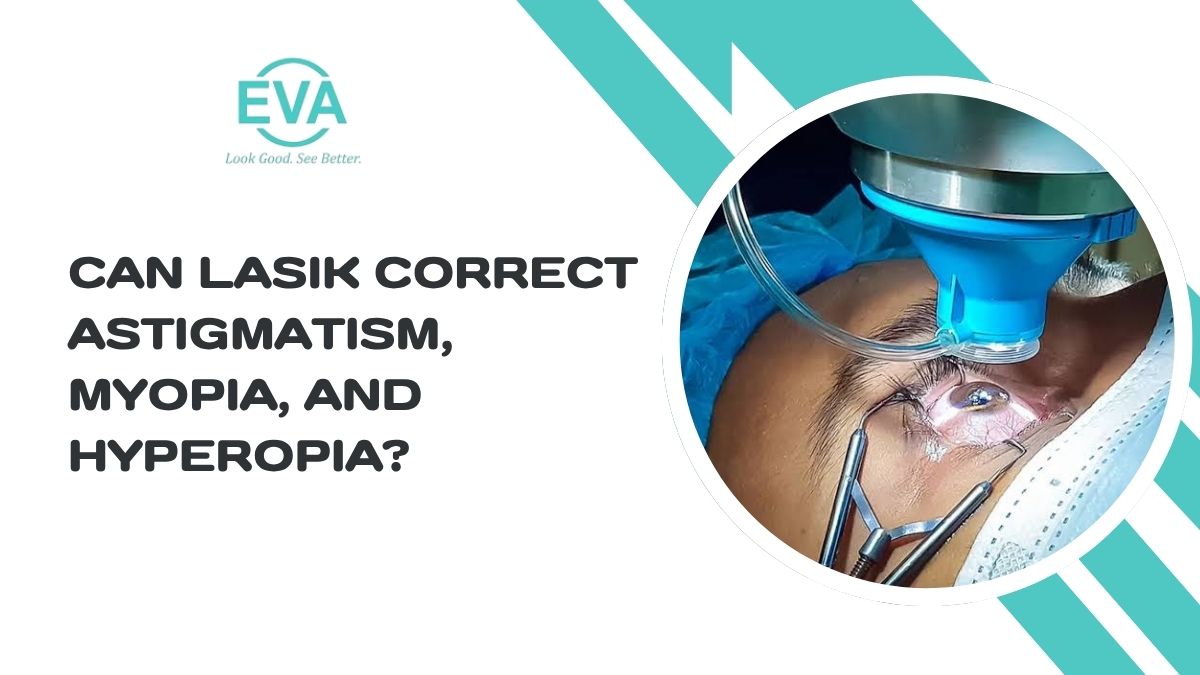
Can LASIK Correct Astigmatism, Myopia, and Hyperopia?
-

- June 27th, 2026
- 23 views

FREE SEO Topical Map Generator: Find Your Next Content Ideas
Millions of people rely on glasses or contact lenses every day to see clearly. Whether you struggle with blurry distance vision, difficulty reading nearby text, or distorted vision caused by astigmatism, you may have wondered if LASIK can provide a long-term solution. One of the most common questions patients ask an eye lasik surgeon in Delhi is: Can LASIK correct astigmatism, myopia, and hyperopia?
The answer is yes—in many cases, LASIK is designed to correct these common refractive errors by reshaping the cornea and improving the way light focuses on the retina. However, the success of treatment depends on factors such as prescription power, corneal thickness, eye health, and overall suitability for surgery.
Let's explore how LASIK works and whether it can help correct different types of vision problems.
Understanding Refractive Errors
Before discussing LASIK, it is important to understand what a refractive error is.
A refractive error occurs when the eye cannot properly focus light onto the retina. This causes blurred vision and may require glasses, contact lenses, or vision correction surgery.
The most common refractive errors include:
- Myopia (Nearsightedness)
- Hyperopia (Farsightedness)
- Astigmatism
- Presbyopia (age-related near vision changes)
LASIK is primarily used to correct myopia, hyperopia, and astigmatism.
What Is LASIK Surgery?
LASIK (Laser-Assisted In Situ Keratomileusis) is a widely performed vision correction surgery that uses an advanced excimer laser to reshape the cornea.
The cornea is the transparent front surface of the eye. When its shape is irregular, light does not focus correctly on the retina, resulting in blurry vision.
During LASIK:
- A thin corneal flap is created.
- The flap is gently lifted.
- An excimer laser reshapes the corneal tissue.
- The flap is repositioned without stitches.
Modern technologies such as bladeless LASIK and wavefront-guided LASIK have improved precision, safety, and visual outcomes significantly.
Can LASIK Correct Myopia (Nearsightedness)?
Yes, LASIK is highly effective for correcting myopia.
People with myopia can see nearby objects clearly but have difficulty seeing distant objects. This happens because light focuses in front of the retina rather than directly on it.
How LASIK Helps
The laser flattens the cornea slightly, allowing light to focus correctly on the retina.
This makes laser eye surgery for nearsightedness one of the most commonly performed LASIK procedures worldwide.
LASIK for Minus Power Eyes
Patients often ask whether LASIK works for high minus numbers. The answer depends on:
- Degree of myopia
- Corneal thickness
- Eye stability
- Overall eye health
Many patients with mild to moderate myopia achieve excellent visual outcomes and significantly reduce or eliminate their dependence on glasses.
An experienced eye specialist doctor in Delhi can determine whether your prescription falls within the safe treatment range.
Can LASIK Correct Hyperopia (Farsightedness)?
Yes, LASIK can also correct hyperopia.
People with hyperopia may see distant objects relatively well but struggle with close-up tasks such as reading or using a smartphone.
How LASIK Helps
For hyperopic eyes, the laser reshapes the cornea to become steeper, helping light focus properly on the retina.
This makes laser eye surgery for farsightedness a valuable option for many patients.
LASIK for Plus Power Eyes
Patients with mild to moderate hyperopia often experience significant improvement after surgery. However, the treatment range for hyperopia is generally more limited compared to myopia.
A comprehensive pre-LASIK evaluation helps determine whether LASIK is the most appropriate treatment or whether another refractive procedure would provide better results.
Can LASIK Correct Astigmatism?
Absolutely.
Astigmatism occurs when the cornea has an irregular shape, causing light to focus unevenly. This results in blurred or distorted vision at all distances.
LASIK for Cylindrical Power
Many people refer to astigmatism as "cylindrical power."
LASIK corrects this condition by reshaping uneven portions of the cornea and creating a more symmetrical surface.
Patients often experience:
- Sharper vision
- Reduced glare
- Better night driving
- Improved visual clarity
Modern wavefront-guided LASIK technology can provide highly customized treatment for astigmatism and improve visual quality beyond what traditional glasses may achieve.
Can LASIK Correct Multiple Refractive Errors Together?
Yes.
Many patients have a combination of myopia and astigmatism or hyperopia and astigmatism.
Modern LASIK systems can address both spherical power and cylindrical power simultaneously.
This personalized approach improves overall vision quality and increases patient satisfaction.
An experienced best eye surgeon in Delhi can design a customized treatment plan based on your unique prescription and eye measurements.
Does LASIK Correct All Eye Problems?
This is one of the biggest misconceptions about LASIK.
While LASIK is highly effective for correcting refractive errors, it does not treat every eye condition.
LASIK cannot cure:
- Cataracts
- Glaucoma
- Retinal disorders
- Macular degeneration
- Severe dry eye disease
- Corneal diseases
Therefore, if you are asking, "Does LASIK correct all eye problems?" the answer is no.
LASIK specifically targets refractive errors and is not a substitute for treatment of other eye diseases.
LASIK Eligibility for Refractive Errors
Not everyone is an ideal candidate for LASIK.
Your LASIK candidacy criteria are determined through a detailed examination.
Typical requirements include:
- Age above 18 years
- Stable spectacle power
- Healthy corneas
- Adequate corneal thickness
- No active eye infection
- No uncontrolled systemic disease affecting healing
A qualified ophthalmologist will perform a complete assessment before recommending surgery.
Importance of a Pre-LASIK Evaluation
A detailed pre-LASIK evaluation is one of the most important steps in the treatment process.
During this assessment, your surgeon may evaluate:
- Corneal thickness
- Corneal topography
- Tear film quality
- Pupil size
- Retinal health
- Prescription stability
- Spherical equivalent measurements
This evaluation helps ensure patient safety and improves treatment predictability.
FDA-Approved LASIK Procedure and Safety
Modern LASIK technology has undergone extensive clinical testing and is recognized as an FDA-approved LASIK procedure for suitable candidates.
Numerous studies have demonstrated excellent safety profiles and high patient satisfaction rates.
The combination of advanced diagnostics, sophisticated laser systems, and experienced surgeons has made LASIK one of the most successful elective procedures in medicine.
Clinical Outcomes of LASIK
Research consistently shows strong clinical outcomes of LASIK for properly selected patients.
Common benefits include:
- Reduced dependence on glasses
- Improved visual clarity
- Fast recovery
- Minimal discomfort
- Long-term vision stability
- Enhanced quality of life
Many patients return to work and routine activities within a day or two after surgery.
When Should You Consult an Ophthalmologist?
If you are tired of glasses or contact lenses, scheduling an ophthalmologist consultation is the best next step.
A specialist can assess:
- Your refractive error
- Corneal health
- Suitability for surgery
- Expected visual outcomes
Whether you need spectacle removal surgery for myopia, hyperopia, or astigmatism, a professional evaluation provides the answers specific to your eyes.
Final Thoughts
LASIK has transformed vision correction by offering a safe and effective solution for myopia, hyperopia, and astigmatism. Through advanced corneal reshaping techniques using an excimer laser, LASIK can correct both spherical and cylindrical power, helping many patients achieve clear vision with reduced dependence on glasses.
However, successful outcomes depend on proper patient selection, accurate diagnostics, and expert surgical care. Consulting an experienced eye lasik surgeon in Delhi, eye specialist doctor in Delhi, or best eye surgeon in Delhi is the best way to determine whether you are a suitable candidate.
If you are considering vision correction surgery, a comprehensive eye examination can help you explore the most appropriate refractive error treatment options and move one step closer to visual freedom.