Travel Tips for Making the Most of a 7 Day Jordan Tour
-

- July 27th, 2026
- 39 views

FREE SEO Topical Map Generator: Find Your Next Content Ideas
A week is enough to see Jordan’s major highlights, but only if you resist the temptation to treat the country like a checklist. The better approach is to build your 7 day Jordan tour around geography, energy levels and the experience you want from each place.
Jordan rewards travellers who leave room for the unexpected. One morning might mean ancient Roman ruins in Amman; another could involve floating in the Dead Sea, walking through Petra or sitting beside the Red Sea in Aqaba. The distances are manageable, but the experiences feel remarkably different.
For travellers who value comfort, privacy and cultural depth, these tips can make a seven-day itinerary feel considerably more relaxed.
Plan the Route Before You Plan the Attractions
The smartest seven-day Jordan itinerary moves broadly southwards rather than repeatedly crossing the country.
A well-paced route can begin in Amman, continue towards the Dead Sea, move on to the baptism site and Petra, and finish around Aqaba. This creates a natural progression from Jordan's capital and ancient history to wellness, archaeology and the Red Sea.
That geographical flow matters more than squeezing in every possible attraction.
The seven-day Essence of Jordan itinerary follows a similar rhythm: Amman comes first, followed by the Dead Sea, the Jordan River baptism site, Petra and finally Aqaba. The published itinerary also allows the final day to remain flexible around departure arrangements.
Tip: Don't judge an itinerary by the number of places it names. Look at how much time you actually spend travelling between them.
Give Amman More Than a Quick Arrival
Amman is easy to underestimate.
Many visitors arrive thinking of it simply as the gateway to Jordan's archaeological sites. Yet the capital gives you an important introduction to the country's modern character before you head into its ancient landscapes.
Allow time for the Roman Amphitheatre and Amman Citadel, ideally with a knowledgeable local guide who can explain the different layers of the city's history rather than simply pointing out ruins. The Citadel is particularly useful for understanding how Jordan's capital has developed around its hills.
If you have additional time, the Royal Automobile Museum offers a completely different perspective on the country's recent history.
The official Jordan Tourism Board lists Amman alongside Petra, Wadi Rum, the Dead Sea, Jerash and Aqaba among the country's principal destinations.
Don't rush the capital. Even half a day of properly guided sightseeing can give you useful context for the rest of the journey.
Treat the Dead Sea as Part of the Itinerary, Not a Stopover
Here's a common mistake: treating the Dead Sea as somewhere to photograph for twenty minutes before moving on.
It deserves more time.
The Dead Sea is one of Jordan's great places to slow down, particularly after several days of sightseeing. The official tourism board describes it as the lowest point on Earth, surrounded by desert beaches, mineral-rich waters, spas and oases.
Use the time deliberately. Float, rest, book a treatment or simply enjoy a long lunch without looking at the clock.
For travellers accustomed to five-star service, this is where comfort can become part of the itinerary rather than something added around the sightseeing.
The Essence of Jordan programme allocates a full day to relaxation at the Dead Sea, with an optional excursion to the thermal waterfalls at Ma'in for travellers who want something more active.
My advice: Don't fill every spare hour. Jordan's landscapes are much more enjoyable when you're not constantly checking the next departure time.
Start Petra Early
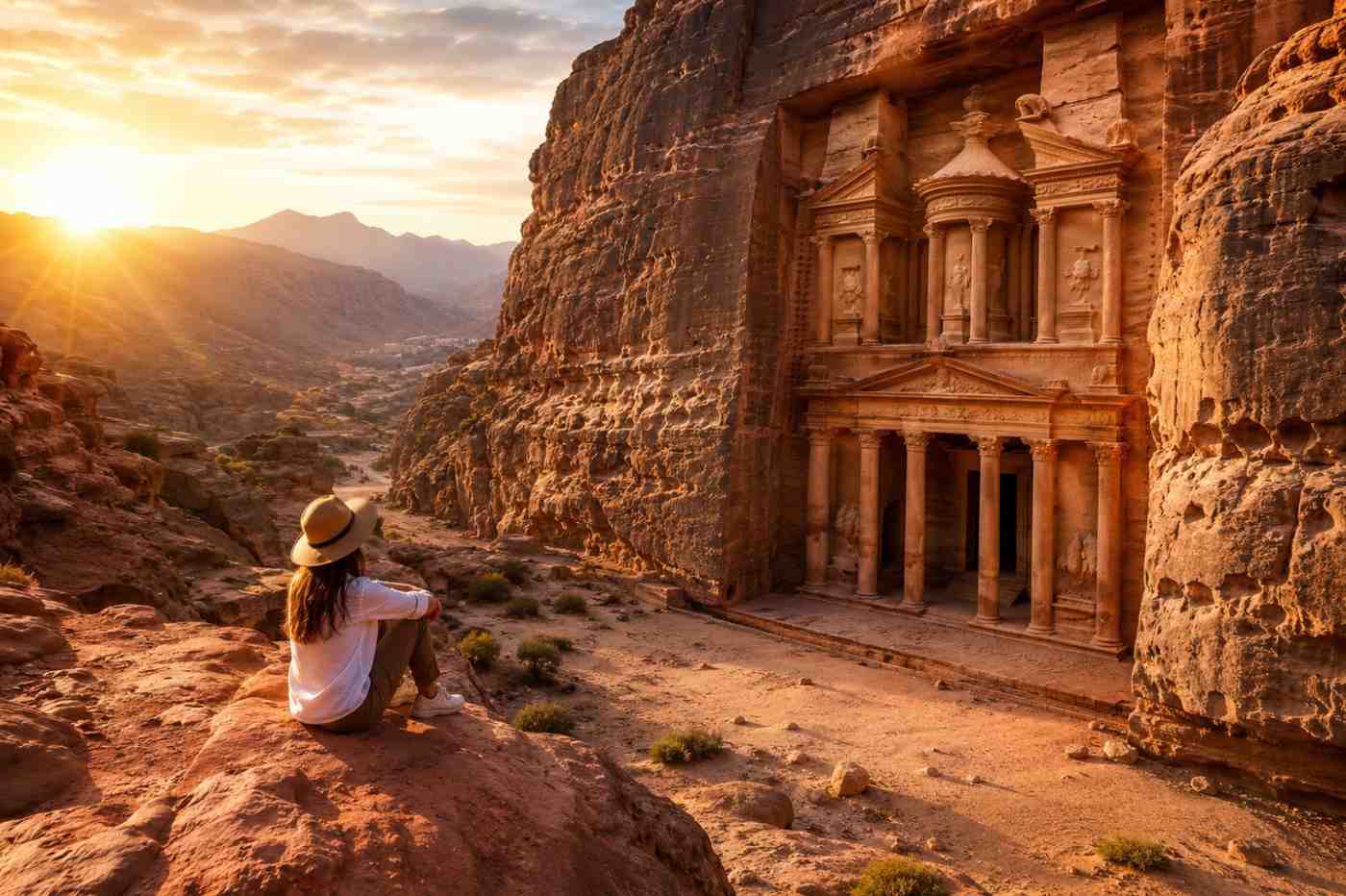
Petra is the one place on a 7 day Jordan tour where getting an early start can transform the experience.
The site is large, and the approach through the Siq is only the beginning. Once you reach the Treasury, there are tombs, temples, viewpoints and ancient streets to explore.
Petra's official visitor information lists the Visitor Centre and archaeological site opening from 06:00, with seasonal hours varying through the year. It also confirms that licensed guides can be arranged through the Visitor Centre.
That makes an early visit worthwhile, particularly if you're travelling during a warmer period.
Wear proper walking shoes, carry water and don't underestimate the amount of time you'll spend on your feet. The most comfortable hotel in the world won't help if you arrive at Petra in shoes that aren't made for uneven ground.
The Jordan Pass can also simplify admission planning. It covers more than 40 attractions, including Petra, Jerash and Wadi Rum, although travellers should check current eligibility and visa conditions before relying on it.
One important detail: the Jordan Pass isn't simply a universal visa. Its visa-fee exemption has conditions, including a minimum stay requirement, and eligibility varies by nationality. Check the official rules before purchasing.
Don't Try to “Do” Petra in a Hurry
Petra isn't a single monument.
It is an enormous archaeological landscape, and the experience changes depending on whether you're interested in Nabataean history, architecture, photography, hiking or simply absorbing the atmosphere.
A private or small-group guide can make a substantial difference here. Rather than hearing a rehearsed list of dates, you can stop when something interests you and ask questions.
The Jordan Tourism Board describes Petra as the rock-cut capital of the Nabataeans and a major caravan centre linking Arabia with wider trading routes.
That history is easier to appreciate when you're standing among the landscape instead of racing through it.
Take your time at the Treasury. Then keep walking.
Pack for Jordan's Contrasts
Jordan can give you several different climates and environments within one week.
You'll want comfortable walking shoes for Petra, breathable clothing for daytime sightseeing, something warmer for cooler evenings and suitable swimwear for the Dead Sea and Aqaba.
A light layer is particularly useful because desert evenings can feel surprisingly different from sunny afternoons.
Modest clothing is also a sensible choice when visiting religious and culturally significant locations. It isn't about making your wardrobe complicated; it's about being comfortable and respectful.
For a luxury trip, luggage planning should be easier rather than harder. Keep the daily essentials accessible so you aren't unpacking your entire suitcase every evening.
Leave Room for Jordanian Food
Don't make every meal an afterthought.
Food is one of the easiest ways to understand Jordan, and a good seven-day itinerary should include opportunities to eat local dishes rather than relying exclusively on international hotel menus.
Try mansaf, Jordan's famous lamb dish served with rice and a jameed-based sauce. Look for mezze, grilled meats, fresh salads, warm flatbreads and sweets such as knafeh.
At the same time, there's nothing wrong with mixing local food with excellent hotel dining. A comfortable trip doesn't have to mean choosing between authenticity and refinement.
The point is balance.
If wine matters to you, Jordan also has an emerging wine culture, and the Journey In Jordan itinerary specifically incorporates Jordanian wines into selected dining experiences.
Keep the Final Days Unhurried
After Petra, the mood changes.
Aqaba offers the chance to swap archaeological sites for the Red Sea, with opportunities for snorkelling, diving, boating and simply enjoying the coastline. The Jordan Tourism Board describes Aqaba as Jordan's southern Red Sea resort city, with the desert mountains meeting the sea.
This is a good reason not to schedule your departure immediately after arriving.
A seven-day journey can feel much longer when the final evening isn't spent worrying about an early airport transfer.
The published seven-day itinerary allows the final day around individual departure schedules and notes that an Aqaba stay can be extended.
If your schedule permits, add the extra night. A relaxed final morning is worth more than another rushed sightseeing stop.
Choose Comfort Where It Actually Matters
Luxury travel isn't necessarily about adding more activities.
In Jordan, the real advantage is often the reduction of friction: private transfers, reliable timing, experienced guides, comfortable hotels and someone who understands the practical details of moving between destinations.
That becomes especially valuable during a seven-day trip because there isn't much spare time to recover from a badly planned transfer or an unnecessary detour.
The Journey In Jordan itinerary, for example, uses private chauffeured transport and includes assistance from its team throughout the journey. It also combines city sightseeing with spa time, cultural sites and coastal relaxation.
For independent travellers, the same principle applies even if you're arranging everything yourself: spend money and planning effort on the parts that genuinely improve your day.
Don't Overload Your Seven Days
The biggest lesson is simple.
You don't need to see everything.
Jordan has enough attractions to fill several weeks, from Jerash and Ajloun in the north to Wadi Rum in the south. The official tourism board also highlights Madaba, Dana, Karak, Umm Qais and other destinations beyond the classic first-time route.
Trying to squeeze all of them into seven days can turn an otherwise memorable trip into a succession of hotel check-ins and car journeys.
A better 7 day Jordan tour gives each destination a purpose.
Amman provides historical context. The Dead Sea creates breathing space. Petra supplies the major archaeological experience. Aqaba gives the journey a change of pace.
That's enough.
The luxury of a well-planned week in Jordan isn't seeing the most places possible. It's being able to experience the right places without constantly feeling rushed.
And when the itinerary is thoughtfully paced, Jordan's greatest pleasures — its hospitality, food, landscapes, history and extraordinary sense of place — have room to reveal themselves.