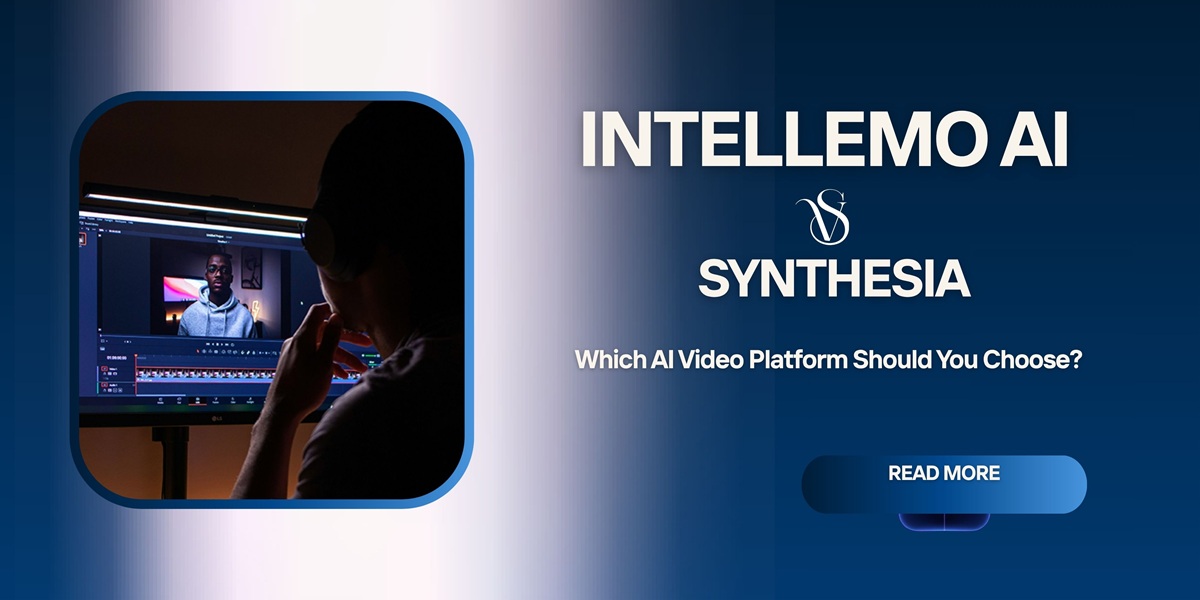
Intellemo AI vs Synthesia: Which AI Video Platform Should You Choose?
-

- July 06th, 2026
- 44 views

FREE SEO Topical Map Generator: Find Your Next Content Ideas
Intellemo AI and Synthesia solve two different production problems. Intellemo turns a written prompt into a cinematic or UGC-style video built for marketing and storytelling. Synthesia turns a script or document into a presenter-led avatar video built for corporate training and internal communication. Once you know which job you're actually trying to do, the choice gets a lot easier.
Most Intellemo AI vs Synthesia comparisons treat these two as if they're fighting for the same use case. They aren't. A marketer trying to launch a Meta ad campaign and an HR team trying to roll out compliance training have almost nothing in common, and the platform that fits one will frustrate the other.
What Intellemo AI and Synthesia Actually Build
Intellemo AI generates cinematic and UGC-style video from a text prompt or short script. You describe the scene, the product, or the story, and the system handles model selection, scene continuity, and lip-sync automatically. If a scene renders poorly, it gets regenerated without extra cost, so the workflow is built around getting a finished, usable video rather than a pile of raw clips to sort through.
Synthesia works from a different starting point. You write a script, or upload a document, PDF, or PowerPoint, and the AI Video Assistant breaks that content into scenes. You then pick from a library of avatars, apply your Brand Kit, and generate the finished video. The platform assumes you're starting from existing content that needs to become a video, not from a blank creative concept.
This is the core split. Intellemo is built for people who start with an idea and need a story. Synthesia is built for people who start with information and need a presenter.
AI Video Platform Style and Output Quality
The visual output reflects that same split. Intellemo focuses on cinematic quality: shot control, camera movement, lighting, and scene transitions that aim for a produced, story-driven feel. Its lip-sync engine ties audio directly to facial movement, so changing the script means regenerating the video rather than swapping in a new voiceover track.
Synthesia's strength is the photorealistic presenter. Its avatars include natural micro-gestures like nodding or raising an eyebrow, along with wardrobe options so the same avatar can present in casual, business, or medical attire depending on the video. Personal Avatars, built from a real person's video sample, let a recognizable spokesperson deliver scripted updates without being on camera for every single one.
Neither approach is better in the abstract. Cinematic scene-building and a talking-head presenter are simply different tools built for different kinds of content.
Who Each Platform Is Built For
Intellemo's target audience is marketers, D2C brands, agencies, and independent storytellers. A brand running paid social ads uses it to generate multiple creative variations for testing without booking a shoot. An agency uses it to scale output across client accounts without adding headcount. An author uses it to turn book chapters into trailer-style videos with a consistent main character across scenes. For ecommerce teams, this extends into generating a short, consistent video for every product in a catalog, something that's close to impossible to do manually at scale.
Synthesia's target audience is enterprise learning and development, HR, and internal communications teams. A compliance team uses it to turn policy documents into training modules that can be updated the moment a policy changes, without re-filming anything. A company with global offices uses Personal Avatars to have an executive deliver the same update in multiple languages using a cloned version of their own voice and likeness. This is also where Synthesia's design shows real limits for marketing use. Its stock avatars carry licensing restrictions for paid advertising and broadcast, and the platform has no built-in way to turn a product listing into a ready-made ad.
Workflow, Languages, and Scale
Intellemo's workflow is optimized for speed and volume rather than a single polished asset. The typical path runs from prompt to script to an animatic review, where you can check the storyboard, voiceover, and music before spending any render budget on motion. From there, finished videos can be exported in 4K or pushed directly into ad campaigns on platforms like Meta and Instagram through its built-in campaign tools, which is useful if the video needs to go straight from generation to a live ad without a separate publishing step.
Synthesia's workflow is optimized for scale across languages and formats rather than campaign volume. A script written once can be dubbed into dozens of languages with matching lip-sync, which matters most for training content that has to reach offices in different countries without being rebuilt from scratch each time. Collaboration features let teams comment directly on a video and manage version history, which fits an enterprise approval process better than a fast-moving ad testing cycle.
Which AI Video Platform Fits Your Project
Weak approach: picking a platform based on which one has better avatars or nicer templates. Strong approach: picking based on what you're actually producing and who has to approve it.
If you're producing marketing content, especially social ads, UGC-style product videos, or brand storytelling, Intellemo's cinematic video generation is built around that exact workflow, from prompt to finished, campaign-ready asset. If you're producing training, onboarding, or internal communication content that needs to stay consistent and get updated often, Synthesia's script-first, document-driven workflow and enterprise integrations fit that job better.
Teams sometimes need both. A marketing department running paid campaigns and an L&D team running compliance training aren't solving the same problem, even if they sit in the same company.
FAQ
Can I use Intellemo AI for training videos instead of marketing content? Yes, but it isn't built specifically for that. Intellemo's AI UGC video generator and cinematic tools are optimized for ads and storytelling, so training content will work but won't get the SCORM or LMS integrations enterprise teams typically need.
Does Synthesia work for social media ads? It can, but its stock avatars carry licensing restrictions for paid advertising, and there's no built-in way to turn a product page into a ready-made ad. It's a workaround rather than the intended use case.
Which platform handles longer, story-driven content better? Intellemo is built around narrative continuity across scenes, keeping a character's appearance and voice consistent from the first scene to the last, which matters for storytelling and book trailers specifically.
Do both platforms support multiple languages? Yes. Synthesia's dubbing covers a wide range of languages with matching lip-sync, aimed at scaling one script across global teams. Intellemo also generates narration in multiple languages and tones as part of its script and voice workflow.
Can I test a platform before committing to a paid plan? Both offer ways to try the product before paying. Synthesia has a free tier with limited minutes and stock avatars. Intellemo offers a free animatic review step so you can check the storyboard before spending on final rendering.
Where This Leaves You
The real question isn't which platform makes better videos. It's which problem you're trying to solve this week. A campaign that needs ten ad variations by Friday and a training module that needs to reach twelve country offices are different jobs, and the platform built for one will always feel like the wrong tool for the other. Once the use case is clear, the rest of the decision mostly makes itself.

![ShortBeast AI Review:Create Viral Videos Fast! [Bonus Inside]](https://indibloghub.in/public/images/courses/6898a5e5967019435_1754834405.png)