
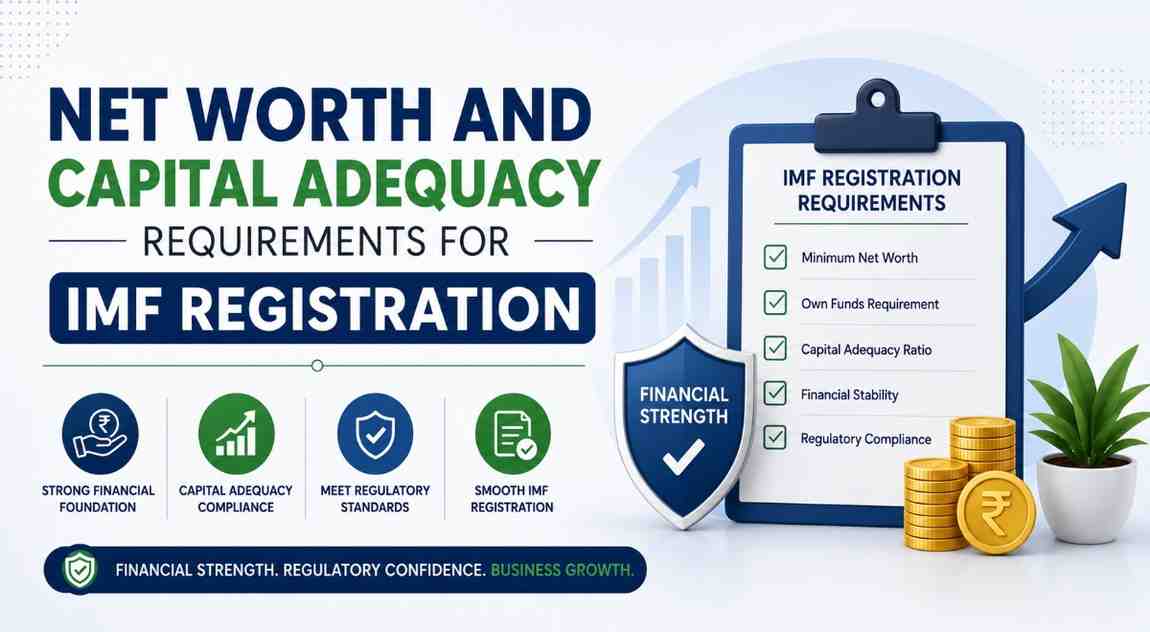
Net Worth and Capital Adequacy Requirements for IMF Registration
-

- June 23rd, 2026
- 91 views

FREE SEO Topical Map Generator: Find Your Next Content Ideas
Starting an Insurance Marketing Firm (IMF) can be a rewarding business opportunity in India's growing insurance sector. Introduced by the Insurance Regulatory and Development Authority of India (IRDAI), the IMF model allows entities to distribute insurance products from multiple insurers and offer certain financial services. However, before obtaining IMF Registration, applicants must satisfy specific financial eligibility criteria. Among these, the most important are the net worth and capital adequacy requirements.
Understanding these requirements is essential for entrepreneurs planning to establish an Insurance Marketing Firm and ensure long-term regulatory compliance.
What is an Insurance Marketing Firm?
An Insurance Marketing Firm is an IRDAI-authorized entity that markets and distributes insurance products offered by life, health, and general insurance companies. Unlike individual insurance agents who generally represent a single insurer, an IMF can work with multiple insurers, providing customers with a wider range of policy options.
The Insurance Marketing Firm model was introduced to improve insurance accessibility across urban and rural areas while maintaining professional standards in insurance distribution.
Net Worth Requirement for IMF Registration
One of the primary eligibility conditions for IMF Registration is maintaining the minimum prescribed net worth.
In simple terms, net worth refers to the value remaining after subtracting total liabilities from total assets. It reflects the overall financial strength of a business.
IRDAI requires every applicant seeking registration as an Insurance Marketing Firm to maintain a minimum net worth of ₹10 lakh. This financial threshold demonstrates that the applicant has sufficient resources to establish and operate the business effectively.
The requirement is not limited to the time of application. The Insurance Marketing Firm must continue maintaining the prescribed net worth throughout the validity of its registration. If the firm's net worth falls below the required level, it may attract regulatory scrutiny and compliance actions.
To establish net worth, applicants generally submit financial records such as audited balance sheets, Chartered Accountant certificates, statements of assets and liabilities, and other supporting documents requested by the regulator.
Understanding Capital Adequacy
While net worth reflects the overall financial position of a business, capital adequacy focuses on its ability to sustain operations and meet financial obligations on an ongoing basis.
Capital adequacy ensures that an Insurance Marketing Firm possesses sufficient financial resources to manage day-to-day expenses, maintain infrastructure, comply with regulatory requirements, and handle unforeseen financial challenges.
The concept is particularly important because insurance distribution requires continuous customer support, compliance monitoring, employee management, and technology infrastructure. A financially weak organization may struggle to meet these responsibilities effectively.
Therefore, IRDAI expects IMFs to maintain adequate capital levels even after obtaining registration.
Why Financial Stability Matters for an IMF
The insurance industry operates on trust. Customers rely on insurance intermediaries to provide accurate information and professional guidance when purchasing policies. Financial instability within an Insurance Marketing Firm can negatively affect service quality and regulatory compliance.
Maintaining adequate net worth and capital provides several benefits:
- Supports smooth business operations.
- Enhances credibility with insurers and customers.
- Helps meet regulatory obligations.
- Ensures continuity of services.
- Strengthens long-term business sustainability.
These financial requirements are designed to create a stable and reliable insurance distribution network across the country.
Consequences of Non-Compliance
Failure to maintain the required net worth or adequate capital levels can result in regulatory action by IRDAI.
Depending on the severity of the non-compliance, the regulator may issue notices, seek corrective measures, impose operational restrictions, or initiate suspension proceedings. In serious cases, the registration of the Insurance Marketing Firm may also be cancelled.
For this reason, businesses should treat financial compliance as an ongoing responsibility rather than a one-time registration requirement.
Tips for Maintaining Net Worth and Capital Adequacy
Applicants and existing IMFs can strengthen their financial position through effective planning and monitoring. Regular review of financial statements, proper bookkeeping, controlled operational expenses, and maintaining reserve funds can help ensure continued compliance.
Many firms also engage professional accountants and compliance consultants to monitor their financial health and identify potential risks before they become regulatory concerns.
A proactive approach to financial management not only helps maintain compliance but also supports business growth and operational efficiency.
Conclusion
The net worth and capital adequacy requirements are fundamental aspects of IMF Registration. IRDAI mandates a minimum net worth of ₹10 lakh to ensure that every Insurance Marketing Firm possesses the financial strength necessary to operate responsibly and serve policyholders effectively.
Businesses planning to enter the insurance distribution sector should focus not only on obtaining registration but also on maintaining financial stability over the long term. By meeting the prescribed net worth requirements and ensuring adequate capital resources, an Insurance Marketing Firm can build credibility, remain compliant, and create a strong foundation for sustainable growth in the insurance industry.