Why HDPE Pipes Are the Backbone of Modern Irrigation Systems
-

- July 27th, 2026
- 29 views

FREE SEO Topical Map Generator: Find Your Next Content Ideas
Introduction
Agriculture has undergone a remarkable transformation over the past few decades. With increasing pressure on water resources, changing climate conditions, and the need to improve crop productivity, farmers are rapidly adopting advanced irrigation technologies that maximize efficiency while minimizing resource wastage. However, the success of any irrigation system depends not only on sprinklers or drippers but also on the quality of the piping infrastructure that transports water across the farm.
This is where HDPE pipe manufacturers play a vital role. High-Density Polyethylene (HDPE) pipes have become the preferred choice for agricultural water distribution because they are durable, flexible, corrosion-resistant, and capable of handling varying water pressures. Whether supporting irrigation and sprinkler systems or supplying water to a drip irrigation lateral pipe network, HDPE pipes ensure reliable and efficient water delivery throughout the field.
Pawan Polytex, under its NANDI brand, has been manufacturing HDPE pipes, drip irrigation systems, sprinkler irrigation systems, and related agricultural products since 1994. With advanced manufacturing facilities and an extensive dealer network, the company provides irrigation solutions designed to improve water conservation and agricultural productivity.
The Growing Importance of Efficient Irrigation
Water has become one of agriculture's most valuable resources. Traditional irrigation methods often result in excessive water loss through evaporation, runoff, and uneven field coverage. Modern irrigation systems are designed to deliver water more accurately, ensuring crops receive the right amount of moisture while reducing wastage.
Efficient irrigation not only conserves water but also improves fertilizer utilization, promotes healthier root development, and supports higher crop yields. As precision farming continues to expand, durable piping systems have become essential for maintaining reliable water flow across agricultural fields.
Why HDPE Pipes Are Widely Used in Agriculture
HDPE (High-Density Polyethylene) pipes are engineered to withstand demanding agricultural conditions. Their flexibility allows them to adapt to uneven terrain, while their high strength enables them to handle varying operating pressures without cracking or leaking.
Unlike traditional metal pipes, HDPE pipes do not corrode or rust when exposed to water, fertilizers, or agricultural chemicals. Their smooth internal surface minimizes friction, ensuring efficient water flow with lower pumping requirements.
Because of these advantages, HDPE pipes are extensively used for water transportation, irrigation mains, borewell connections, fertigation systems, and agricultural water supply networks.
Why Experienced HDPE Pipe Manufacturers Matter
Selecting experienced HDPE pipe manufacturers is critical for ensuring long-term irrigation performance. Manufacturing quality directly affects pressure resistance, durability, leak prevention, and overall service life.
Established manufacturers use premium raw materials, advanced extrusion technology, and rigorous quality testing to produce pipes capable of performing under diverse agricultural conditions. Properly manufactured HDPE pipes require minimal maintenance while providing consistent water delivery over many years.
Pawan Polytex operates an advanced manufacturing facility with an annual production capacity of 10,000 MT of HDPE products and manufactures ISI-certified irrigation products designed for modern farming applications.
Understanding Irrigation and Sprinkler Systems
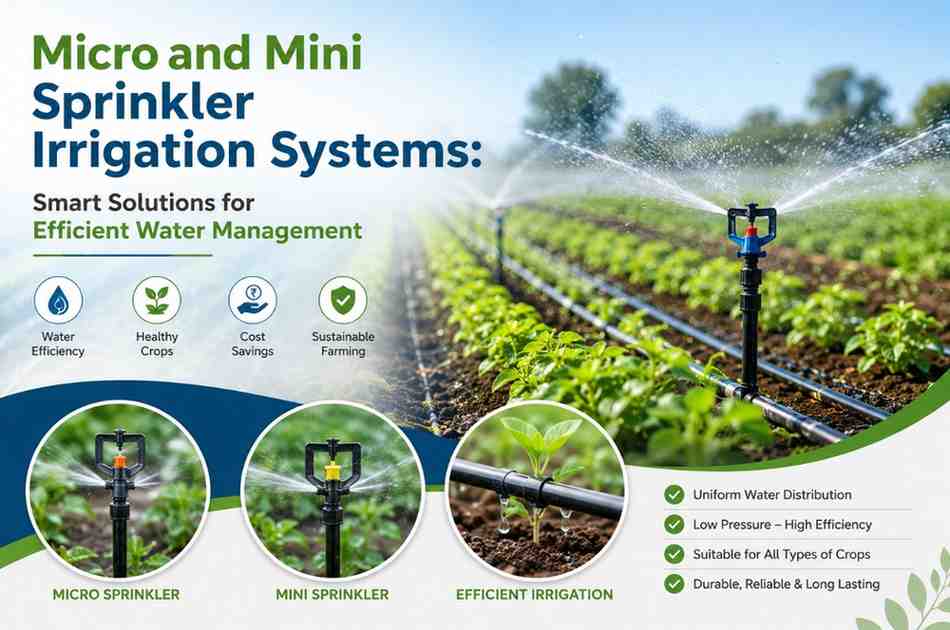
Modern irrigation and sprinkler systems are designed to distribute water efficiently across agricultural fields while minimizing water loss. These systems include pipelines, filters, valves, sprinkler heads, fittings, pressure regulators, and control components that work together to ensure uniform irrigation.
Sprinkler irrigation simulates natural rainfall by distributing water evenly over crops, making it suitable for cereals, vegetables, fodder crops, lawns, and landscaping. Drip irrigation, on the other hand, delivers water directly to plant roots, making it ideal for orchards, vineyards, vegetables, and plantation crops.
Both systems rely on durable HDPE piping infrastructure to transport water efficiently from the source to the irrigation network.
How Drip Irrigation Lateral Pipe Improves Water Efficiency
A drip irrigation lateral pipe is one of the most important components of a drip irrigation system. These flexible pipes contain precisely spaced emitters that release water directly into the root zone of each plant.
By supplying water only where it is required, drip laterals significantly reduce evaporation and runoff while maintaining consistent soil moisture. This precision irrigation method improves crop health, enhances fertilizer absorption through fertigation, and minimizes weed growth between crop rows.
Drip lateral pipes are commonly used in fruit orchards, vegetable farming, cotton cultivation, vineyards, sugarcane, greenhouse farming, and commercial plantations where efficient water management is essential.
Advantages of HDPE Pipes in Irrigation Systems
HDPE pipes provide numerous advantages that make them ideal for agricultural applications. Their flexibility allows easier installation even on uneven land, while their leak-resistant joints help reduce water losses during transportation.
Their resistance to UV radiation, chemicals, and corrosion makes them suitable for long-term outdoor use in different climatic conditions. HDPE pipes also require minimal maintenance, helping farmers reduce operational costs over the lifetime of the irrigation system.
Because of their durability, HDPE pipes continue to perform reliably even under continuous agricultural use, making them a cost-effective investment for modern farms.
Supporting Sustainable Agriculture
Sustainable farming depends heavily on responsible water management. Modern irrigation infrastructure helps farmers conserve water while improving crop productivity and reducing environmental impact.
Efficient irrigation systems supported by HDPE pipelines ensure that water reaches crops with minimal losses. This improves groundwater conservation, reduces energy consumption for pumping, and supports healthier crop development through consistent irrigation practices.
As precision agriculture expands, irrigation systems are increasingly integrated with automation, sensors, and smart controllers to further optimize water usage while improving farm efficiency.
Choosing the Right Irrigation Infrastructure
Every farm has unique irrigation requirements depending on crop type, soil characteristics, water availability, and field size. Selecting quality HDPE pipes, efficient sprinkler systems, and reliable drip laterals ensures consistent performance across different farming conditions.
Working with an experienced manufacturer allows farmers to choose compatible irrigation components designed for durability, efficient water distribution, and long service life. This integrated approach helps maximize productivity while reducing long-term maintenance costs.
Why Pawan Polytex Is a Trusted Choice
With more than three decades of experience, Pawan Polytex has established itself as a trusted manufacturer of agricultural irrigation products under the NANDI brand. The company's product portfolio includes HDPE coil pipes, drip irrigation systems, sprinkler irrigation systems, mini sprinklers, micro sprinklers, filters, fittings, and accessories that support efficient water management across India.
Its commitment to quality manufacturing, innovation, and sustainable agriculture has made the company a preferred partner for farmers seeking dependable irrigation solutions.
Conclusion
Modern farming depends on reliable irrigation infrastructure that conserves water while improving crop productivity. Experienced HDPE pipe manufacturers play an essential role by producing durable piping systems capable of supporting efficient water transportation across agricultural fields.
Whether used in irrigation and sprinkler systems or as part of a drip irrigation lateral pipe network, high-quality HDPE pipes help farmers reduce water wastage, improve irrigation efficiency, and achieve sustainable agricultural growth. By investing in dependable irrigation products from trusted manufacturers like Pawan Polytex, farmers can build long-lasting irrigation systems that deliver consistent performance season after season.
FAQs
Why are HDPE pipes preferred for agricultural irrigation?
HDPE pipes are lightweight, corrosion-resistant, flexible, durable, and capable of providing leak-resistant water transportation, making them ideal for modern irrigation systems.
What do HDPE pipe manufacturers produce for agriculture?
Leading HDPE pipe manufacturers produce HDPE coil pipes, irrigation mains, fittings, and piping solutions used in drip irrigation, sprinkler systems, water supply networks, and fertigation systems.
What is a drip irrigation lateral pipe?
A drip irrigation lateral pipe is a flexible pipe with built-in or attached emitters that deliver water directly to plant roots, improving water efficiency and crop health.
How do irrigation and sprinkler systems benefit farmers?
These systems provide uniform water distribution, reduce water wastage, improve crop growth, lower labor requirements, and increase overall irrigation efficiency.
How long do HDPE pipes typically last?
High-quality HDPE pipes can provide decades of reliable performance when installed correctly and maintained under recommended operating conditions.
Why choose Pawan Polytex for irrigation products?
Pawan Polytex manufactures HDPE pipes, drip irrigation systems, sprinkler systems, and agricultural irrigation accessories using advanced manufacturing processes and quality-tested materials to support sustainable farming.