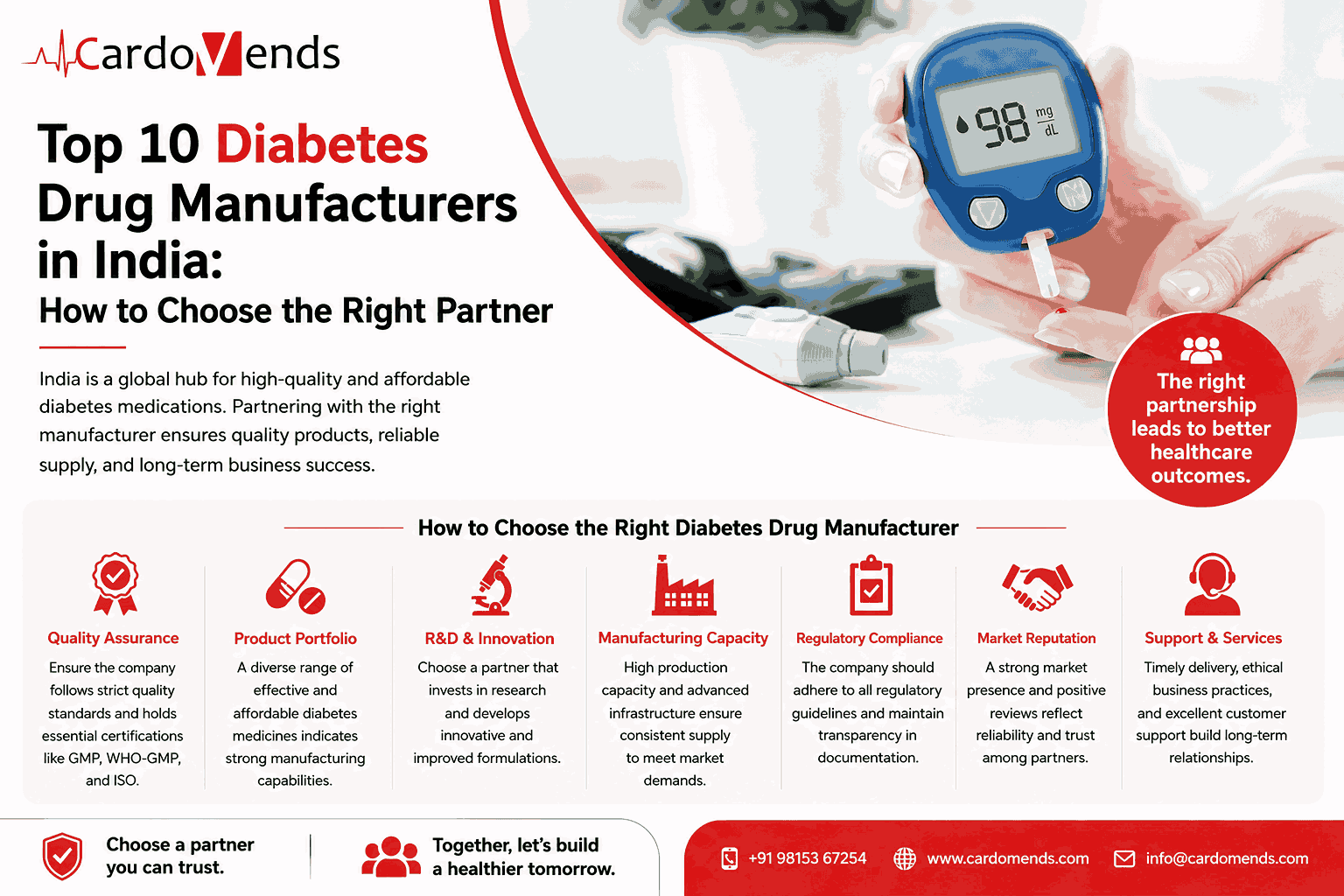
Top 10 Diabetes Drug Manufacturers in India: How to Choose the Right Partner
-

- June 30th, 2026
- 31 views

FREE SEO Topical Map Generator: Find Your Next Content Ideas
India's diabetes burden is enormous, and so is the industry built to treat it. With more than 100 million people living with diabetes in the country, the demand for affordable, high-quality antidiabetic medicines has turned India into one of the world's largest hubs for diabetes drug manufacturing. For pharma businesses, distributors, and PCD franchise owners, picking the right manufacturing partner can make or break a product line.
This guide walks through what to look for in diabetes drug manufacturers in India, profiles the kind of companies worth shortlisting, and gives you a practical framework for due diligence before you sign any agreement.
Why India Leads in Diabetes Medicine Manufacturing
India is often called the "pharmacy of the world," and diabetes care is one of its strongest segments. A few reasons this matters for buyers and business partners:
- Cost efficiency: Indian manufacturing costs remain significantly lower than in Western markets, without compromising on formulation quality.
- Regulatory maturity: Many facilities operate under WHO-GMP, ISO, and DCGI-approved standards, meeting both domestic and export requirements.
- Wide molecule coverage: From Metformin and Glimepiride to newer agents like Sitagliptin, Teneligliptin, Dapagliflozin, Empagliflozin, and Vildagliptin, Indian manufacturers produce nearly every major oral hypoglycemic drug class.
- Flexible business models: Third-party manufacturing, private label manufacturing, and PCD pharma franchise arrangements make it easier for smaller brands to enter the market without owning a factory.
What to Look for in Diabetes Pharmaceutical Companies in India
Before comparing specific companies, it helps to know which factors actually separate a dependable partner from a risky one.
1. Manufacturing Certifications
A genuine WHO GMP diabetes medicine manufacturer should be able to show current certificates, not just claim compliance. Look for:
- WHO-GMP certification
- ISO 9001:2015 certification
- DCGI-approved product registrations
- State FDA manufacturing license
2. Product Range and Formulation Depth
A strong diabetes medicine manufacturing company typically offers a broad portfolio, including:
- Single-molecule tablets (Metformin, Glimepiride, Sitagliptin)
- Fixed-dose combination medicines for better patient compliance
- Diabetes tablets in extended-release formats
- Cardiac and diabetic medicine ranges, since the two conditions frequently overlap in patients
3. Quality Assurance and R&D Capability
Ask about in-house quality control labs, stability testing, and whether the company invests in research and development for newer formulations. This reflects long-term reliability, not just current capacity.
4. Supply Chain and Export Readiness
If you plan to scale beyond India, check whether the manufacturer has experience as a diabetes medicine exporter with documentation for international shipments, including COPP (Certificate of Pharmaceutical Product) where required.
5. Business Model Flexibility
Confirm whether they support:
- Third-party manufacturing for diabetes medicines
- Private label diabetes medicine manufacturer arrangements
- PCD franchise for diabetes products with marketing support
Top 10 Diabetes Drug Manufacturers in India: Evaluation Criteria
Rather than ranking companies by name alone, here's a comparison framework based on the qualities that matter most when shortlisting a diabetes pharma company India partner.
| Criteria | Why It Matters | What to Verify |
|---|---|---|
| GMP/WHO-GMP Certification | Ensures consistent manufacturing standards | Ask for certificate copies and validity dates |
| Product Portfolio Width | Reduces need for multiple suppliers | Request full product list with compositions |
| Minimum Order Quantity (MOQ) | Affects cash flow for smaller businesses | Compare MOQ across shortlisted vendors |
| Packaging Customization | Supports branding for PCD and private label | Check sample packaging and lead times |
| Regulatory Documentation | Required for distribution and export | Confirm DCGI approval and drug license numbers |
| Pricing Transparency | Avoids hidden costs later | Get itemized quotations in writing |
| Delivery Timelines | Impacts inventory planning | Ask for average turnaround time on bulk orders |
| After-Sales Support | Matters for complaints, recalls, or reorders | Look for dedicated account managers |
When you evaluate diabetes pharmaceutical companies in India against this table, you get an objective basis for comparison instead of relying on marketing claims alone.
Categories of Diabetes Drug Manufacturers Worth Considering
Rather than naming ten companies that may shift in ranking over time, it's more useful to understand the categories of manufacturers active in this space, so you can match your business needs to the right type of partner.
1. Large-scale formulation manufacturers – These operate multiple manufacturing units, hold extensive WHO-GMP certifications, and supply both domestic distributors and international markets. They're suited for bulk buyers and established brands.
2. Third-party and contract manufacturing specialists – These focus on producing medicines under a client's brand name. They're ideal if you're building your own diabetes medicine label without investing in a factory.
3. PCD franchise-focused companies – These provide monopoly rights, marketing inputs, and smaller MOQs, making them suitable for individuals or small teams entering pharma distribution.
4. Export-oriented manufacturers – These hold international certifications and documentation, useful for businesses targeting markets in Africa, Southeast Asia, or the CIS region.
5. Niche cardiac-diabetic combination specialists – Given the overlap between cardiovascular and diabetes care, some manufacturers focus specifically on combination therapies, which can be valuable if your portfolio spans both therapeutic areas.
How to Choose the Right Diabetes Medicine Manufacturing Partner
Here's a step-by-step approach that works well for most pharma businesses, whether you're starting a PCD franchise or sourcing for an existing distribution network.
- Define your business model first. Decide if you need third-party manufacturing, private labeling, or a straightforward bulk supply arrangement.
- Shortlist 4–5 manufacturers based on certifications, product range, and reputation in the market.
- Request samples and documentation, including certificates of analysis for key molecules like Metformin or Sitagliptin.
- Compare pricing and MOQs using a standardized quotation format so you're comparing like for like.
- Visit the facility if possible, or request a virtual tour. A transparent manufacturer won't hesitate to show their setup.
- Check references from existing distributors or franchise partners.
- Review the contract terms carefully, especially around exclusivity, minimum order commitments, and quality guarantees.
For businesses exploring trusted sourcing options, platforms that aggregate verified diabetes medicine manufacturers can simplify the shortlisting process considerably.
Expert Tips for Long-Term Success
- Don't chase the lowest price alone. A slightly higher cost from a certified, reliable anti diabetic drug manufacturer often saves money in returns, recalls, and reputation damage later.
- Diversify cautiously. Having one backup supplier for critical molecules protects you from supply disruptions.
- Stay updated on regulatory changes. DCGI guidelines and state FDA requirements evolve, and your manufacturer should proactively communicate these updates.
- Build a relationship, not just a transaction. The bestdiabetes medicine supplier in India partnerships involve regular communication, feedback loops, and joint planning for new product launches.
- Audit packaging and labeling compliance periodically, since errors here are a common cause of regulatory flags.
Common Mistakes to Avoid
- Signing agreements without verifying GMP certificates directly with issuing authorities
- Ignoring MOQ terms that don't match your actual sales velocity
- Overlooking after-sales support until a quality issue arises
- Failing to clarify exclusivity terms in PCD franchise contracts
- Not asking for stability data on newer molecules like Teneligliptin or Dapagliflozin
Frequently Asked Questions
1. What is the difference between third-party and PCD manufacturing for diabetes medicines? Third-party manufacturing usually involves producing medicines under your brand at scale, often with your own marketing and distribution. PCD (Propaganda Cum Distribution) franchising typically includes additional support like promotional materials and monopoly distribution rights for a specific area.
2. How do I verify if a diabetes medicine manufacturer is WHO-GMP certified? Ask for the certificate number and cross-check it with the issuing certification body or relevant state drug control authority. Reputable manufacturers display this information openly.
3. What are the most commonly manufactured anti-diabetic medicines in India? Metformin, Glimepiride, Sitagliptin, Teneligliptin, Vildagliptin, Dapagliflozin, and Empagliflozin are among the most widely manufactured, often available as single-molecule tablets or fixed-dose combinations.
4. Can small businesses start a diabetes PCD franchise with low investment? Yes. Many diabetes PCD companies in India offer flexible MOQs and starter kits specifically designed for new distributors entering the pharma business.
5. How long does it take to get a private label diabetes medicine manufactured? Timelines vary, but most manufacturers need 30–45 days from order confirmation to delivery, depending on packaging customization and order volume.
6. Are Indian diabetes medicines accepted for export to other countries? Yes, provided the manufacturer holds the necessary international certifications and documentation, such as COPP, required by the importing country's regulatory body.
7. What documents should I ask for before finalizing a manufacturing partner? Request the manufacturing license, WHO-GMP and ISO certificates, product list with DCGI approval status, and sample certificates of analysis.
8. Is it necessary to visit the manufacturing facility before signing a contract? While not mandatory, an in-person or virtual facility visit adds a layer of confidence and helps verify that operations match what's claimed on paper.
Final Thoughts
Choosing among diabetes drug manufacturers in India isn't just about finding the cheapest quote. It's about building a dependable supply relationship that supports your business as patient needs and regulatory standards evolve. Focus on certifications, product depth, transparent communication, and a track record of consistent delivery. Get these fundamentals right, and your diabetes medicine business will have a solid foundation to grow on.