Algorithmic Mirroring: Decoding the Infrastructure of Copy Trading
-

- July 20th, 2026
- 49 views


FREE SEO Topical Map Generator: Find Your Next Content Ideas
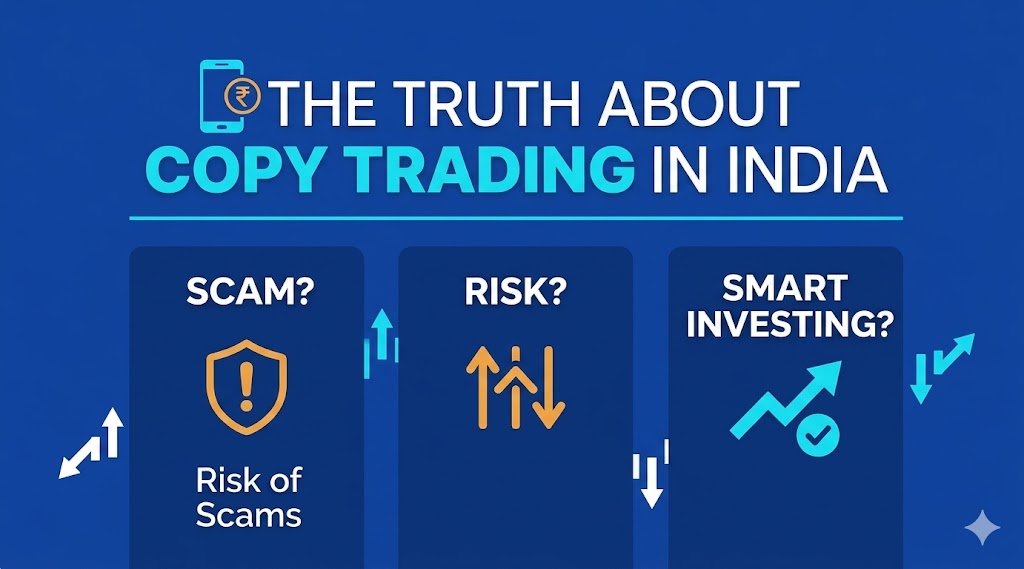
The democratizing effect of digital financial technologies has fundamentally transformed how retail participants engage with global capital markets. Historically, retail investors were limited to manual self-directed speculation or traditional fund management structures characterized by high management fees and restricted liquidity windows.
In recent years, the convergence of social trading networks and advanced API routing infrastructure has popularized a middle ground: automated signal mirroring. Through this mechanism, retail market participants can automatically replicate the positions of experienced portfolio managers in real time. However, to deploy capital effectively in this space, one must look past simple promotional marketing and understand the underlying structural mechanics of
The Technical Framework: How Signal Synchronization Works
At its core, signal mirroring relies on real-time data communication between two distinct trading accounts: the Master Account (the strategy provider) and the Copier Account (the investor replicating the trades).
When a strategy provider initiates a market order on their platform, the transaction is processed through a specialized bridging network. This server network instantly captures the parameters of the trade—including the asset class, entry price, stop-loss invalidation level, and trade direction—and converts them into a standardized API command. This data packet is then broadcast across the server infrastructure to all connected investor terminals, which automatically open an equivalent position within milliseconds.
To maintain proportional exposure, the system uses dynamic position-sizing mathematical formulas rather than raw lot sizes:
$$\text{Copier Position Size} = \text{Master Position Size} \times \left( \frac{\text{Copier Account Equity}}{\text{Master Account Equity}} \right)$$
This proportional scaling ensures that if a strategy provider risks 1% of their total account equity on a setup, every follower automatically risks 1% of their respective account balance, regardless of absolute capital size.
The Silent Operational Hazard: Execution Latency and Slippage
While the mathematical concept of automated replication sounds seamless, executing signal mirroring in live, high-velocity financial markets introduces unavoidable physical friction. The primary technical threat to a copied strategy's performance is execution latency.
When a strategy provider places an order, a distinct chronological delay occurs before the follower's terminal can execute the identical command:
Order Initiation: The master trader places an aggressive market order on their local platform.
Signal Transmission: The provider's broker processes the order and transmits the signal payload across cloud servers to the copy platform infrastructure.
API Processing & Allocation: The network calculates proportional lot sizes for thousands of connected follower accounts simultaneously.
Follower Execution: Individual follower terminals receive the API instruction and route the market order to their respective liquidity providers.
During calm market conditions, this complete loop takes only a few dozen milliseconds, resulting in near-identical fill prices. However, during periods of extreme macroeconomic volatility—such as central bank interest rate announcements or major earnings releases—the price velocity of the asset can move significantly across fractional seconds.
By the time the follower's terminal receives the execution payload, the original entry quote may no longer exist. The matching engine is forced to fill the follower at a worse price level, causing severe negative slippage. Over a large sample size of trades, this latency gap can cause the follower’s equity curve to perform noticeably worse than the master strategy they are attempting to mirror.
Structural Risk Management: Evaluating Strategy Providers
To build a resilient strategy mirroring portfolio, an investor must look past surface-level profit metrics and evaluate a provider's historical performance through a quantitative risk framework:
1. Maximum Historical Drawdown
A strategy provider displaying high net percentage returns may be achieving those numbers through dangerous exposure models. Always evaluate the Maximum Drawdown (MDD)—the largest peak-to-trough decline in account equity. A strategy with a 100% gain but an 85% maximum drawdown indicates an aggressive system vulnerable to total account liquidation during adverse market regimes.
2. Martingale and Grid Behavior
Be cautious of providers using unmanaged grid or Martingale execution models. These strategies attempt to recover losing trades by continuously opening larger positions as the market moves against them without applying hard stop-loss limits. While this creates a artificially smooth upward equity curve during range-bound conditions, a sustained trend will inevitably exhaust account margin and trigger catastrophic stop-out events.
3. Execution History Across Diverse Volatility Regimes
Verify that the strategy provider has a live trading history spanning at least six to twelve months. This ensures the system has demonstrated statistical survival across various market environments, including high-volatility trend expansions, quiet consolidation phases, and unexpected liquidity shocks.
Final Thoughts: Systematizing Capital Allocation
Automated copy trading is a powerful technological tool that enables retail investors to leverage the analytical expertise of quantitative traders. However, treating signal mirroring as a passive, risk-free shortcut is a costly mistake.
By understanding the mechanics of proportional lot allocation, accounting for network latency friction during high-volatility windows, and screening strategy providers through rigorous drawdown criteria, you can construct a professional automated allocation strategy. Approach signal replication with the analytical discipline of an institutional manager, enforce strict equity protection controls, and let mechanical precision guide your portfolio growth.