10 Industries That Benefit the Most from Conveyor Systems in 2026
-

- July 24th, 2026
- 34 views

FREE SEO Topical Map Generator: Find Your Next Content Ideas
This is where conveyor systems have transformed modern industries. What was once considered a simple transportation mechanism has now evolved into an intelligent material handling solution capable of integrating with automation, robotics, IoT, and warehouse management systems. In 2026, conveyor systems are no longer just about moving products from one location to another. They play a vital role in improving workflow efficiency, reducing manual labor, enhancing workplace safety, and supporting data-driven industrial operations.
Across industries, businesses are investing in advanced industrial conveyor systems to eliminate bottlenecks, optimize production lines, and meet growing customer demands. From heavy manufacturing units and logistics hubs to pharmaceutical facilities and food processing plants, conveyor technology has become an essential part of modern industrial infrastructure.
In this blog, we'll explore the 10 industries that benefit the most from conveyor systems in 2026, understand how each sector uses conveyor technology, and learn why investing in the right material handling solution can significantly improve operational performance and long-term profitability.
Why Conveyor Systems Are Essential in 2026
Industrial operations have changed dramatically over the past decade. Rising labor costs, increasing production targets, stricter safety regulations, and the rapid growth of automation have made efficient material handling more important than ever. Conveyor systems have emerged as one of the most reliable solutions for businesses looking to improve productivity while reducing operational challenges.
Modern conveyor systems are designed to transport materials continuously, accurately, and safely across different stages of production, storage, packaging, and distribution. Unlike manual handling, automated conveyor solutions reduce delays, minimize product damage, and ensure a consistent workflow throughout the facility.
Some of the key benefits businesses experience include:
- Faster material movement throughout the facility
- Increased production efficiency
- Lower operational and labor costs
- Reduced workplace injuries
- Better inventory management
- Improved product quality
- Scalable automation for future expansion
- Higher return on investment
As industries continue to embrace smart manufacturing and warehouse automation, conveyor systems are becoming one of the most valuable investments for sustainable business growth.
1. Manufacturing Industry
Manufacturing remains one of the largest users of industrial conveyor systems worldwide. From automotive components and electrical equipment to consumer goods and heavy machinery, manufacturers depend on conveyor systems to maintain continuous production while minimizing manual intervention.
In a typical manufacturing facility, raw materials move through multiple stages including fabrication, machining, assembly, inspection, packaging, and dispatch. Managing this flow manually can lead to delays, inconsistencies, and increased labor costs. Conveyor systems streamline these processes by ensuring smooth, uninterrupted movement of materials between workstations.
Belt conveyors are widely used for transporting lightweight and medium-weight products, while chain conveyors handle heavy components such as engines, metal parts, and industrial equipment. Roller conveyors are commonly integrated into assembly lines where products require controlled movement during inspection or packaging.
Benefits for Manufacturing
- Continuous production flow
- Reduced downtime
- Faster assembly operations
- Improved product consistency
- Lower labor dependency
- Better workplace safety
- Increased production capacity
As manufacturers adopt Industry 4.0 technologies, conveyor systems are increasingly integrated with sensors, programmable logic controllers (PLCs), and robotics to create intelligent production environments capable of monitoring performance and optimizing workflows in real time.
Warehousing has evolved significantly with the rapid growth of e-commerce and omnichannel retail. Customers now expect faster deliveries, accurate order fulfillment, and real-time inventory updates. To meet these expectations, warehouses rely heavily on conveyor systems for efficient material handling.
Conveyor systems enable seamless movement of cartons, pallets, totes, and packages throughout receiving, storage, sorting, picking, packing, and shipping operations. By automating repetitive transportation tasks, warehouses reduce manual effort while increasing throughput and order accuracy.
Roller conveyors are particularly effective for carton movement, while belt conveyors provide smooth transportation for products with varying shapes and sizes. Automated sortation conveyors further improve operational efficiency by directing packages to designated shipping zones.
Benefits for Warehousing
- Faster order fulfillment
- Reduced handling time
- Improved inventory accuracy
- Lower labor costs
- Better warehouse space utilization
- Enhanced worker safety
- Increased daily shipment capacity
Modern warehouse automation often combines conveyor systems with barcode scanners, RFID technology, warehouse management software (WMS), and autonomous mobile robots (AMRs), creating a fully integrated logistics ecosystem.
The logistics and courier sector operates in a highly competitive environment where speed and accuracy directly influence customer satisfaction. Every package must be sorted, transported, loaded, and dispatched within strict delivery timelines.
Conveyor systems play a crucial role in ensuring efficient parcel handling throughout logistics hubs. Instead of relying on manual movement, automated conveyors transport packages through sorting stations, scanning systems, and loading areas with remarkable speed and precision.
Truck Loading Conveyors have become especially valuable for logistics companies, significantly reducing loading and unloading times while minimizing physical strain on workers. These systems also improve vehicle turnaround time, allowing more shipments to be processed within the same operational window.
Benefits for Logistics Companies
- Faster package sorting
- Efficient truck loading and unloading
- Reduced shipment delays
- Improved parcel tracking
- Higher processing capacity
- Lower operational expenses
- Enhanced workplace safety
As same-day and next-day delivery services continue to grow in 2026, logistics providers increasingly invest in automated conveyor systems integrated with AI-powered sorting technologies to handle rising shipment volumes without compromising service quality.
The Food & Beverage industry is one of the fastest-growing sectors adopting advanced conveyor systems in 2026. With increasing consumer demand, stricter food safety regulations, and the need for faster production cycles, manufacturers are investing in hygienic and automated material handling equipment to improve efficiency while maintaining product quality.
Food processing facilities handle a wide range of products, from fresh fruits and vegetables to packaged snacks, dairy products, frozen foods, and beverages. Conveyor systems help transport these products seamlessly through washing, sorting, processing, packaging, labeling, and dispatch. Unlike manual handling, automated conveyors minimize human contact, reducing contamination risks and ensuring compliance with food safety standards.
For this industry, Modular Conveyors, Belt Conveyors, and Stainless Steel Conveyor Systems are commonly used because they are easy to clean, corrosion-resistant, and designed for hygienic operations. Many modern systems also include wash-down capabilities, antimicrobial materials, and easy-access designs for routine maintenance.
Why Food Manufacturers Use Conveyor Systems
- Maintain hygienic production environments
- Improve processing and packaging speed
- Reduce product contamination
- Minimize manual handling
- Ensure consistent product flow
- Increase production efficiency
- Comply with food safety regulations
As smart factories become more common, food manufacturers are integrating conveyor systems with automated inspection cameras, weighing machines, and packaging robots to improve product consistency and reduce wastage.
5. Pharmaceutical Industry
Precision, cleanliness, and regulatory compliance are critical in pharmaceutical manufacturing. Every tablet, capsule, vial, and medical device must be handled with extreme care to ensure quality and patient safety. Conveyor systems have become indispensable for pharmaceutical companies seeking to automate production while maintaining strict hygiene standards.
Modern pharmaceutical facilities use conveyor systems for transporting raw materials, medicine bottles, blister packs, syringes, medical devices, and finished products through various stages of manufacturing. These include filling, sealing, labeling, inspection, packaging, and quality control.
Pharmaceutical conveyor systems are designed using stainless steel and other non-corrosive materials that meet Good Manufacturing Practice (GMP) standards. Many systems are also enclosed to protect sensitive products from dust and environmental contamination.
Benefits for Pharmaceutical Companies
- Accurate product handling
- Improved production efficiency
- Reduced contamination risks
- Better traceability
- Compliance with GMP and regulatory standards
- Faster packaging operations
- Enhanced product quality
With the increasing adoption of automation in healthcare manufacturing, conveyor systems are now integrated with robotic pick-and-place systems, vision inspection technologies, and AI-powered quality control systems for even greater operational accuracy.
6. Automotive Industry
The automotive industry depends heavily on automation to manufacture vehicles efficiently and consistently. A single automobile consists of thousands of components that move through multiple assembly stages before becoming a finished product. Managing this complex workflow without an efficient material handling system would be nearly impossible.
Conveyor systems ensure that engines, chassis, body panels, tires, and assembled vehicles move smoothly between workstations. Chain Conveyors, Slat Conveyors, Overhead Conveyors, and Power & Free Conveyor Systems are widely used in automotive plants because they can transport heavy loads safely and reliably.
By automating material movement, manufacturers reduce production delays, improve assembly line synchronization, and ensure workers have continuous access to components when needed.
Benefits for Automotive Manufacturers
Efficient movement of heavy components
Reduced production bottlenecks
Faster assembly line operations
Lower labor costs
Improved workplace safety
Higher production output
Better product consistency
Many automotive companies are also integrating conveyor systems with industrial robots and collaborative automation technologies, allowing machines and workers to operate together more efficiently while maintaining high manufacturing standards.
The explosive growth of online shopping has transformed the way products are stored, sorted, packed, and shipped. Customers now expect same-day or next-day delivery, making speed and accuracy essential for e-commerce businesses. Conveyor systems have become the backbone of modern fulfillment centers by enabling rapid and reliable product movement throughout the warehouse.
From receiving inventory to order picking, packing, labeling, and dispatch, conveyor systems streamline every stage of the fulfillment process. Belt conveyors and roller conveyors are commonly used to transport cartons, parcels, and totes between workstations, while automated sortation systems direct packages to the correct shipping lanes with minimal manual intervention.
When integrated with Warehouse Management Systems (WMS), barcode scanners, and Autonomous Mobile Robots (AMRs), conveyor systems create a highly efficient and scalable order fulfillment environment.
Benefits for E-commerce Businesses
Faster order processing
Improved order accuracy
Reduced manual handling
Increased warehouse throughput
Lower operational costs
Better inventory flow
Enhanced customer satisfaction
As e-commerce continues to expand in 2026, conveyor automation helps businesses manage seasonal demand spikes without compromising delivery performance.
8. Packaging Industry
Packaging plays a crucial role in protecting products, maintaining quality, and ensuring they reach customers in perfect condition. Conveyor systems are essential in packaging facilities, where products must move continuously through filling, sealing, labeling, inspection, and final packing stages.
Belt conveyors provide smooth transportation for lightweight products, while roller conveyors are ideal for moving cartons and packaged goods. Automated conveyor systems also integrate seamlessly with labeling machines, shrink-wrapping equipment, case packers, and palletizers, creating a continuous production flow.
Benefits for Packaging Operations
Faster packaging processes
Consistent product flow
Reduced packaging errors
Improved productivity
Better integration with packaging machinery
Lower labor requirements
Higher production capacity
Modern packaging plants increasingly use sensor-based conveyor systems to monitor product positioning, detect defects, and maintain smooth operations throughout the production line.
The mining and cement industry operates in some of the harshest industrial environments, where large quantities of raw materials such as coal, limestone, sand, gravel, ore, and clinker must be transported efficiently over long distances. Manual handling is impractical for these heavy-duty operations, making industrial conveyor systems an essential part of daily production.
Heavy-duty Belt Conveyors, Chain Conveyors, and Inclined Conveyor Systems are commonly used to move bulk materials from extraction sites to processing plants and storage areas. These conveyor systems are designed to withstand abrasive materials, extreme weather conditions, and continuous operation while minimizing equipment wear.
By automating material transportation, mining and cement companies can significantly reduce fuel consumption, operational costs, and manual labor requirements while improving workplace safety.
Benefits for Mining & Cement Industries
Efficient transportation of bulk materials
Reduced dependence on heavy vehicles
Lower operational costs
Continuous production flow
Improved worker safety
Reduced material spillage
Higher equipment reliability
Increased production capacity
Modern mining operations are also adopting IoT-enabled conveyor monitoring systems that provide real-time data on belt speed, motor performance, and predictive maintenance, helping businesses avoid costly downtime.
Airports process thousands of passengers and luggage items every day. Efficient baggage handling is essential for maintaining smooth airport operations and ensuring passengers receive their luggage accurately and on time. Conveyor systems form the backbone of airport baggage handling infrastructure.
Airport conveyor systems transport luggage from check-in counters to security screening, sorting areas, aircraft loading zones, and baggage claim belts. These systems operate continuously with high precision, reducing delays and minimizing the risk of misplaced baggage.
Modern airports use intelligent conveyor systems integrated with barcode scanners, RFID technology, and automated sorting software to improve tracking accuracy and optimize baggage flow.
Benefits for Airport Operations
Faster baggage processing
Accurate luggage tracking
Reduced baggage handling errors
Improved passenger experience
Higher operational efficiency
Lower manual labor requirements
Enhanced security integration
As global air travel continues to recover and grow, automated baggage conveyor systems are becoming increasingly important for handling larger passenger volumes while maintaining operational excellence.
How to Choose the Right Conveyor System for Your Industry
Every industry has unique material handling requirements, and selecting the right conveyor system is a strategic investment that can directly impact productivity, operating costs, and long-term business growth. Rather than choosing a conveyor based solely on price, businesses should evaluate their operational needs, production goals, and future expansion plans.
When selecting a conveyor system, consider the following factors:
Type of Material
Understand whether you are transporting cartons, pallets, bulk materials, food products, heavy machinery, or fragile components. Different materials require different conveyor technologies.
Load Capacity
Choose a conveyor designed to safely handle your maximum product weight without affecting performance or equipment lifespan.
Production Volume
High-volume manufacturing facilities require conveyor systems capable of continuous operation with minimal downtime.
Available Space
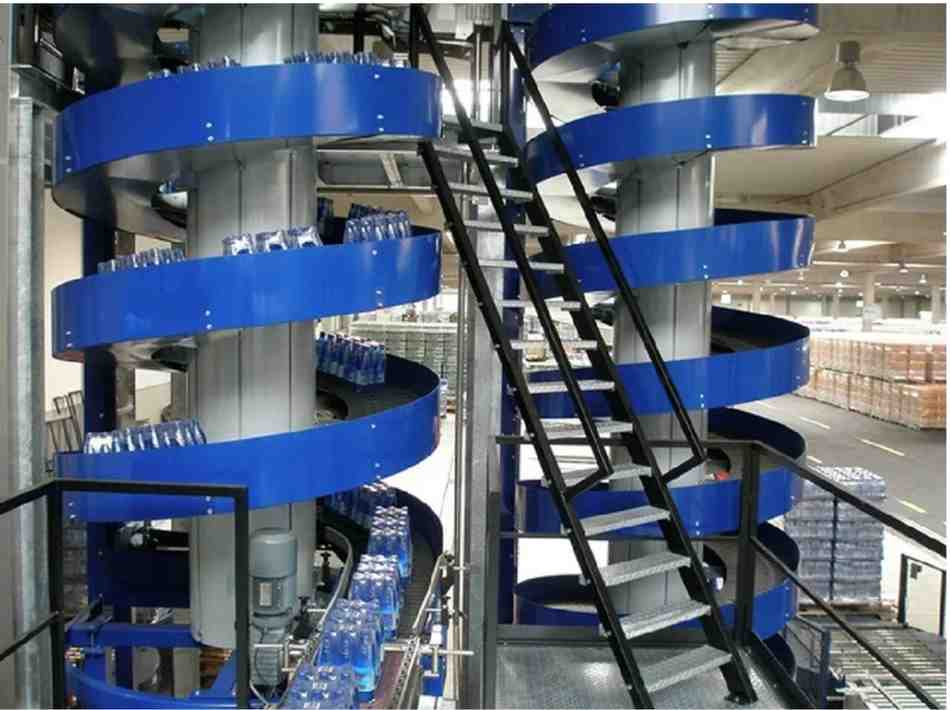
Factory layout plays a significant role in conveyor selection. Straight conveyors, inclined conveyors, spiral conveyors, and overhead conveyors each offer different space-saving advantages.
Industry Regulations
Industries such as food processing and pharmaceuticals require hygienic conveyor designs that comply with strict regulatory standards.
Automation Requirements
If your business plans to adopt Industry 4.0 technologies, select conveyor systems compatible with robotics, PLCs, IoT sensors, and Warehouse Management Systems (WMS).
Future Expansion
Investing in modular conveyor systems allows businesses to expand production lines without replacing the entire material handling infrastructure.
Working with an experienced conveyor system manufacturer ensures your solution is customized for your application, helping maximize efficiency and long-term return on investment.
Future Trends in Conveyor Systems
The future of material handling is being shaped by automation, artificial intelligence, and smart manufacturing. Businesses are increasingly adopting advanced conveyor technologies to improve productivity while reducing operational costs.
Some of the biggest trends expected to shape conveyor systems in 2026 and beyond include:
AI-powered predictive maintenance
IoT-enabled smart conveyor monitoring
Autonomous Mobile Robot (AMR) integration
Energy-efficient drive systems
Real-time production analytics
Cloud-connected industrial automation
Automated sorting technologies
Modular conveyor designs for flexible manufacturing
Sustainable and eco-friendly conveyor solutions
Digital twin technology for production optimization
Companies investing in these technologies today will be better positioned to meet future production demands while maintaining a competitive advantage.
Frequently Asked Questions (FAQs)
1. Which industry uses conveyor systems the most?
Manufacturing remains the largest user of conveyor systems due to continuous production processes. However, warehousing, logistics, e-commerce, food processing, automotive, pharmaceuticals, and mining industries also rely heavily on conveyor automation.
2. What are the main benefits of conveyor systems?
Conveyor systems improve productivity, reduce manual labor, lower operating costs, increase workplace safety, enhance product quality, and streamline material handling operations.
3. Which conveyor system is best for warehouses?
Roller Conveyors and Belt Conveyors are commonly used in warehouses because they efficiently transport cartons, packages, and pallets while integrating easily with warehouse automation systems.
4. Are conveyor systems suitable for small businesses?
Yes. Modular conveyor systems are available in various sizes and can be customized according to production requirements, making them suitable for both small businesses and large industrial facilities.
5. How do conveyor systems improve workplace safety?
By reducing manual lifting, repetitive movements, and heavy material transportation, conveyor systems minimize workplace injuries and create a safer working environment.
6. Can conveyor systems be integrated with automation?
Absolutely. Modern conveyor systems can integrate with robotics, barcode scanners, RFID technology, PLCs, IoT devices, Warehouse Management Systems (WMS), and Autonomous Mobile Robots (AMRs) to create intelligent automated facilities.
Conclusion
As industries continue to embrace automation and digital transformation, conveyor systems have become much more than simple material transport solutions. They are now essential components of modern manufacturing, warehousing, logistics, food processing, pharmaceuticals, automotive production, mining, packaging, airports, and e-commerce operations.
The right industrial conveyor system helps businesses streamline workflows, improve operational efficiency, reduce labor-intensive processes, enhance workplace safety, and support long-term growth. Whether your goal is to optimize production lines, improve warehouse operations, or automate material handling, investing in the right conveyor solution delivers measurable benefits across every stage of your operation.
Choosing a trusted conveyor system manufacturer is equally important. A well-designed, customized solution ensures your business receives equipment that matches its operational requirements while remaining scalable for future expansion.
As technology continues to evolve with AI, IoT, robotics, and smart factory integration, conveyor systems will play an even greater role in shaping the future of industrial automation.
Ready to Upgrade Your Material Handling Operations?
At Dynamic Industrials, we design and manufacture high-performance conveyor systems tailored to the unique needs of modern industries. From Belt Conveyors, Roller Conveyors, and Chain Conveyors to Truck Loading Conveyors and complete warehouse automation solutions, our team delivers reliable, efficient, and scalable systems that help businesses maximize productivity.
Looking for the right conveyor solution for your industry? Contact Dynamic Industrials today to discuss your project and discover how our customized conveyor systems can transform your material handling operations.