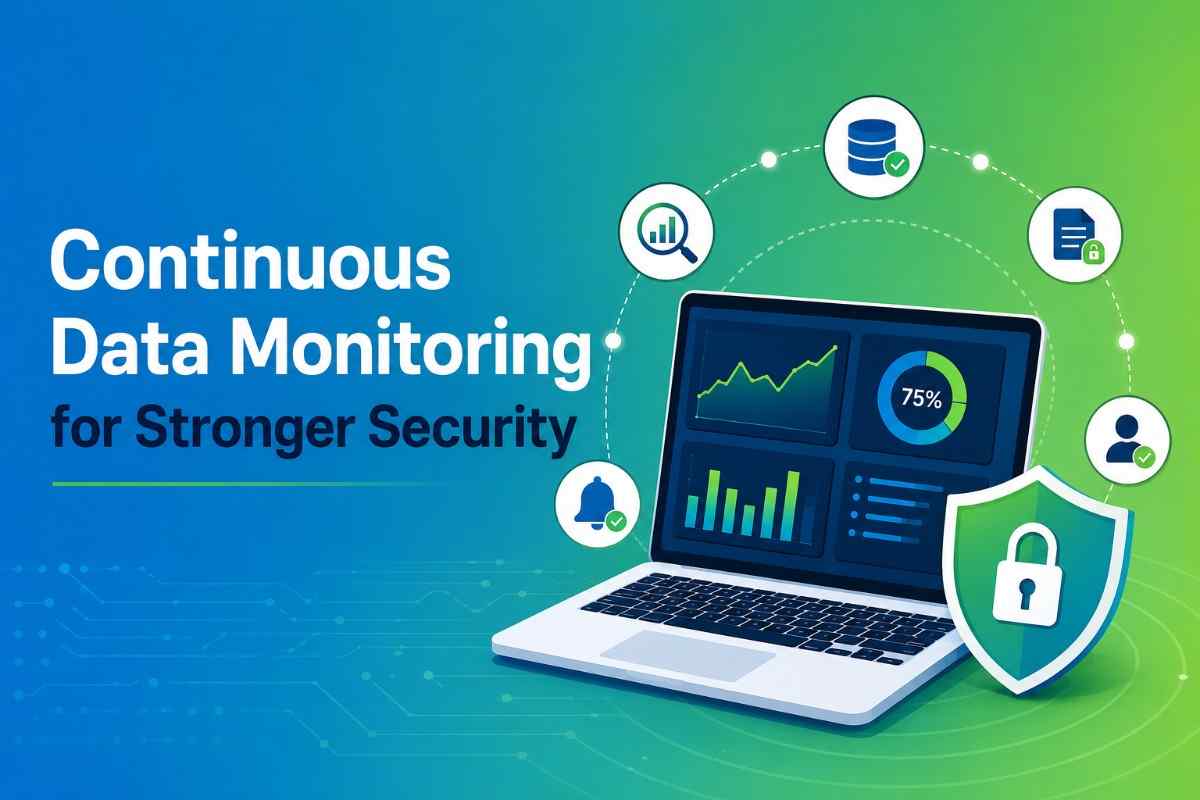
How Continuous Data Monitoring Reduces Security Risks
-

- July 24th, 2026
- 20 views

FREE SEO Topical Map Generator: Find Your Next Content Ideas
Cyber threats rarely announce themselves before they strike. In many cases, attackers spend days—or even weeks—moving through an environment before anyone notices unusual activity. The longer these threats remain undetected, the greater the potential impact on your sensitive information, operations, and reputation.
This is why continuous data monitoring has become an essential part of modern cybersecurity. Rather than relying on periodic assessments or manual reviews, organizations are adopting DSPM approaches to maintain continuous visibility into where sensitive data resides, how it is being accessed, and whether security policies are being followed.
As digital environments continue to expand across cloud platforms, SaaS applications, databases, and hybrid infrastructures, knowing your data's security posture at any given moment is no longer optional—it's a business necessity.
Why Traditional Data Monitoring Falls Short
Many organizations still depend on scheduled security scans, quarterly audits, or manual reporting. While these methods provide useful snapshots, they often fail to identify issues that emerge between assessments.
Consider what can happen in just a few hours:
A storage bucket is accidentally exposed.
Sensitive customer records are copied to an unsecured location.
Access permissions become overly permissive.
A privileged account begins accessing unusual datasets.
A cloud workload is deployed without proper security controls.
If monitoring only occurs periodically, these risks may remain unnoticed until an incident has already occurred.
Continuous monitoring changes this model by providing ongoing visibility instead of isolated checkpoints.
What Is Continuous Data Monitoring?
Continuous data monitoring is the practice of constantly observing where sensitive information exists, how it moves, who accesses it, and whether security controls remain effective over time.
Instead of waiting for scheduled reviews, organizations receive near real-time insights into changes that could increase security risks.
A mature monitoring strategy typically tracks:
Sensitive data discovery
Data classification
Permission changes
Access anomalies
Data movement
Configuration changes
Compliance violations
Suspicious user activity
This ongoing visibility allows security teams to identify potential risks much earlier than traditional monitoring methods.
Real-Time Visibility Improves Risk Detection
You cannot protect data that you cannot see.
Modern enterprises generate enormous volumes of structured and unstructured information across multiple environments. Without continuous visibility, sensitive data often becomes scattered across cloud storage, collaboration platforms, databases, development environments, and backup repositories.
Continuous monitoring helps you answer critical questions such as:
Where is sensitive information currently stored?
Has new confidential data appeared unexpectedly?
Are users accessing data outside their normal behavior?
Have security configurations changed recently?
Is regulated information stored in approved locations?
Answering these questions continuously enables organizations to detect risks before they become incidents.
Detecting Misconfigurations Before They Become Breaches
Configuration mistakes remain one of the leading causes of data exposure.
An unintentionally public cloud storage container or an overly permissive access policy may expose thousands of sensitive records without triggering immediate alarms.
Continuous monitoring identifies these changes as they occur, allowing security teams to respond quickly instead of discovering the issue weeks later during an audit.
Early detection significantly reduces the window of opportunity for attackers.
Faster Incident Response
Every minute matters during a cybersecurity incident.
Continuous monitoring provides security teams with immediate visibility into suspicious behavior, enabling faster investigation and remediation.
For example, alerts may identify:
Unexpected downloads of confidential files
Large-scale data transfers
Privilege escalation attempts
Unauthorized access from unfamiliar locations
Unusual access outside business hours
Instead of discovering these activities long after they occur, security teams can investigate while the activity is still in progress.
Reducing detection time often leads to significantly lower business impact.
Supporting Regulatory Compliance
Compliance is not simply about passing annual audits.
Frameworks and regulations increasingly expect organizations to maintain ongoing visibility into sensitive information and demonstrate continuous protection.
Continuous monitoring supports compliance efforts by helping organizations:
Identify regulated data automatically
Track policy violations
Monitor access history
Generate audit-ready reports
Maintain consistent security controls
Rather than scrambling to collect evidence before an audit, organizations can maintain compliance continuously throughout the year.
Reducing Insider Risks
Not every security incident originates from external attackers.
Employees, contractors, third-party vendors, and privileged users all have legitimate access to business data. Whether intentional or accidental, inappropriate access can create significant security risks.
Continuous monitoring helps detect unusual behavior such as:
Accessing data unrelated to job responsibilities
Downloading unusually large datasets
Copying confidential information to unauthorized locations
Repeated access failures
Unusual activity after working hours
Behavioral visibility enables organizations to investigate potential insider threats before sensitive information leaves the environment.
Strengthening Cloud Security
As organizations embrace multi-cloud and hybrid infrastructures, maintaining consistent visibility becomes increasingly difficult.
Cloud environments change constantly. New workloads are deployed, permissions evolve, and data moves between services at high speed.
Continuous monitoring ensures these rapid changes do not introduce unnoticed security gaps.
Instead of reacting after exposure occurs, organizations gain proactive awareness of risks across their cloud ecosystem.
This visibility becomes increasingly valuable as cloud adoption continues to accelerate.
Building a Proactive Security Strategy
Security is no longer about responding to alerts after damage has occurred.
Organizations that continuously monitor their sensitive information gain the ability to identify risks earlier, prioritize remediation efforts, and reduce their overall attack surface.
By maintaining ongoing awareness of data locations, permissions, user activity, and security posture, businesses can make informed decisions based on current conditions rather than outdated reports.
Continuous monitoring also improves collaboration between security, IT, compliance, and governance teams by providing a shared understanding of where critical risks exist.
Final Thoughts
Cybersecurity depends on visibility. When organizations only assess their data periodically, important risks can remain hidden for extended periods. Continuous data monitoring replaces uncertainty with ongoing insight, enabling faster detection, quicker response, and stronger protection for sensitive information.
As data volumes continue to grow across cloud and hybrid environments, continuous monitoring is becoming a foundational capability for reducing security risks and strengthening resilience.
If you're looking to strengthen continuous visibility across your sensitive information, explore our Data Security Posture Management (DSPM) solutions to understand how Know All Edge helps organizations discover, classify, monitor, and protect critical data across modern environments.