Construction Project Life Cycle Explained from Concept to Completion
-

- July 02nd, 2026
- 31 views

FREE SEO Topical Map Generator: Find Your Next Content Ideas
Construction Project Life Cycle Explained: From Concept to Completion
Every Successful Building Begins Long Before Construction Starts
Every successful construction project begins long before the first foundation is excavated or the first brick is laid. Behind every residential home, commercial building, or infrastructure project is a carefully planned process that involves strategic decision-making, technical expertise, budgeting, scheduling, and collaboration among multiple stakeholders. Construction is far more than simply assembling materials on a site—it is the coordinated effort of architects, engineers, contractors, suppliers, and project managers working toward a common goal. Understanding the complete construction project life cycle helps homeowners, civil engineering students, site engineers, and project professionals appreciate how every stage contributes to delivering a safe, high-quality, and cost-effective building.
Understanding the Construction Project Life Cycle
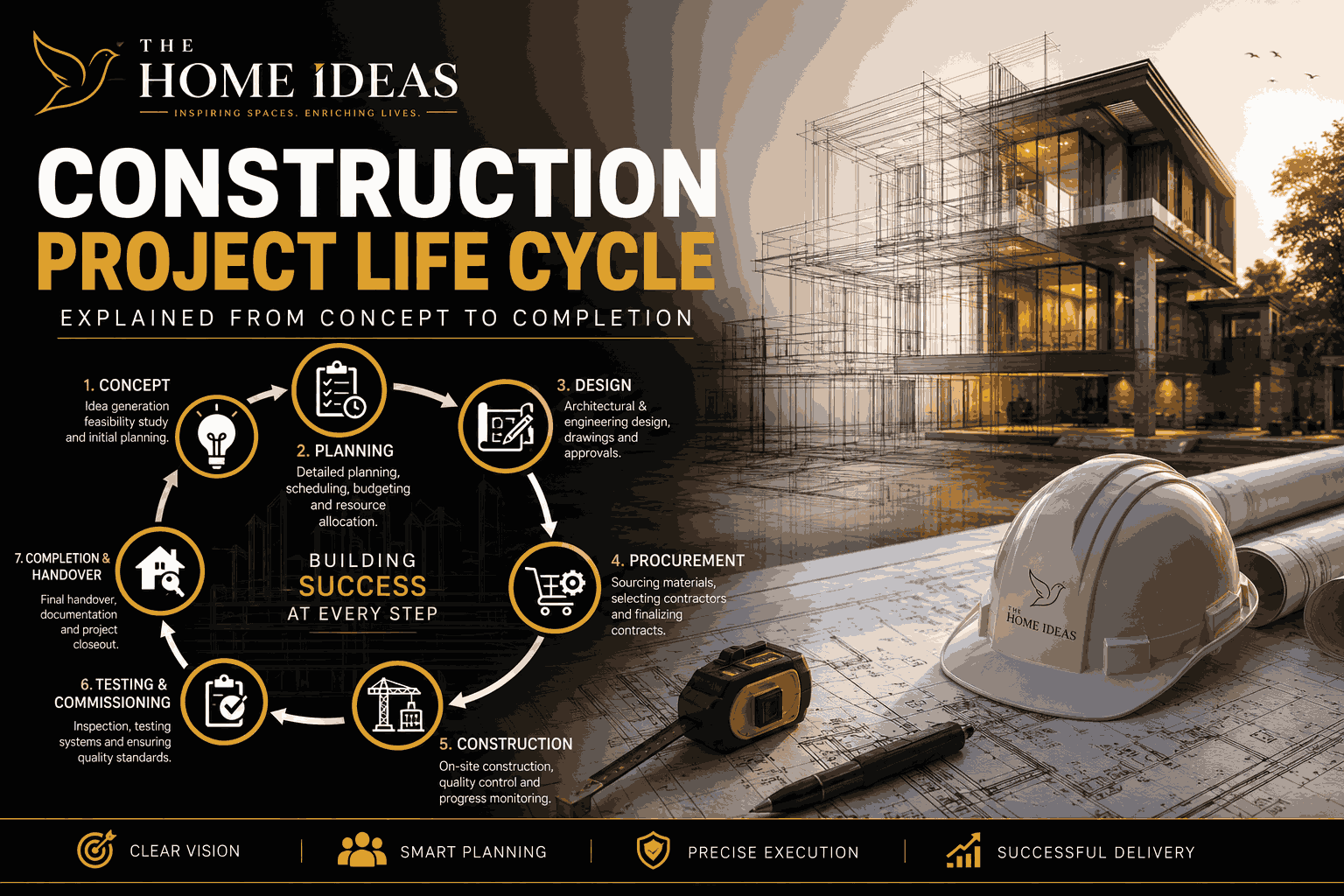
The construction project life cycle is a structured framework that divides a project into a series of interconnected phases, beginning with the initial concept and ending with the successful handover of the completed building. Each phase has its own objectives, responsibilities, deliverables, and quality standards that ensure the project progresses smoothly. Following a systematic life cycle allows project teams to improve communication, reduce unnecessary delays, control costs, maintain quality standards, and minimize project risks. Regardless of whether the project is a small residential house or a large commercial complex, these stages remain the foundation of successful construction management.
Project Initiation: Turning an Idea into a Practical Plan
Every construction project starts with an idea, but not every idea becomes a successful project without careful evaluation. During the initiation phase, the client's requirements, project objectives, estimated budget, and desired completion timeline are clearly defined. Engineers and consultants conduct site investigations, evaluate soil conditions, assess environmental factors, and perform feasibility studies to determine whether the proposed project is technically, legally, and financially viable. This stage also involves identifying potential risks, understanding local building regulations, and preparing a preliminary project scope. Investing sufficient time during project initiation helps avoid costly mistakes and establishes a strong foundation for the remaining stages.
Planning and Design: Building the Blueprint for Success
Once the project is approved, the planning and design phase begins. This is often regarded as the most critical stage because every decision made here directly affects construction quality, project cost, and completion time. Architects develop detailed floor plans and elevations, while structural engineers design safe and durable structural systems. Mechanical, electrical, and plumbing engineers prepare service layouts that integrate seamlessly with the architectural design. Alongside technical drawings, project managers prepare cost estimates, procurement strategies, construction schedules, resource allocation plans, and risk management strategies. Proper planning reduces uncertainty, minimizes rework, improves coordination among stakeholders, and ensures construction activities proceed efficiently once execution begins.
Procurement: Securing the Right Resources at the Right Time
After completing the design and obtaining necessary approvals, the project enters the procurement phase. This stage focuses on acquiring the materials, equipment, contractors, and specialized services required for construction. Contractors evaluate suppliers, negotiate contracts, procure quality materials, and arrange transportation to ensure resources arrive according to the project schedule. Effective procurement plays a significant role in maintaining construction quality and controlling project costs. Delays in material delivery or poor supplier selection can disrupt project timelines, making careful procurement planning essential for smooth project execution.
Construction and Execution: Bringing the Vision to Life
The construction phase is where planning transforms into reality. Site preparation begins with clearing the land, excavation, and foundation work before progressing to structural construction, masonry, roofing, waterproofing, plumbing, electrical installations, HVAC systems, flooring, painting, and interior finishing. Every activity follows the approved drawings and project schedule while complying with engineering standards and safety regulations. Site engineers, supervisors, and project managers continuously coordinate labour, equipment, and materials to maintain productivity and quality. Since multiple activities often occur simultaneously, effective communication and daily supervision are essential for avoiding delays and resolving issues before they impact the project.
Monitoring and Quality Control Throughout Construction
Successful construction projects require continuous monitoring rather than waiting until completion to evaluate quality. Throughout the execution phase, project managers compare actual progress with planned schedules, inspect workmanship, verify material quality, and ensure compliance with design specifications. Regular quality inspections, safety audits, laboratory testing of construction materials, and detailed documentation help identify potential problems at an early stage. Continuous monitoring not only improves construction quality but also reduces costly rework, minimizes delays, and ensures the final building meets both regulatory requirements and client expectations.
Project Completion and Handover
As construction activities come to an end, attention shifts toward final inspections, testing, and client handover. Engineers prepare snag lists to identify any remaining defects, which are then rectified before completion. Building systems such as electrical installations, plumbing networks, fire safety equipment, and mechanical systems undergo comprehensive testing to confirm proper operation. The contractor submits as-built drawings, warranty documents, maintenance manuals, and other project documentation before handing over the building to the client. A well-managed handover ensures the structure is safe, fully functional, compliant with applicable regulations, and ready for occupancy.
Challenges That Can Affect Construction Projects
Despite detailed planning, construction projects often face unexpected challenges that require proactive management. Weather conditions, labour shortages, fluctuations in material prices, equipment breakdowns, design changes, delayed approvals, communication gaps, and unforeseen site conditions can significantly affect project schedules and budgets. Poor coordination among stakeholders may lead to quality issues and unnecessary rework. Experienced project managers minimize these risks by maintaining contingency plans, monitoring project progress closely, communicating effectively with all parties, and responding quickly to changing conditions.
The Growing Role of Technology in Modern Construction
The construction industry is rapidly evolving through the adoption of digital technologies that improve efficiency and project performance. Building Information Modeling (BIM) enables architects, engineers, and contractors to collaborate using intelligent three-dimensional models before construction begins. Drones assist in site inspections and progress monitoring, while cloud-based project management software improves communication and document control. Artificial intelligence, digital quality management systems, and Internet of Things (IoT) technologies are also helping construction teams monitor equipment, track progress, reduce errors, and make better decisions throughout the project life cycle. These innovations are making construction projects more accurate, efficient, and sustainable than ever before.
Best Practices for Successful Construction Project Management
Successful construction projects are built on disciplined planning and effective management rather than chance. Clearly defining project objectives, completing designs before execution, selecting qualified contractors, maintaining realistic budgets and schedules, conducting regular quality inspections, and prioritizing worker safety all contribute to successful outcomes. Consistent communication among stakeholders, accurate project documentation, proactive risk management, and regular progress reviews further enhance project performance. Organizations that follow these best practices are more likely to complete projects on time, within budget, and to the highest quality standards.
Conclusion
Every successful building is the result of careful planning, technical expertise, and effective collaboration across every phase of the construction project life cycle. From the initial concept and feasibility study to planning, procurement, construction, quality control, and final handover, each stage plays a critical role in delivering a durable, safe, and functional structure. Understanding this life cycle enables homeowners, engineers, contractors, and project managers to make informed decisions, anticipate challenges, and achieve better project outcomes. As modern technologies continue to reshape the construction industry, combining proven project management principles with innovative digital tools will remain the key to completing construction projects successfully and sustainably.