best cement for construction
-

- July 29th, 2026
- 28 views

FREE SEO Topical Map Generator: Find Your Next Content Ideas
The rains give relief from excessive heat, but for the construction sector, the monsoon season comes with its own set of difficulties. The rains can affect the concrete that has been freshly put in place and make it lose strength and durability. Regardless of whether you are building your house or commercial premises, it is important to know how rain affects concrete.
With proper planning, implementation, and selection of best cement for construction, the builders can easily avoid weather troubles.
Why Fresh Concrete Is Vulnerable To Rain
Strength development in concrete made with the best cement involves a chemical reaction known as hydration, whereby cement mixes with water to form a strong and tough structure. Even though water is required for this process, too much rainwater during the setting period could upset the well-balanced ratio between water and cement.
Rainfall on fresh concrete may:
- Raise the amount of surface water
- Remove cement particles from the surface
- Give an irregular surface finish
- Cause a delay in the setting time
- Lower surface strength and durability
This phase immediately after pouring is especially important. It is vital to protect new concrete at this point.
Understanding The Possible Effects of Rain On Concrete
1. Weakness in the Surface
One of the effects of rain that becomes immediately visible is the weakening strength of the concrete surface. Excessive water makes cement paste less compact.
As a result, the surface layer will be more porous and vulnerable to erosion.
2. Cracking and Surface Defects
Rain may affect the consistency of the concrete and lead to:
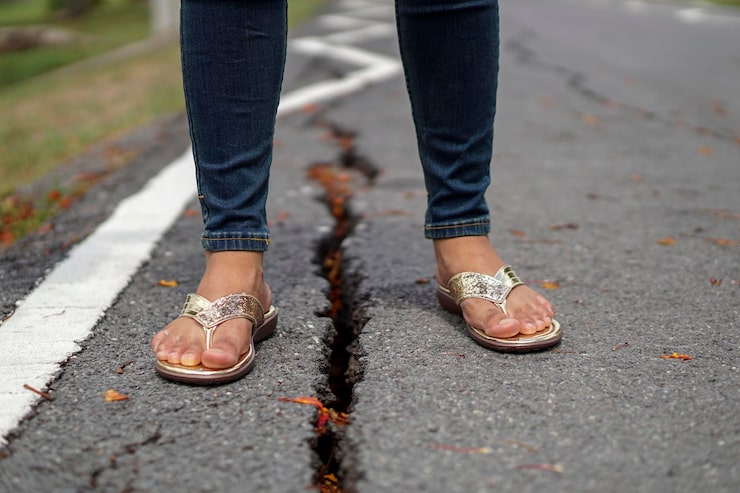
- Cracking of the surface
- Pitting of the surface
- Flaking of the concrete
- Poor and uneven finish
In addition to hampering the appearance of the structure, these issues may become points of entry for water and shorten the lifespan of the structure.
3. Reduced Strength
The water-cement ratio is set for the concrete according to its required strength. But the extra water present in the form of rainwater changes the water-cement ratio, decreasing the strength of the concrete.
The use of the best cement for construction increases the workability and strength of the concrete. But the cement needs to be properly protected from rainfall.
4. Delay in Construction Schedule
Unwanted rainfall can cause delays in concrete placement, finishing, and curing work. Planning in advance during the monsoon season reduces these problems.
What Are The Best Practices for Concreting During Monsoon?
While rainfall poses difficulties, this doesn’t necessarily mean that construction must be halted. There are certain steps that can help enhance the quality of concrete in rainy conditions.
Check the Weather Forecast
Prior to any concreting project, check weather forecasts. In case of heavy rains predicted during concreting, it would be wise to delay this process.
For big construction projects, weather forecasting should be incorporated in construction management.
Have the Construction Site Prepared Prior to Work
Good preparation of the construction site helps minimize rain problems at the very beginning.
One should ensure that:
- There is proper drainage on the construction site.
- Water does not collect near recently poured concrete.
- The materials are kept in sheltered locations.
- The formwork is dry and clean of excess water.
Have Protective Covers Readily Available.
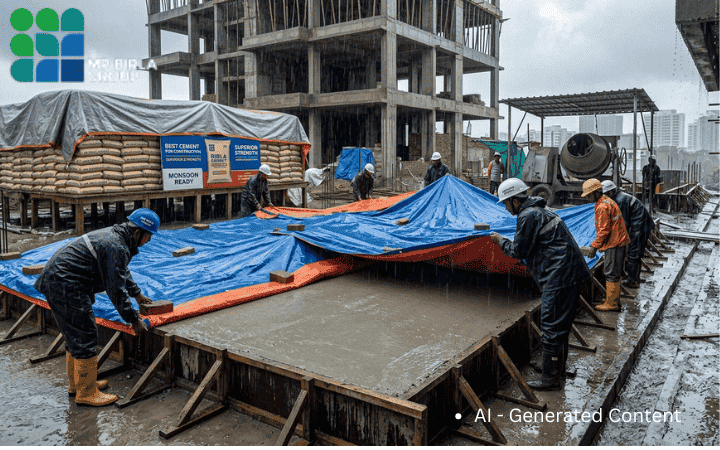
One of the easiest methods that can work best is having waterproof sheets or tarps available for use.
These covers need to be spread over the concrete immediately once the rain starts to fall without letting the cover make contact with the fresh surface. You can also use temporary covers for some important construction areas.
Do Not Add More Water to Concrete
Another common error done by many people at construction sites is mixing more water in the concrete mixture to increase workability in rainy weather.
Doing this will reduce the quality of the concrete and adversely affect the strength of the concrete.
Follow the right mix ratio as well as follow appropriate practices during construction.
Compact the Concrete Adequately
Properly compacted concrete has very few air bubbles and thus has good moisture resistance properties. Use mechanical vibrators where necessary for proper compaction.
How The Best Cement Makes A Difference?
The selection of the best cement for construction can contribute immensely towards making durable concrete.
The best cement for concrete must be chosen as per the below criteria:
- Consistent quality
- Superior strength development
- High workability
- Excellent durability
- Reliable performance under different site conditions
You should opt for trusted cement companies in India such as MP Birla Cement. They are renowned for consistency in quality and superior formulation. Every bag of cement delivers superior performance in various construction situations including the monsoon period.
Conclusion
To sum up, rain may affect the freshly made concrete if appropriate measures are not taken. Excessive moisture may cause the deterioration of surfaces, retard the setting process, reduce structural strength, and make the structure less durable. Nevertheless, with some planning and timely protection, with curing and good building materials, the builders will be able to continue their construction work even in the monsoon season.
The selection of the best cement for construction work, the use of appropriate concreting techniques, and reliance on the best cement companies in India make buildings stronger and more durable despite the bad weather conditions.