How Ankara Transformed Into the Heart of Modern Turkey
-

- July 09th, 2026
- 27 views

FREE SEO Topical Map Generator: Find Your Next Content Ideas
When travelers think about Turkey, cities like Istanbul or Cappadocia usually come to mind first. Yet, hidden in the heart of the country is Ankara, a city that quietly shaped the story of modern Turkey. While Istanbul showcases centuries of imperial history, Ankara represents the birth of a new nation. Today, it stands as the political, cultural, and educational center of the country, offering visitors a fascinating mix of ancient heritage and modern development.
From Ancient Settlement to National Capital
Long before it became Turkey's capital, Ankara had already witnessed thousands of years of civilization. The city has been home to the Hittites, Phrygians, Galatians, Romans, Byzantines, Seljuks, and Ottomans. Each civilization left behind traces that can still be discovered today, making Ankara one of the most historically layered cities in Turkey.
Despite this rich heritage, Ankara remained a relatively modest Anatolian town during the late Ottoman period. Its location in central Anatolia, however, would eventually make it one of the most strategically important places in the country.
Today, visitors exploring Ankara travel attractions can easily experience this historical journey by visiting ancient ruins, Roman baths, historic mosques, and medieval fortresses scattered across the city.
Why Ankara Was Chosen as Turkey's Capital
One of the biggest turning points in Turkish history came after the First World War. During the Turkish War of Independence, Mustafa Kemal Atatürk established Ankara as the headquarters of the national resistance movement.
Unlike Istanbul, which was occupied by Allied forces, Ankara offered a safer and more central location. Its position deep within Anatolia made communication and military coordination much easier during the struggle for independence.
When the Republic of Turkey was officially founded in 1923, Ankara replaced Istanbul as the nation's capital. This decision wasn't simply geographical—it symbolized the beginning of a modern, independent, and forward-looking Turkey.
Today, anyone visiting Ankara can still feel this historical significance throughout the city.
The Vision Behind Modern Ankara
Once Ankara became the capital it underwent one of the most remarkable urban transformations in Turkish history.
Wide boulevards replaced narrow streets. government buildings, universities, parks, embassies, and cultural institutions began appearing across the city. European architects contributed to designing a capital that reflected progress, modernization, and national identity.
Unlike many historic cities that grew organically over centuries, Ankara was carefully planned. The city balanced historical preservation with modern infrastructure, creating an environment that continues to attract both residents and international visitors.
For travelers exploring Turkey with a Turkey e Visa Ankara offers a completely different atmosphere from Istanbul. Instead of crowded tourist districts, visitors experience spacious avenues, green parks, and an authentic look into everyday Turkish life.
Anıtkabir: The Symbol of Modern Turkey
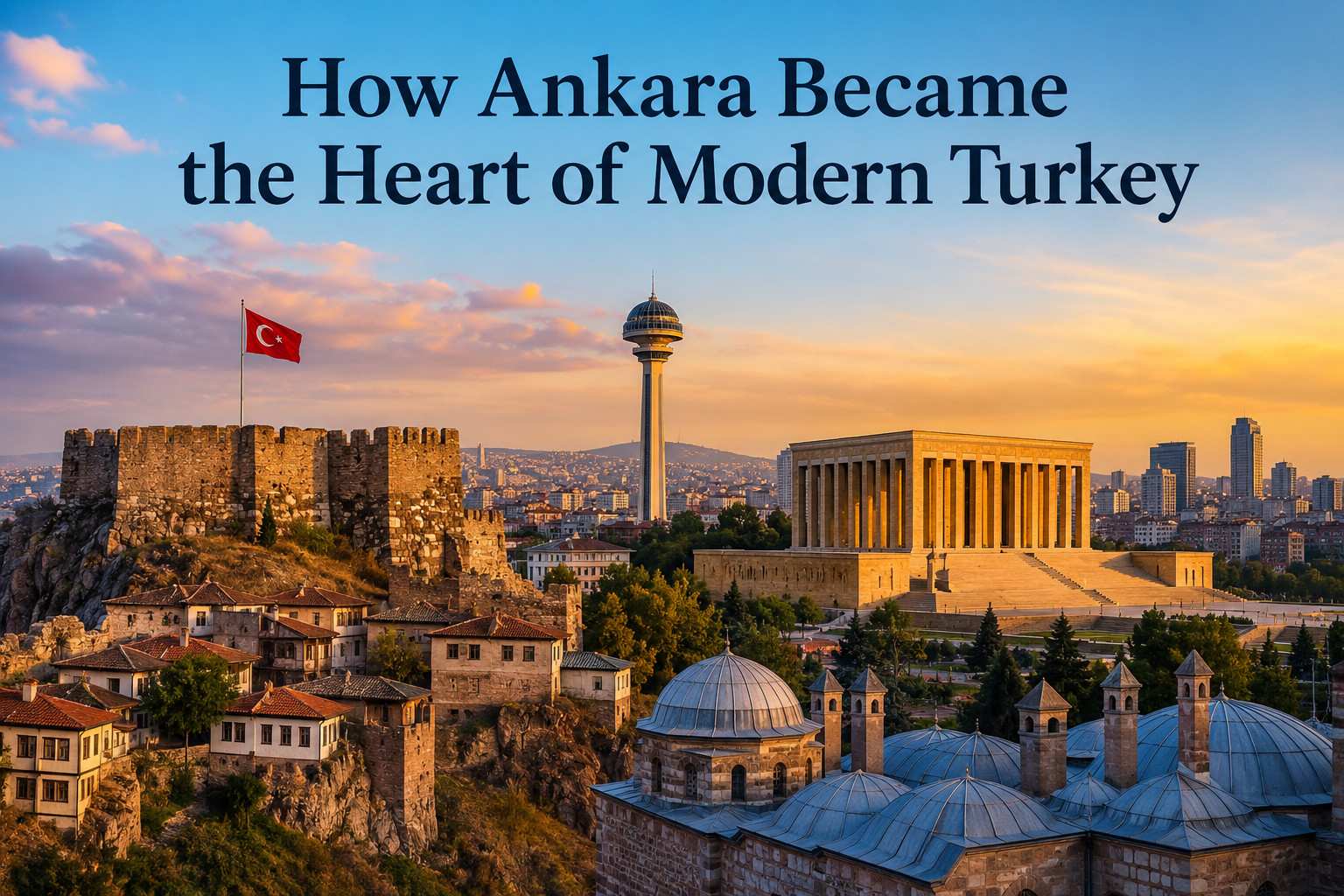
No visit to Ankara is complete without seeing Anıtkabir, the magnificent mausoleum of Mustafa Kemal Atatürk.More than a memorial, Anıtkabir represents the ideals upon which modern Turkey was founded. The massive ceremonial plaza, elegant architecture, peaceful surroundings, and detailed museum make it one of Turkey's most meaningful landmarks.Millions of domestic and international travelers visit Anıtkabir every year to understand the country's transformation from empire to republic.
For anyone interested in Turkish history, this site alone makes Ankara worth visiting after obtaining a Turkey eVisa
Ankara Castle Connects the Past and Present
Standing proudly above the city skyline, Ankara Castle offers a completely different perspective.
Originally built centuries ago and expanded by successive civilizations, the fortress overlooks both the historic district and the modern city beyond. Walking through its stone streets reveals traditional Turkish houses, artisan workshops, boutique cafés, and local craft stores.
From the castle walls, visitors can appreciate how Ankara blends its ancient heritage with contemporary urban development.
This contrast perfectly illustrates why Ankara remains one of Turkey's most unique travel destinations.
Museums That Tell Turkey's Story
Ankara is often called Turkey's museum capital, and for good reason.
The Museum of Anatolian Civilizations is internationally recognized for its extraordinary collection of archaeological treasures dating back thousands of years. Visitors can explore artifacts from the Hittites, Phrygians, Urartians, and many other ancient civilizations.
Other museums throughout Ankara focus on art, science, ethnography, aviation, and the War of Independence, making the city an excellent destination for travelers who enjoy learning while exploring.
Adding museum visits to your Ankara itinerary provides a deeper understanding of Turkish culture beyond famous tourist attractions.
A City Filled with Education and Innovation
Modern Ankara isn't only about politics and history.
The city is home to many of Turkey's leading universities, research centers, technology parks, and government institutions. Students from across the country bring youthful energy to its neighborhoods, cafés, bookstores, and cultural venues.
This educational environment creates a dynamic atmosphere where traditional Turkish customs exist alongside innovation and creativity.
Visitors often discover that Ankara feels more relaxed and authentic compared to larger tourist hubs, making it ideal for slow travel.
Local Culture That Feels Genuine
One of Ankara's greatest strengths is its authenticity.
Unlike destinations heavily focused on international tourism, Ankara allows travelers to experience daily Turkish life more naturally. Local markets, neighborhood restaurants, traditional bakeries, tea gardens, and public parks offer genuine interactions with residents.
Food lovers can enjoy classic Turkish specialties, regional Anatolian dishes, freshly baked simit, delicious kebabs, gözleme, and traditional desserts while exploring the city's culinary scene.
Green Spaces in the Capital
Despite being a major metropolitan city, Ankara features numerous parks and recreational areas.
Gençlik Park, Kuğulu Park, Seğmenler Park, and Atatürk Forest Farm provide peaceful escapes from busy city life. Families, students, and visitors gather here to relax, exercise, and enjoy the outdoors throughout the year.
These green spaces add another dimension to Ankara tourism, showing that the capital is not only about government buildings but also about quality of life.
Planning Your Ankara Journey
International travelers can easily add Ankara to a Turkey itinerary by applying for a Turkey eVisa online in advance, as long as they meet the eligibility requirements. The process is simple and removes the need to visit an embassy or consulate. Once approved, Ankara is easy to reach by domestic flights, high-speed trains, and major highways linking the capital with other parts of Turkey.
Many visitors pair Ankara with Istanbul, Cappadocia, Konya, or the Black Sea region to enjoy Turkey’s rich mix of history, culture, and natural beauty. Spring and autumn are the best times to visit, with mild weather ideal for sightseeing, museums, local markets, and traditional Turkish food. To keep travel smooth apply Turkey eVisa online early and enjoy one of Turkey’s most important and rewarding destinations.
Ankara Is the Story of Modern Turkey
Ankara may not have the worldwide fame of Istanbul, but it tells one of the most important stories in Turkish history. From its ancient civilizations and medieval fortress to its role in the founding of the Republic, every corner of the city reflects resilience, transformation, and national identity.
Today, Ankara continues to thrive as Turkey's political, educational, and cultural heart while welcoming travelers who want to explore beyond the country's most famous destinations.