Why Allulose Is Becoming the Preferred Sugar Alternative for Food Manufacturing
-
- July 20th, 2026
- 39 views

FREE SEO Topical Map Generator: Find Your Next Content Ideas
Consumer demand for healthier, low-calorie food and beverage products has never been higher. Shoppers want the same taste and texture they've always loved, minus the sugar guilt - and that shift is putting enormous pressure on food manufacturers to reformulate. This is exactly where allulose steps in as a genuine sugaralternative for food manufacturing, offering sugar-like performance without the calorie load or glycemic spike that comes with traditional sucrose.
If you're a formulator, procurement manager, or product developer evaluating sweetener options, here's a closer look at why allulose deserves a place in your ingredient deck.
What Is Allulose?
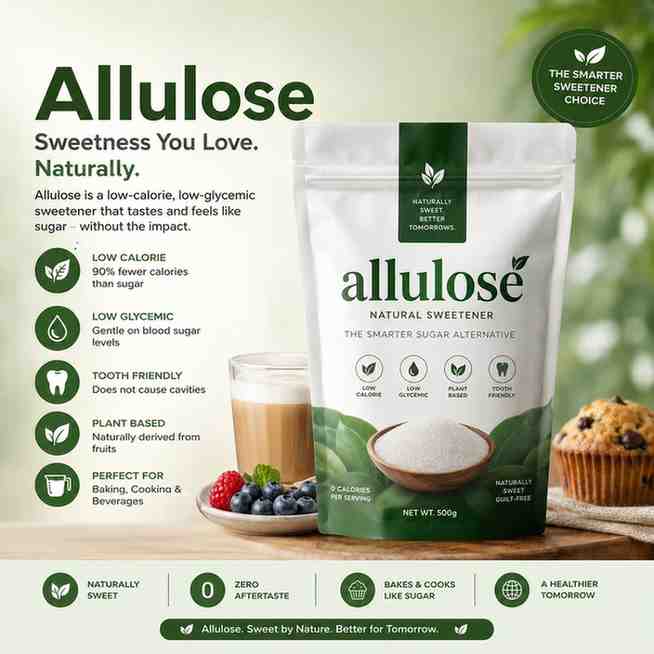
Allulose is a naturally occurring rare sugar, found in trace amounts in select fruits and commercially produced from corn starch. Structurally, it's a monosaccharide - very close to fructose - but the human body doesn't metabolize it the same way. That means it delivers roughly 90% fewer calories than regular sugar (about 0.4 kcal/g versus 4 kcal/g) while still tasting sweet, dissolving easily, and behaving like sugar in a formulation.
This combination of familiar functionality and minimal metabolic impact is why allulose has quickly become one of the most sought-after ingredients for brands developing keto, diabetic-friendly, and "no added sugar" products.
Allulose vs. Sugar: A Quick Comparison
|
Regular Sugar |
Allulose |
|
4 kcal per gram |
~0.4 kcal per gram (≈90% fewer calories) |
|
Causes blood sugar spikes |
Near-zero impact on blood glucose |
|
Counts as added sugar |
Supports "No Added Sugar" claims |
|
Not ideal for diabetics or low-carb diets |
Keto and diabetic-friendly |
|
High in carbohydrates |
Near-zero net carbs |
|
Adds bulk and calories |
Delivers browning, texture, and mouthfeel - without the calorie cost |
Unlike many high-intensity sweeteners that fall short on texture or leave an aftertaste, allulose supports browning and caramelization much like sugar does, which matters enormously for bakery items, sauces, and confectionery where visual appeal is part of the sensory experience.
Why Food Manufacturers Are Switching to Allulose
For any business sourcing a food-grade allulose ingredient, the appeal goes beyond calorie reduction. Manufacturers care about how an ingredient performs at scale, across formulations, storage conditions, and shelf life - and allulose checks those boxes:
- Excellent solubility - dissolves quickly and completely for uniform sweetness throughout a batch
- Heat stability - remains stable across a wide range of pH and temperature conditions, making it suitable for baking, pasteurization, and hot-fill processes
- Non-crystallizing behavior - helps maintain clarity and gloss, particularly valuable in beverages and glazes
- Freezing point control - useful in frozen desserts like ice cream and gelato, where texture consistency is critical
- Improved mouthfeel and viscosity - helps replicate the sensory profile consumers expect from sugar-sweetened products
These functional properties are precisely why allulose is increasingly treated not just as a sweetener, but as a multi-functional allulose ingredient for food industry applications spanning bakery, dairy, beverages, and more.
Where Allulose Fits in Product Development
Allulose's versatility means it isn't limited to one category. It's already being used across:
- Beverages - carbonated, non-carbonated, RTD, functional, and sports drinks
- Bakery & confectionery - cakes, cookies, chocolates, gummies, and traditional sweets
- Dairy & frozen desserts - ice cream, gelato, yogurt, and dairy-based desserts
- Table-top sweeteners - everyday sugar replacement for retail and foodservice
- Nutraceutical and specialty applications - supplements, oral care products, and condiments
Because it performs so similarly to sugar across such a wide application range, allulose has become a natural fit for brands looking to reformulate without a lengthy, expensive R&D cycle.
What to Look for in an Allulose Ingredient Supplier
Not all sweetener suppliers are equal, and sourcing decisions matter - especially at commercial volume. When evaluating an allulose ingredient supplier, manufacturers should look for:
- Regulatory approval - Ideally FSSAI-approved for the Indian market, along with recognized certifications such as Halal, Kosher, Vegan, and Vegetarian.
- Documentation and traceability - Certificates of Analysis (COA), MSDS, technical specifications, and stability data should be readily available.
- Consistent quality at scale - GDP-compliant storage and batch traceability are essential for manufacturers who can't afford variability between production runs.
- Reliable bulk supply - the ability to source a bulk allulose sweetener in commercial packaging (such as 25kg bags) is critical for manufacturers who need dependable, ongoing supply rather than one-off retail quantities.
This is where Allupure™ Allulose, offered by JJD Enterprises, has positioned itself as a dependable option for businesses across India. Allupure™ Allulose is FSSAI-approved and carries Halal, Kosher, Vegan, and Vegetarian certifications, with full documentation support and Pan-India delivery - making it a practical choice for manufacturers seeking an industrial allulose sweetener they can trust for continuous production.
A Note on Sourcing for Manufacturers
For companies searching for a consistent, well-documented allulose ingredients supplier, working with a vendor that understands the compliance and volume needs of commercial food production makes all the difference. Allupure™ Allulose is supplied in bulk packaging designed for B2B use, with quotation options scaled to different order sizes - whether that's a single bag for trial formulation or larger volumes for full production runs.
Final Thoughts
The shift away from traditional sugar isn't a passing trend - it's a structural change in how consumers evaluate food and beverage products. For manufacturers looking to stay ahead of that shift, allulose offers a rare combination: the taste, texture, and functional behavior of sugar, at a fraction of the caloric and glycemic cost.
Whether you're reformulating an existing product line or developing something new, sourcing a reliable, well-certified food-grade allulose supply can make the difference between a product that merely claims to be "healthier" and one that actually delivers on taste, texture, and performance.
To learn more about Allupure™ Allulose products, specifications, and bulk ordering options, visit
https://allulose.in/products/.