Choosing the Right Acoustic Foam Panels in Qatar: Wedge, Pyramid, Egg Crate & Bass Trap Guide
-

- July 20th, 2026
- 43 views

FREE SEO Topical Map Generator: Find Your Next Content Ideas
Acoustic foam panels are among the most widely used sound treatment solutions for recording studios, podcast rooms, cinemas, offices, auditoriums, and industrial spaces across Qatar. However, choosing the right foam profile is often more complicated than selecting the most attractive design. Wedge, pyramid, egg crate, and bass trap foams each serve a different acoustic purpose, and understanding these differences is essential for achieving balanced room acoustics rather than simply covering walls with foam. Whether you're designing a professional recording studio or reducing reverberation in a conference room, selecting the appropriate acoustic treatment will significantly improve speech clarity, recording accuracy, and overall listening comfort.
How Acoustic Foam Panels Work to Control Sound
Acoustic foam panels are porous absorbers manufactured from open-cell polyurethane foam that convert a portion of incoming sound energy into small amounts of heat through friction within the material's interconnected cells. Rather than blocking sound from passing through walls, they primarily reduce reflections, flutter echoes, and reverberation inside a room. Their effectiveness depends on factors such as thickness, density, surface profile, and placement, with thicker materials generally performing better across a wider frequency range. The surface geometry increases the exposed area, allowing more sound waves to interact with the foam before reflecting back into the room. Facilities looking for high-quality acoustic foam panels in Qatar can select profiles designed specifically for recording studios, offices, cinemas, educational institutions, and commercial spaces where controlled acoustics are essential.
Wedge, Pyramid, Egg Crate, and Bass Trap: Which One Should You Choose?
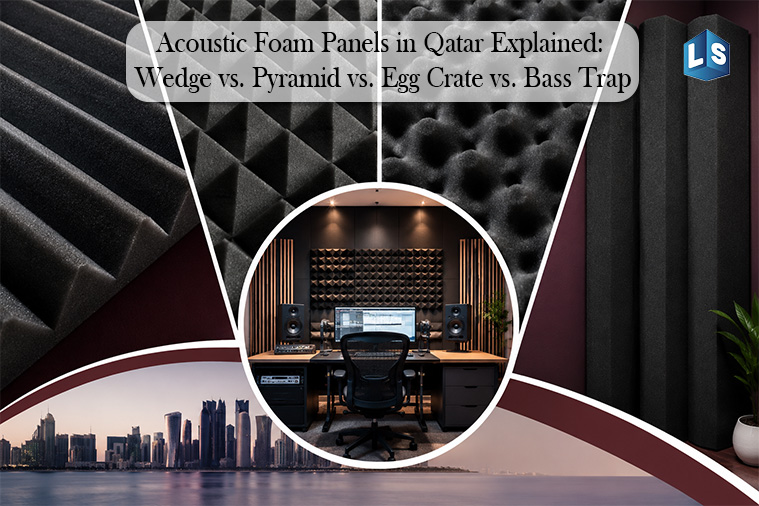
Although all acoustic foams absorb reflected sound, each profile is optimized for different acoustic challenges. Wedge panels provide excellent broadband absorption and are commonly installed in recording studios, podcast rooms, rehearsal spaces, and home theatres because their linear grooves help manage reflections across mid and high frequencies. Pyramid foam distributes sound reflections in multiple directions while maintaining strong absorption, making it popular for control rooms, meeting spaces, and commercial interiors where balanced acoustics are important. Egg crate foam features a convoluted surface that offers cost-effective echo reduction and is often installed behind fabric finishes, false walls, or ceiling systems where appearance is less critical. Low-frequency sound behaves differently from mid and high frequencies, requiring thicker corner treatments such as anechoic foam wedges and bass traps to absorb energy that naturally accumulates in room corners. Combining wall-mounted absorbers with corner treatments generally produces a more balanced acoustic environment than relying on a single foam profile throughout the room.
Common Mistakes Buyers Make When Selecting Acoustic Foam
One of the biggest misconceptions is believing acoustic foam completely "soundproofs" a room. In reality, foam primarily controls internal reflections and echo rather than preventing sound transmission through walls, ceilings, or doors. Another common mistake is choosing panels solely based on appearance instead of acoustic performance, thickness, or frequency response. Installing thin decorative foam in spaces experiencing heavy bass build-up often leaves low-frequency problems unresolved because bass wavelengths require deeper absorbers or dedicated corner treatments. Buyers also frequently underestimate placement strategy, covering random wall sections while ignoring first reflection points and room corners where treatment has the greatest impact. Professional room assessment ensures that the correct combination of absorbers, bass management, and diffusion is selected instead of relying on visual aesthetics or online trends alone. Community discussions among acoustics professionals also consistently note that foam profile alone cannot compensate for insufficient thickness or poor room layout.
Installation Considerations for Qatar's Climate and Commercial Projects
Qatar's high temperatures, humidity fluctuations, and heavy air-conditioning usage create installation conditions that require careful material selection. Adhesive performance becomes particularly important because improperly bonded foam may detach over time due to temperature variation or poorly prepared wall surfaces. Using purpose-designed acoustic foam adhesives helps maintain reliable long-term bonding while avoiding chemical reactions that may damage polyurethane foam. Installers should ensure that concrete, gypsum, MDF, or painted surfaces are clean, dry, and free from dust before installation to maximize adhesion. Commercial projects such as auditoriums, educational institutions, hospitality venues, broadcasting studios, and industrial facilities should also consider maintenance accessibility, fire performance requirements, and future panel replacement during system design. Selecting products suited to Qatar's environmental conditions helps preserve both acoustic performance and installation durability throughout the system's service life.
Choosing the Right Acoustic Treatment for Your Space
The most effective acoustic treatment is rarely achieved by selecting a single foam profile for every application. Instead, successful room acoustics result from matching the treatment strategy to the room's intended use, dimensions, frequency challenges, and architectural layout. Recording studios often benefit from combining wedge or pyramid panels with strategically positioned bass traps, while offices and educational spaces may prioritize speech intelligibility through carefully placed broadband absorbers. Technical evaluation of reverberation, reflection paths, and low-frequency build-up allows acoustic materials to perform as part of a complete treatment system rather than as isolated products. L S Trading (LST) supplies a comprehensive range of acoustic foam panels, anechoic wedges, adhesives, and complementary soundproofing materials for projects throughout Qatar. Whether you're designing a professional studio, upgrading a commercial facility, or specifying materials for a new construction project, consulting LST's acoustic product range ensures you receive technically appropriate solutions tailored to your space, performance objectives, and installation requirements.
Originally published on : https://www.lstcco.com/acoustic-foam-panels-in-qatar-explained-wedge-vs-pyramid-vs-egg-crate-vs-bass-tra